Table of Contents
Choosing a interactive cat scratcher starts with the detail that changes its everyday use. Flexible toy arms need room to move without striking a wall or wrapping around the center post. Compare a two-arm layout with a conventional suspended ball, keeping the scratching surface available when toys are removed.
This interactive cat scratcher guide focuses on reviewing motion and replaceable toys. It connects an illustrative design comparison with observable construction details and a Hanyang catalog reference, helping pet retailers and brands define the next product decision.
A practical interactive cat scratcher comparison
For the interactive cat scratcher comparison, work through the following example before choosing between visual alternatives.
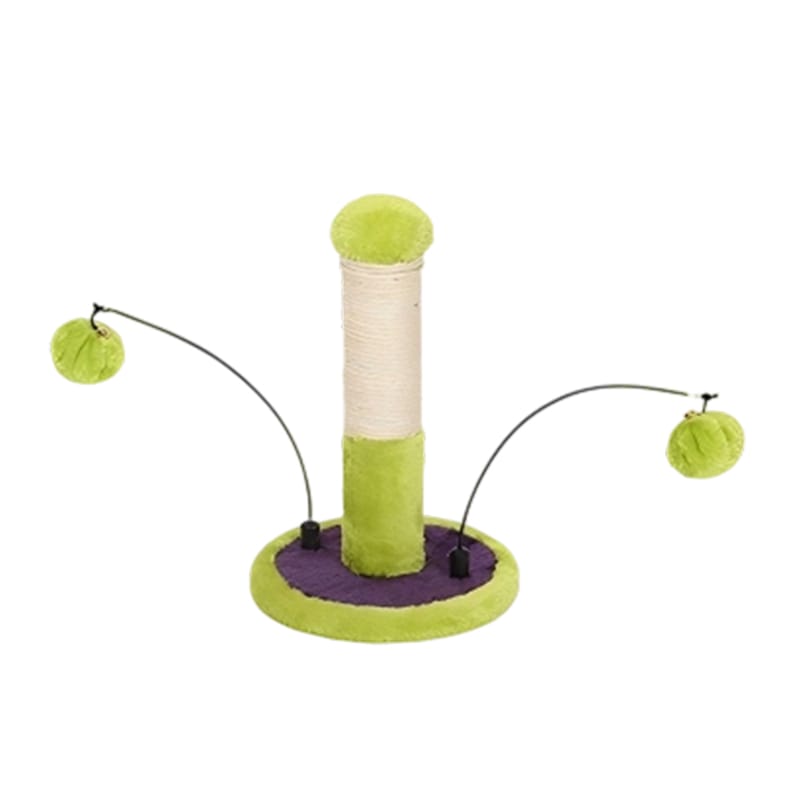
Set a two-arm toy scratcher in the proposed display position and map the sweep of each flexible arm. Compare that envelope with a simpler post carrying one suspended ball. The two-arm version may create a more active visual impression but need more clear space around its base. Check the toy attachments under the interactive cat scratcher supplier's instructions and confirm whether replacements are offered. Then remove the optional toy from the interactive cat scratcher comparison and assess the remaining scratching surface. The core product should be described accurately in both states, and no claim about engagement should be presented as a guaranteed response from every cat.
Interactive cat scratcher: separate core functions from optional accessories
List the structure, resting areas, scratching surfaces, grooming elements and toys as distinct parts. Decide which functions remain available if a worn optional accessory must be removed. A dangling ball can add play interest without turning a resting product into a complete activity system. Describe what the accessory is and how it connects. Avoid counting the same component several times under different marketing terms. This makes a multifunctional offer easier to understand and allows a buyer to compare it with a simpler design on a fair basis.
Measure the continuous working surface
Identify the uninterrupted area available to the cat rather than quoting only the overall product height. Top caps, decorative trim, beds and low shelves can reduce the usable stroke. On a board, measure the supported working face rather than the surrounding frame. On a post, note where a different material or an attachment interrupts the wrap. Compare the working surface from more than one direction. A product can contain several wrapped columns while providing only one easily reached scratching station in its intended room position.
Map the movement area of each attachment
Look at the full swing or flex area of a ball, rope or sprung arm. Check whether that area intersects a cave opening, climbing route, bed entrance or nearby wall. A still photograph can hide these conflicts. Ask the supplier to demonstrate the intended accessory on the complete sample and to provide use and inspection instructions. Do not improvise cord lengths or add household attachments. If a change is proposed, reassess the complete layout and attachment method rather than assuming that a small toy cannot affect the surrounding product.
Match the orientation to the intended use
Vertical posts, inclined boards and horizontal surfaces are distinct options. The relevant comparison includes the approach space, grip surface and support behind the material. A diagonal feature should not automatically be described as a climbing ramp, and a grooming brush should not be counted as a scratching board. Keep the interactive cat scratcher’s intended function clear in its name and main image. Retailers can explain the available orientations without promising that one shape will suit every cat. Customer observation and a clear product description are more useful than a universal preference claim.

Inspect attachment points and loose-part risks
Examine where the accessory joins the platform or post, including any concealed fixing. Ask which parts are designed to be replaceable and how a replacement is identified. Follow supplier guidance for inspection, supervised use where specified and retirement of damaged accessories. Loose or damaged components should not be disguised by tying knots or adding adhesive. Keep product claims limited to supported functions. A brush, ball or rope is an accessory with its own construction and care needs, rather than evidence that the whole assembly is suitable for every age or use pattern.
Inspect the connection as well as the surface
A textured face needs a dependable connection to its backing and supporting structure. Examine the ends of the wrap, board edges, concealed attachment points and junctions with the base. Ask how these details are specified and checked on the proposed model. A neat photograph does not establish performance after repeated use. Any durability or capacity claim needs model-specific support from the supplier. Record the exact sample configuration, including its materials and fixings, so a later substitution is not accepted solely because it looks similar from a distance.
Show the product with and without optional parts
When an accessory is optional or removable, make that status clear in the interactive cat scratcher listing. A clean main image should show the included configuration, while a detail view can explain the attachment and replacement part. If the structure remains useful without the toy, show the underlying scratching or resting feature. This helps customers understand what they are buying and how the interactive cat scratcher can be maintained. Keep accessory colors and shapes aligned with the actual order specification so a lifestyle image does not promise an item omitted from the carton.
Keep the scratching area available in the room
Place the interactive cat scratcher sample in a realistic arrangement with nearby walls, furniture and doorways. Check that the intended face is still reachable and that a hanging toy or resting basket does not block the approach. The product should remain useful when a worn optional toy is removed as directed. In listing photographs, include a view that shows the whole working surface. Buyers should not have to infer its length from a lifestyle image cropped above the base. Clear placement information helps explain what the interactive cat scratcher offers without making promises about behavior.
Compare the design approaches
| Design approach | What to compare | Evidence to request |
|---|---|---|
| Structure with optional toy | Clear routes and maintainability | Attachment and replacement instructions |
| Core structure alone | Compare the same factor on this alternative | Keep dimensions and assessment conditions consistent |
| Continuous vertical surface | Reachable uninterrupted area | Measured working surface and support details |
| Inclined working face | Compare the same factor on this alternative | Keep dimensions and assessment conditions consistent |
A relevant Hanyang catalog reference
Hanyang lists Interactive Cat Scratcher (With Double Hanging Plush Ball Toys) as a relevant construction reference. Its published parameter table states Overall height: 26.5cm; base size: 19cm*19cm; material: Sisal rope, short plush fabric, elastic steel wire, high-density board. Confirm the current drawing and quoted configuration before using those catalog figures in an order specification. The page provides a starting point for discussion; it is not independent evidence of a capacity or an unlisted material property.
For the interactive cat scratcher brief, compare the reference with the wider Cat Furniture range. Hanyang describes product development and OEM/ODM support on its company page. Ask which proposed changes are available for the selected model and which require a separate drawing or sample. Keep requested options distinct from confirmed specifications.
Prepare the next product decision
The next interactive cat scratcher decision should follow the specific comparison above. Compare a two-arm layout with a conventional suspended ball, keeping the scratching surface available when toys are removed. The core product should be described accurately in both states, and no claim about engagement should be presented as a guaranteed response from every cat.
For background beyond the interactive cat scratcher product comparison, see Cats Protection’s scratching guidance. For the next supplier conversation, bring the annotated views and the specific unresolved measurements from this guide. Keep behavioral background, product specifications and supplier commitments as distinct sources of information.
Discuss your interactive cat scratcher project with Hanyang, focusing on reviewing motion and replaceable toys. Include the intended room position, usable dimensions and changes to the referenced model. Use the form below to request clarification or a quotation for the interactive cat scratcher configuration you want to explore.
Frequently asked questions
What should I measure when comparing interactive cat scratcher options?
Set a two-arm toy scratcher in the proposed display position and map the sweep of each flexible arm. Compare that envelope with a simpler post carrying one suspended ball. Keep the interactive cat scratcher comparison tied to the finished dimensions of the proposed version.
What is the main layout question for a interactive cat scratcher?
Flexible toy arms need room to move without striking a wall or wrapping around the center post. Compare a two-arm layout with a conventional suspended ball, keeping the scratching surface available when toys are removed.
Can a interactive cat scratcher be customized?
Discuss reviewing motion and replaceable toys with Hanyang using the referenced model and a marked-up drawing. Compare a two-arm layout with a conventional suspended ball, keeping the scratching surface available when toys are removed. Availability of the requested change must be confirmed for that configuration.
What evidence should support a interactive cat scratcher claim?
Use the Interactive Cat Scratcher (With Double Hanging Plush Ball Toys) as the catalog reference for the discussion. Then remove the optional toy from the interactive cat scratcher comparison and assess the remaining scratching surface. Confirm the final configuration and any claimed performance separately.
What should I include in a interactive cat scratcher inquiry?
Frame the inquiry around reviewing motion and replaceable toys. The core product should be described accurately in both states, and no claim about engagement should be presented as a guaranteed response from every cat. Include the annotated reference and identify the measurements or material details still awaiting confirmation.