Table of Contents
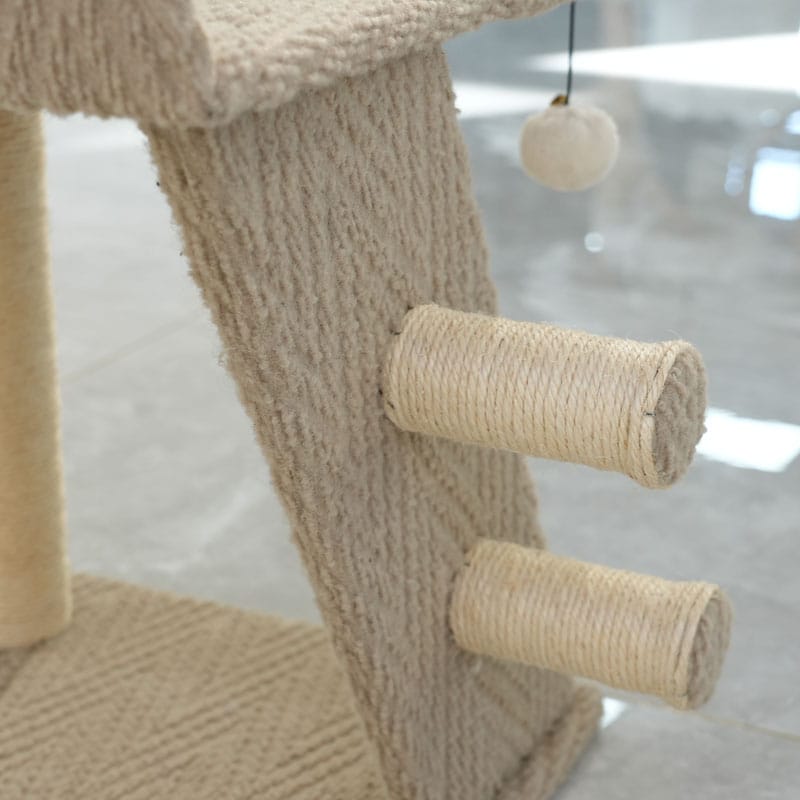
Choosing a cat scratcher board starts with the detail that changes its everyday use. An inclined board needs firm support along its working surface. Inspect its lower edge and connection to the upper shelf. Distinguish an actual climbing step from a small horizontal peg that may only add texture or play interest.
This cat scratcher board guide focuses on choosing a supported angle and surface. It connects an illustrative design comparison with observable construction details and a Hanyang catalog reference, helping pet retailers and brands define the next product decision.
A practical cat scratcher board comparison
For the cat scratcher board comparison, work through the following example before choosing between visual alternatives.
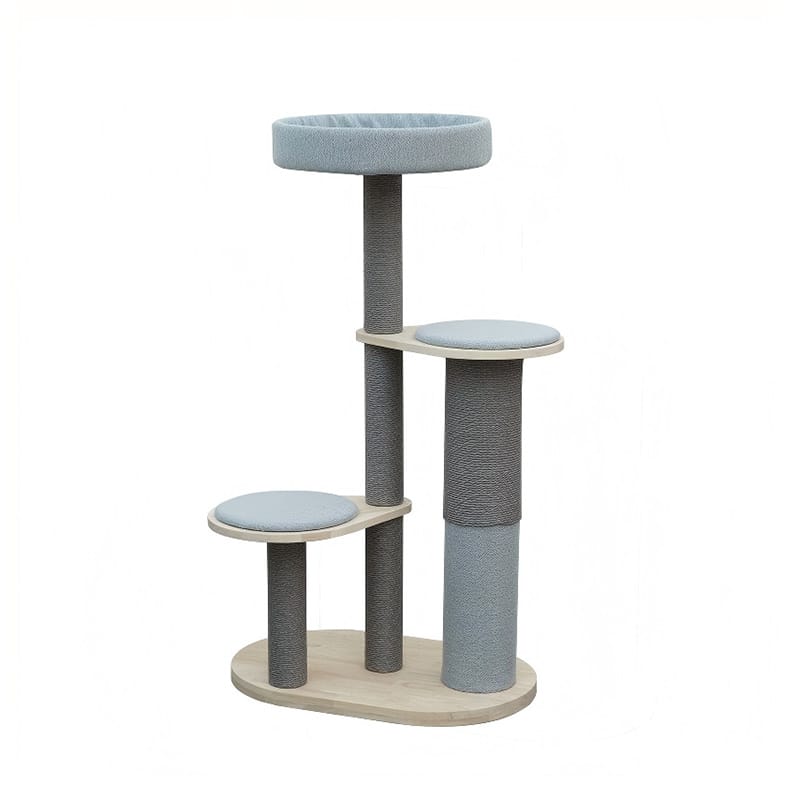
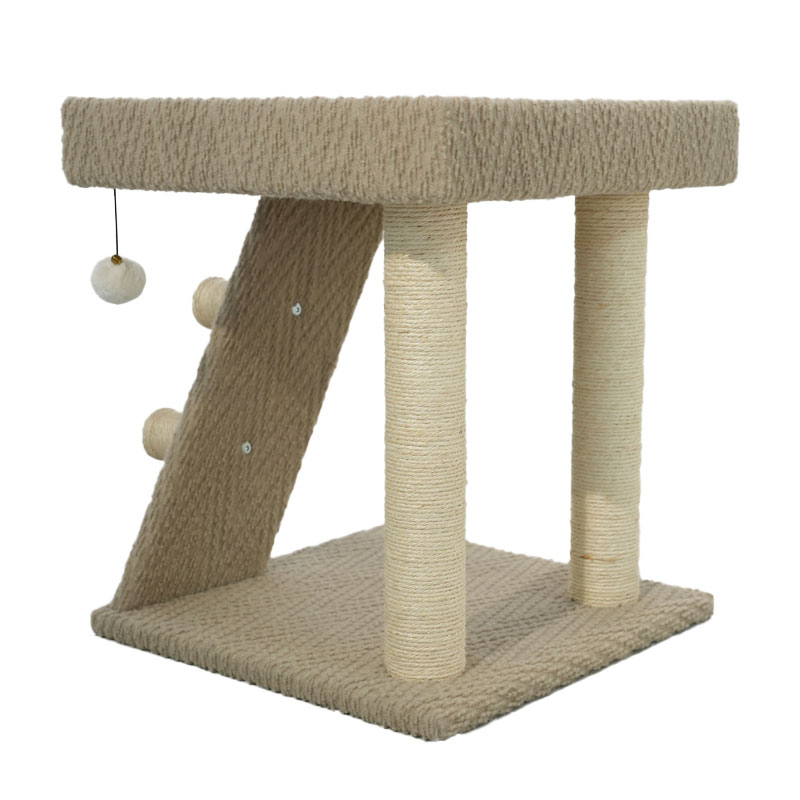
Compare a broad inclined panel supported at both ends with a smaller curved board beneath a resting platform. The broad panel may offer a more obvious working surface, while the curved part can combine with a compact structure. Review the lower approach, upper clearance and attachment details for both. A horizontal peg on the panel should be identified by its intended purpose rather than casually called a step. Request a side drawing that shows where the board contacts its supports. The buyer can then compare usable face area and occupied space without confusing a scratching feature with an assessed climbing ramp.
Cat scratcher board: identify the purpose of the curved or sloped element
In cat scratcher board comparisons, a curved scratching panel, a climbing ramp and an arch-shaped grooming brush serve different purposes. Start by identifying the contact material, backing and support arrangement. Ask the cat scratcher board supplier what use the component is designed for and what information supports that description. Do not infer a load-bearing climbing function from a sloped appearance. In a product comparison, show each feature from the side so the customer can recognize the angle, clearance and relationship to the rest of the structure before choosing an option.
Measure the continuous working surface
Identify the uninterrupted area available to the cat rather than quoting only the overall product height. Top caps, decorative trim, beds and low shelves can reduce the usable stroke. On a board, measure the supported working face rather than the surrounding frame. On a post, note where a different material or an attachment interrupts the wrap. Compare the working surface from more than one direction. A product can contain several wrapped columns while providing only one easily reached scratching station in its intended room position.
Check support along the working face
Inspect how the panel connects at its upper and lower ends and whether the backing is supported through the middle. A curved surface can look substantial while concealing a thin or uneven support. Ask for the component construction and examine the edges, surface attachment and junction with the base. Compare the actual sample with the drawing, including the direction of the curve. A finish change should not conceal exposed backing or make the intended contact surface difficult to identify in the final product photograph.
Match the orientation to the intended use
Vertical posts, inclined boards and horizontal surfaces are distinct options. The relevant comparison includes the approach space, grip surface and support behind the material. A diagonal feature should not automatically be described as a climbing ramp, and a grooming brush should not be counted as a scratching board. Keep the cat scratcher board’s intended function clear in its name and main image. Retailers can explain the available orientations without promising that one shape will suit every cat. Customer observation and a clear cat scratcher board description are more useful than a universal preference claim.
Allow enough room in front of the lower edge
A sloped surface needs an approach area that extends beyond its own base. Review it in the proposed room position and check whether nearby furniture limits access. The lower edge should remain visible and reachable rather than disappearing behind a raised base lip or loose cushion. If the upper end sits beneath a bed, inspect the clearance for the intended use. Keep toys outside the main approach path. These checks help distinguish a useful working surface from an accessory that looks appealing but is awkward to reach.
Inspect the connection as well as the surface
A textured face needs a dependable connection to its backing and supporting structure. Examine the ends of the wrap, board edges, concealed attachment points and junctions with the base. Ask how these details are specified and checked on the proposed model. A neat photograph does not establish performance after repeated use. Any durability or capacity claim needs model-specific support from the cat scratcher board supplier. Record the exact sample configuration, including its materials and fixings, so a later substitution is not accepted solely because it looks similar from a distance.
Describe the angle without inventing performance
If the angle matters to the cat scratcher board specification, measure it on the proposed sample and record how it is maintained by the supporting parts. Do not substitute an approximate photograph for a drawing. Explain the orientation and available working face in customer language, while keeping unsupported claims about preference, exercise or accessibility out of the cat scratcher board listing. Where different angles are offered, compare them under the same measurement method. Confirm whether changing the angle affects the platform above, the occupied footprint or the cat scratcher board assembly instructions.
Keep the scratching area available in the room
Place the cat scratcher board sample in a realistic arrangement with nearby walls, furniture and doorways. Check that the intended face is still reachable and that a hanging toy or resting basket does not block the approach. The product should remain useful when a worn optional toy is removed as directed. In listing photographs, include a view that shows the whole working surface. Buyers should not have to infer its length from a lifestyle image cropped above the base. Clear placement information helps explain what the cat scratcher board offers without making promises about behavior.
Compare the design approaches
| Design approach | What to compare | Evidence to request |
|---|---|---|
| Supported sloped panel | Approach and backing support | Side drawing with connection details |
| Curved feature under a platform | Compare the same factor on this alternative | Keep dimensions and assessment conditions consistent |
| Continuous vertical surface | Reachable uninterrupted area | Measured working surface and support details |
| Inclined working face | Compare the same factor on this alternative | Keep dimensions and assessment conditions consistent |
A relevant Hanyang catalog reference
Hanyang lists Small Cat Tree with Pure Sisal (Inclined Scratching Board) as a relevant construction reference. Its published parameter table states Overall height: 52cm; base size: 45cm*45cm; material: High-density board + natural sisal. Confirm the current drawing and quoted configuration before using those catalog figures in an order specification. The page provides a starting point for discussion; it is not independent evidence of a capacity or an unlisted material property.
For the cat scratcher board brief, compare the reference with the wider Cat Furniture range. Hanyang describes product development and OEM/ODM support on its company page. Ask which proposed changes are available for the selected model and which require a separate drawing or sample. Keep requested options distinct from confirmed specifications.
Prepare the next product decision
The next cat scratcher board decision should follow the specific comparison above. Distinguish an actual climbing step from a small horizontal peg that may only add texture or play interest. The buyer can then compare usable face area and occupied space without confusing a scratching feature with an assessed climbing ramp.
For background beyond the cat scratcher board product comparison, see Cats Protection’s scratching guidance. For the next supplier conversation, bring the annotated views and the specific unresolved measurements from this guide. Keep behavioral background, product specifications and supplier commitments as distinct sources of information.
Discuss your cat scratcher board project with Hanyang, focusing on choosing a supported angle and surface. Include the intended room position, usable dimensions and changes to the referenced model. Use the form below to request clarification or a quotation for the cat scratcher board configuration you want to explore.
Frequently asked questions
What should I measure when comparing cat scratcher board options?
Compare a broad inclined panel supported at both ends with a smaller curved board beneath a resting platform. The broad panel may offer a more obvious working surface, while the curved part can combine with a compact structure. Keep the cat scratcher board comparison tied to the finished dimensions of the proposed version.
What is the main layout question for a cat scratcher board?
An inclined board needs firm support along its working surface. Inspect its lower edge and connection to the upper shelf. Distinguish an actual climbing step from a small horizontal peg that may only add texture or play interest.
Can a cat scratcher board be customized?
Discuss choosing a supported angle and surface with Hanyang using the referenced model and a marked-up drawing. Distinguish an actual climbing step from a small horizontal peg that may only add texture or play interest. Availability of the requested change must be confirmed for that configuration.
What evidence should support a cat scratcher board claim?
Use the Small Cat Tree with Pure Sisal (Inclined Scratching Board) as the catalog reference for the discussion. Request a side drawing that shows where the board contacts its supports. Confirm the final configuration and any claimed performance separately.
What should I include in a cat scratcher board inquiry?
Frame the inquiry around choosing a supported angle and surface. The buyer can then compare usable face area and occupied space without confusing a scratching feature with an assessed climbing ramp. Include the annotated reference and identify the measurements or material details still awaiting confirmation.