Choosing an indoor cat tree sounds simple at first, but once you start comparing options, the differences become obvious. Some designs look attractive but fail after a few months. Others are stable but too limited for active cats. And then there are structures that work well for one cat size but completely fall short in multi-cat households.
What actually makes the difference is not appearance—it is how the structure is engineered, how cats interact with it, and how well it fits into real living environments.
This guide breaks down the decision-making process in a practical way, focusing on real usage rather than theory. It also reflects how modern indoor cat furniture is designed and manufactured today.
Table of Contents
What an Indoor Cat Tree Really Does in a Home Environment
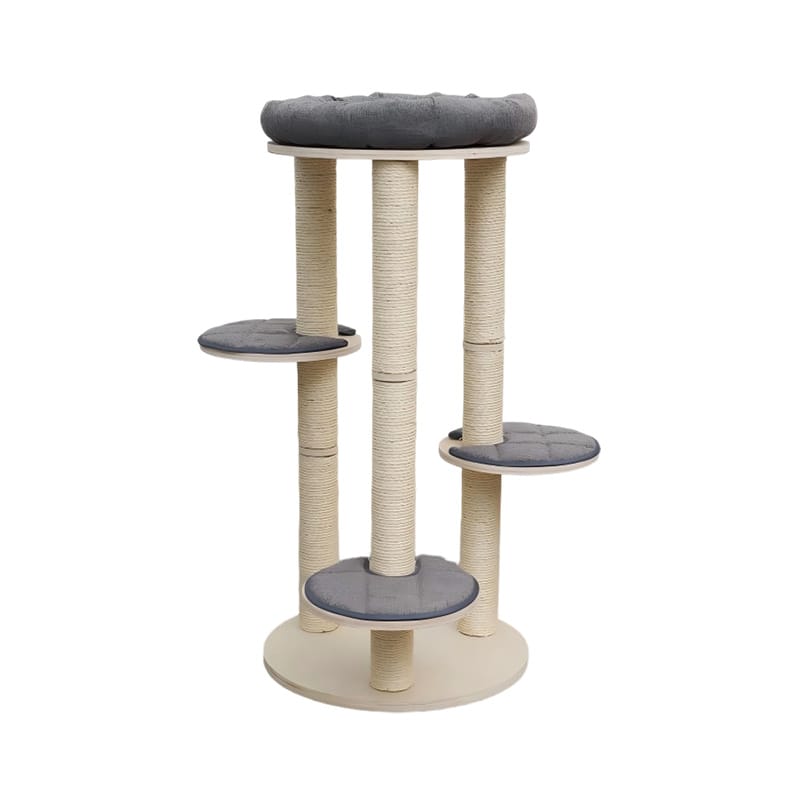
An indoor cat tree is often misunderstood as just a piece of pet furniture. In reality, it functions more like a controlled activity system for indoor cats.
Cats naturally seek height, territory, and repetitive movement such as climbing and scratching. Without a dedicated structure, these behaviors don’t disappear—they simply shift to sofas, shelves, or curtains.
A well-designed indoor cat tree helps redirect these instincts into one structured area. That includes climbing routes, resting zones, and scratching surfaces that mimic natural behavior patterns.
From a design perspective, the goal is not decoration. It is behavioral balance.
Cat Size Changes Everything (More Than Most Buyers Expect)
One of the most common mistakes in selection is ignoring cat size over time. A kitten-friendly structure often becomes unstable or too limited once the cat matures.
Small cats usually prefer lower platforms and tighter spaces where they feel secure. They move quickly and don’t require heavy reinforcement.
Medium-sized adult cats need balance. At this stage, jumping force increases, and platforms must support repetitive movement without shifting.
Large breeds introduce a completely different requirement: structural reinforcement. Not just stronger materials, but wider base distribution and reduced top-heavy design.
In multi-cat environments, the challenge is not size alone—it is shared load. Movement becomes unpredictable, and pressure points change constantly.
This is where design engineering matters more than visual design.
Materials Are Not Just About Looks
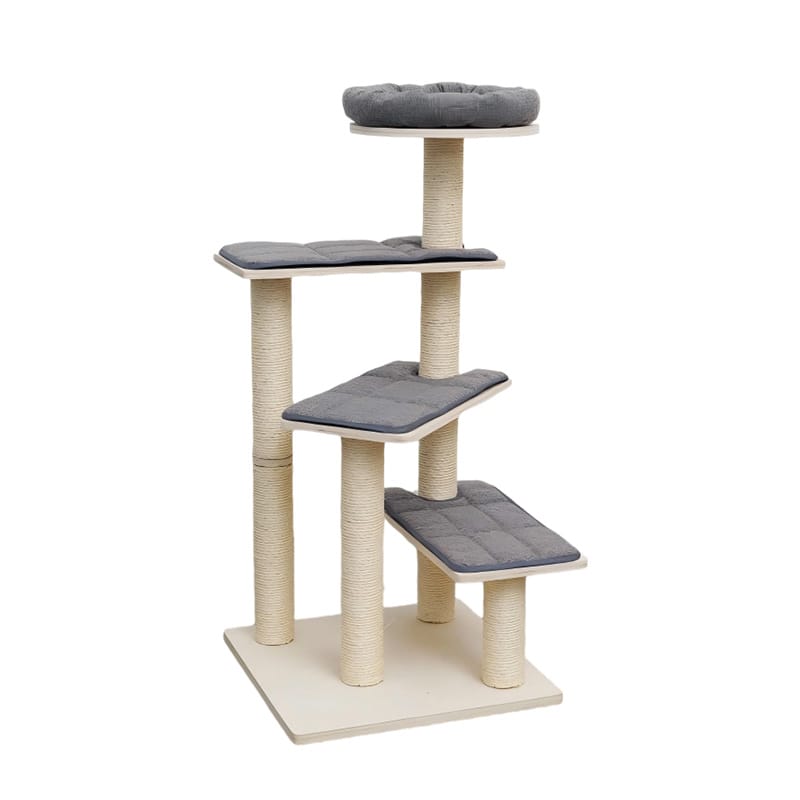
Most people notice the surface finish first, but performance starts underneath.
Wood-based structures are commonly used because they provide a stable foundation and predictable strength behavior. Engineered panels offer consistency in mass production, while solid wood is often used in heavier-duty builds.
Scratching surfaces usually rely on natural fiber wrapping. The goal is resistance—not softness. Cats apply repetitive friction, so material tension and wrapping density matter more than appearance.
Fabric elements are mainly used for comfort zones. However, durability depends heavily on stitching strength and how well the material holds up under repeated contact.
In higher-quality manufacturing environments, material selection is not random—it is tested against load behavior and long-term wear patterns.
Stability Is Not a Feature, It Is the Base Requirement
A cat tree that shifts slightly during use tends to be ignored by cats over time. Animals quickly avoid unstable structures.
The foundation must handle both static weight and dynamic movement. Cats rarely climb in a controlled way—they jump, twist, and push off at different angles.
This is why base width and internal reinforcement matter more than height.
A common failure point in low-grade structures is joint loosening over time. Even small movement between parts can gradually affect overall stability.
In better-designed systems, load is distributed across multiple contact points rather than concentrated in one vertical column.
Safety is not an added feature—it is built into the structure from the beginning.
Small Spaces Require Vertical Thinking, Not Smaller Furniture
In compact homes, reducing size often leads to poor usability. The better approach is vertical design.
Instead of spreading structure outward, modern indoor cat trees use height efficiently. This allows cats to climb without requiring large floor space.
Corner placement designs also help integrate the structure into existing room layouts without blocking movement paths.
Some newer designs even combine multiple functions into one structure, reducing redundancy while keeping activity variety intact.
The key idea is not to shrink the cat tree, but to rethink how space is used.
Multi-Cat Households Need Separation Without Isolation
When more than one cat shares the same structure, behavior changes immediately.
Cats do not simply share space—they negotiate it.
A good design anticipates this by creating multiple resting points at different levels, so no single area becomes dominant.
Entry routes also matter. If every cat is forced through one path, competition increases. Multiple access points reduce tension naturally.
Structural strength becomes even more important here because movement is no longer predictable.
The goal is not separation—it is coexistence without friction.
Why Modern Homes Are Changing Cat Tree Design Expectations
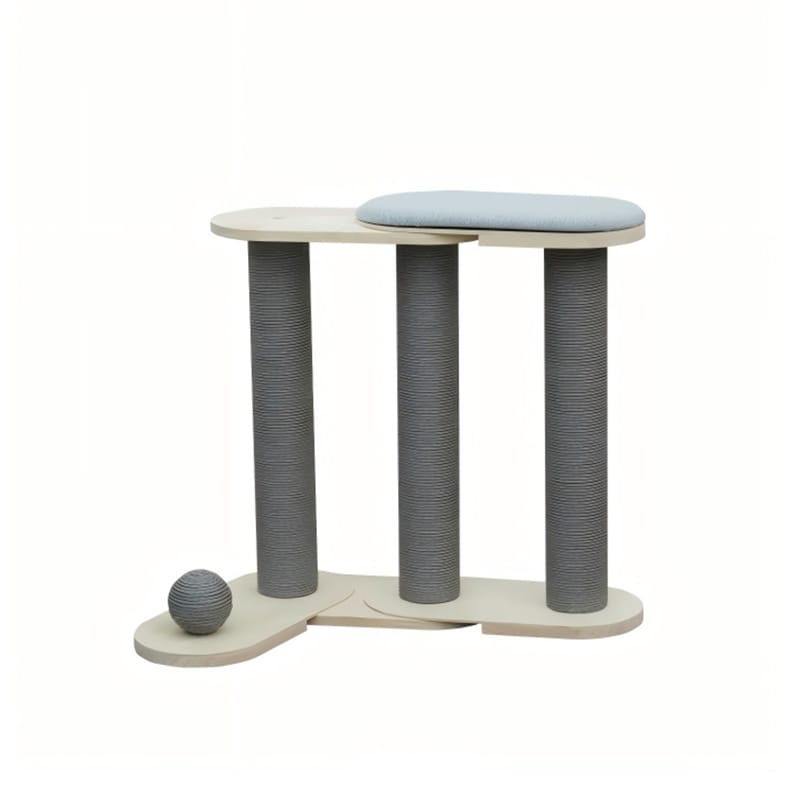
Cat furniture is no longer hidden in corners. In many homes, it has become part of the visible interior.
This shift has influenced design direction significantly.
Neutral tones, clean geometry, and natural textures are now preferred because they integrate better with living spaces.
However, aesthetics alone cannot replace function. The best designs balance visual simplicity with internal structural complexity.
This is why many modern cat trees look minimal on the outside but are reinforced internally in multiple layers.
What Defines a Reliable Manufacturer in This Industry
From a production perspective, not all cat trees are built with the same level of control.
A reliable manufacturing process usually includes consistent material sourcing, structured assembly procedures, and repeated load testing before distribution.
Customization capability is also a key factor. Different markets require different structural preferences, and flexible production systems can adapt to those requirements.
Quality control is not just about final inspection. It starts from material selection and continues through each stage of assembly.
In large-scale production, consistency matters more than isolated quality.
Maintenance Is Part of Product Performance
Even well-built structures require basic upkeep.
Fabric areas should be kept clean to maintain comfort and hygiene. Scratching surfaces naturally wear over time, especially in active households.
What matters is whether components can be maintained or replaced without dismantling the entire structure.
Modular design makes a significant difference here, extending usability without increasing complexity.
Custom Builds Are Becoming the Standard, Not the Exception
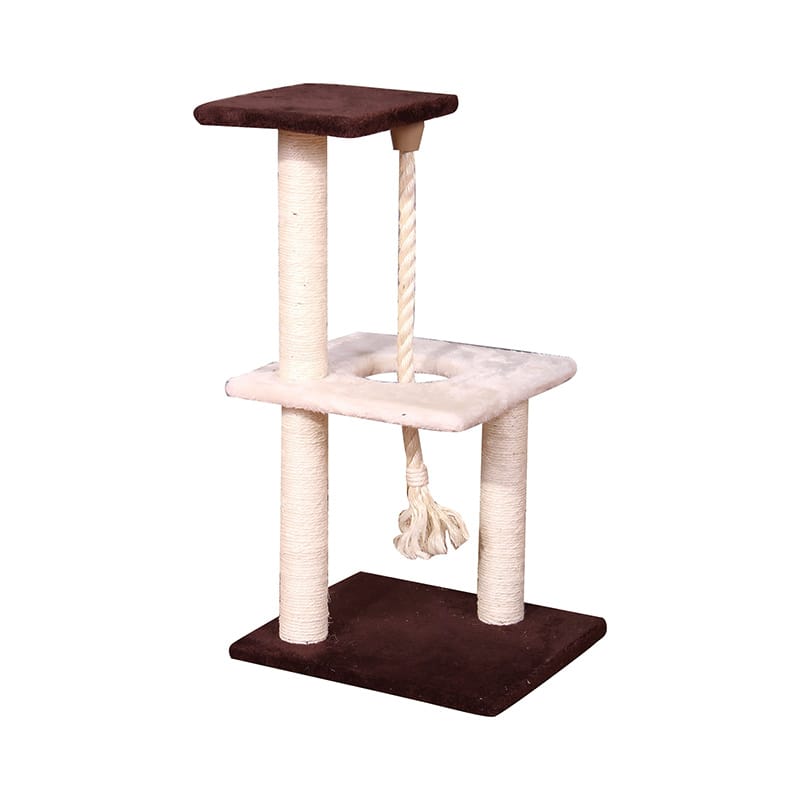
As pet ownership becomes more specialized, standard designs are no longer enough for many buyers.
Customization allows adjustments in size, layout, material combinations, and structural layout depending on usage scenarios.
For brands and distributors, this also opens opportunities to build differentiated product lines without redesigning manufacturing systems from scratch.
This shift is shaping the direction of the entire indoor cat furniture market.
Conclusion
Selecting an indoor cat tree is not about choosing the most visually appealing option. It is about matching structure with behavior, space, and long-term use.
Size compatibility, material strength, stability engineering, and spatial design all play a role in how well the structure performs in real environments.
When these factors are aligned, the result is not just a piece of furniture—it becomes part of a cat’s daily routine and a stable element of the home.
For manufacturers, the focus is increasingly on engineering consistency and adaptable design rather than isolated product features. That shift is what defines higher-quality indoor cat tree development today.
FAQ
What is the main purpose of an indoor cat tree?
An indoor cat tree provides climbing, scratching, and resting areas that support natural feline behavior while protecting home furniture.
How do I choose the right indoor cat tree for different cat sizes?
Focus on weight capacity, platform width, and structural stability. Larger cats need reinforced bases and wider resting platforms.
What materials are best for an indoor cat tree?
High-quality wood or engineered wood for structure, sisal rope for scratching surfaces, and durable fabric for comfort zones are commonly preferred.
Is stability important in an indoor cat tree design?
Yes. Stability is essential because cats jump and climb dynamically. A weak base can lead to tipping and reduced usability.
Can one indoor cat tree be used for multiple cats?
Yes, but it should include multiple platforms, strong load-bearing support, and enough space to reduce competition between cats.