Table of Contents
Rattan cat furniture can give a pet collection a warmer, more residential look than conventional fabric-covered towers. That visual difference is commercially useful, but it also creates a different set of sourcing questions. Buyers need to understand the woven material, the supporting frame, the joining method, the finish, the cushion system, and the way every component behaves during shipping and daily use.
This guide explains how pet brands, importers, and wholesale buyers can evaluate rattan cat furniture before approving a sample or confirming bulk production. It focuses on practical decisions that can be documented in a product brief and checked during sampling, rather than relying on attractive photographs alone.
Why Rattan Cat Furniture Deserves a Separate Sourcing Plan
In rattan cat furniture, the visible woven shell is only one part of the product. Most rattan cat furniture depends on an internal frame, base panels, fasteners, cushions, and sometimes sisal scratching components. A rattan cat furniture model can look balanced in a studio image yet develop rocking, loose strands, or distorted baskets when the frame and weave are not engineered as one system.
Start by defining the intended retail position and use environment. A compact enclosed bed has different load paths from a multi-level tree. A product designed for flat-pack delivery requires different joints from a fully assembled woven basket. If rattan cat furniture will be sold as a natural-material collection, material traceability and claim approval should also be addressed before packaging copy is written.
Understand What Rattan Cat Furniture Is Made From
“Rattan look” is not a material specification. Natural rattan comes from climbing palms and is valued for a combination of strength and flexibility. The Food and Agriculture Organization’s overview of rattan fibres provides useful background on the raw material and its processing. Seagrass, water hyacinth, paper rope, willow, and synthetic resin weave can produce a related appearance, but each behaves differently.
For natural rattan cat furniture, ask the supplier to identify both the visible weave and the frame material. Natural cane may be used over a metal, plywood, or solid-wood structure. The specification should state whether colour variation is expected, whether the surface is stained or clear-coated, and what variation is acceptable between the approved sample and production.
A responsible sourcing claim needs evidence that matches the actual supply chain. The FAO describes rattan among non-wood forest products, while the Forest Stewardship Council explains chain-of-custody certification. Buyers should request applicable documents and verify scope rather than assuming that a natural appearance proves a specific environmental claim.
Match the Product Architecture to the Retail Use Case
Good rattan cat furniture begins with a clear functional hierarchy. Resting products need a stable base, accessible entry, washable soft goods, and enough internal space for the intended cat profile. Climbing products add platform spacing, anti-tip considerations, post rigidity, and controlled movement at every connection.
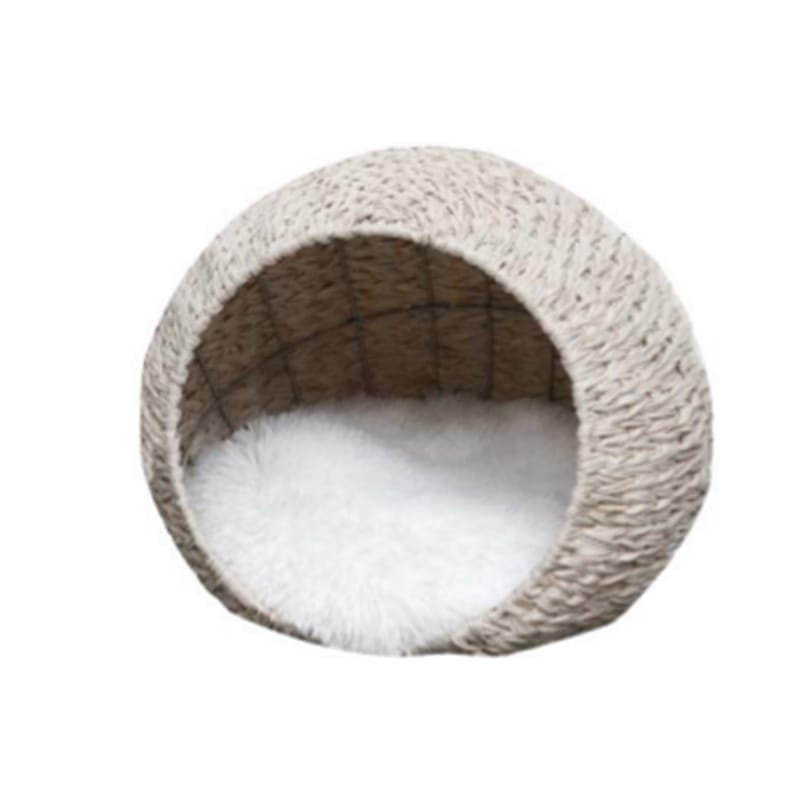
- Woven beds and caves: prioritize opening size, rim stiffness, cushion retention, ventilation, and cleanability.
- Elevated loungers: check the centre of gravity, leg spread, floor contact, and resistance to lateral movement.
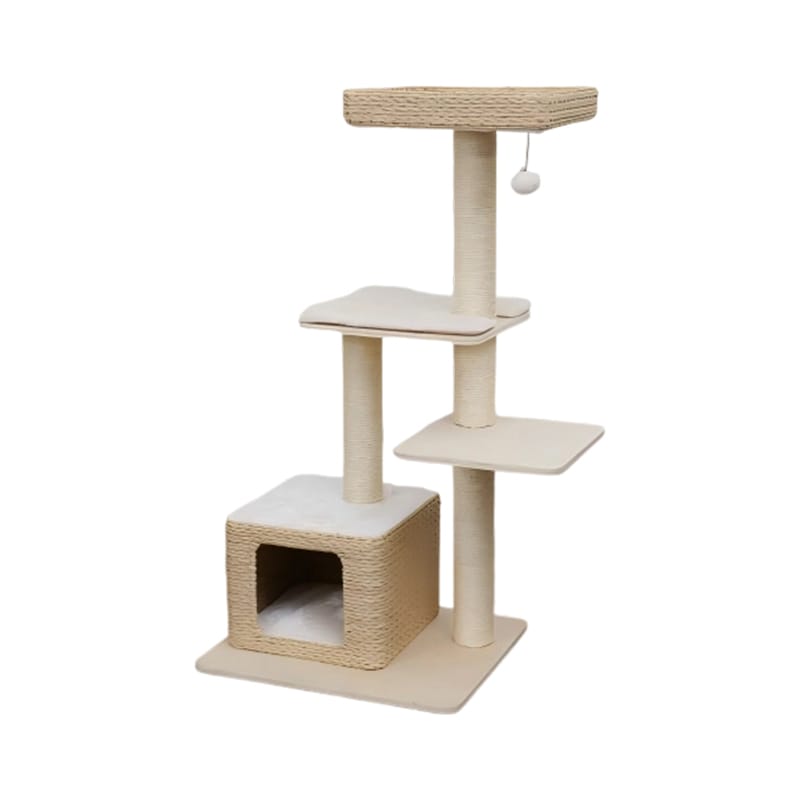
- Multi-level trees: define platform load, post diameter, fastener access, base dimensions, and anti-tip provisions.
- Hybrid scratch-and-rest products: separate replaceable wear components from the woven body wherever possible.
Review existing forms before developing a new model. A handwoven rattan cat bed, an elevated woven cat bed, and a full cat tree solve different buyer needs even when they share a natural visual language.
How to Evaluate Weave Quality and Structural Integrity
Weave inspection should be systematic. On rattan cat furniture, compare strand spacing across front, back, sides, and curved transitions. Look for abrupt changes in tension, exposed cut ends, sharp tips, gaps large enough to catch claws, and compressed areas where the weave is doing structural work it was not designed to carry.
Push gently at several points rather than judging stiffness in one location. The basket should recover its intended shape without crackling, permanent distortion, or frame movement. Check the underside as carefully as the presentation side. Binding points, staples, welds, screws, and end treatments are often visible there and reveal how consistently the rattan cat furniture was assembled.
For a rattan cat furniture production specification, translate visual expectations into checkable limits. Define the approved weave pattern, strand range, maximum permitted gap, location of joins, end-treatment method, and the areas that must remain free of protrusions. Photographs with marked acceptance and rejection examples are more effective than terms such as “tight weave” or “premium finish.”
Review Finishes, Hardware, and Cat-Contact Points
Every rattan cat furniture surface a cat can reach deserves a separate review. Run a cloth over edges and openings to identify snag points. Confirm that screws are recessed or capped, metal ends are covered, staples cannot be reached, and removable cushions do not expose unstable hardware.
Coatings, adhesives, dyes, and textile components should be specified for the destination market. For EU-bound rattan cat furniture, the buyer may need to assess obligations under the European Commission’s REACH framework. Requirements vary by material, claim, and market, so ask for current test reports that identify the tested material and product rather than accepting a generic document.
Soft goods in rattan cat furniture need their own construction details: fabric composition, filling, seam strength, zipper placement, washing instructions, colour tolerance, and attachment method. A removable cushion can improve maintenance, but it should remain stable during normal entry and turning movements.
Write a Specification That a Factory Can Follow
A useful rattan cat furniture specification combines drawings, a bill of materials, performance expectations, finish references, packaging instructions, and inspection criteria. It should identify which dimensions are critical to function and which can carry a reasonable handmade tolerance.
- Overall dimensions, usable sleeping area, opening sizes, and platform heights.
- Frame material, panel thickness, post construction, fastener type, and assembly sequence.
- Woven material, strand dimensions, colour reference, pattern, joint placement, and end treatment.
- Cushion fabric, filling, removable cover details, care label, and attachment system.
- Target carton configuration, included hardware, instructions, warning labels, and barcode locations.
- Inspection tests, sample approval points, defect definitions, and retained reference samples.
If the product is part of a wider collection, document common components and deliberate differences. This makes rattan cat furniture easier to manage alongside scratchers, beds, and solid-wood products without allowing uncontrolled substitutions.
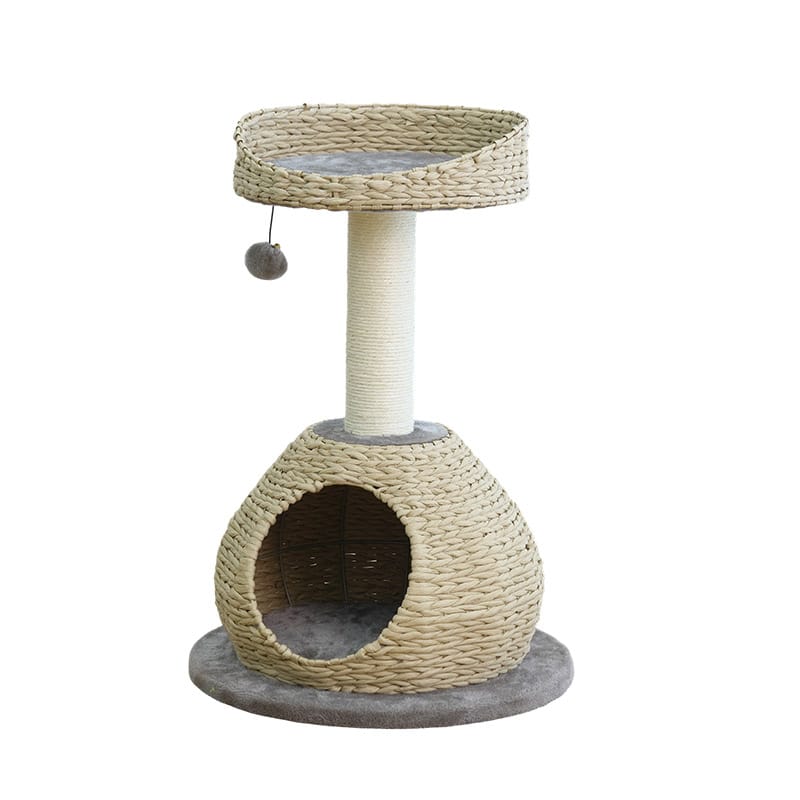
Use Samples to Find Problems Before Bulk Production
A sample is a decision tool, not merely a sales model. Evaluate the rattan cat furniture in the same sequence a customer will experience it: unpacking, assembly, placement, cleaning, and repeated use. Record the sample weight and dimensions, photograph concealed construction, and retain approved colour and weave references.
Check rocking on a flat surface, joint movement after repeated handling, cushion recovery, odour after unpacking, abrasion at contact points, and carton condition after a suitable transport simulation. Our cat furniture sample evaluation guide provides a broader pre-production review process that can be adapted to woven products.
Do not approve a sample with verbal corrections only. Mark every change on a revision sheet, request photographs or a revised sample where the risk justifies it, and confirm which physical sample becomes the production reference. For bulk inspection, an acceptance-sampling plan can be discussed with your quality team; ISO 2859-1 describes AQL-indexed sampling schemes for lot-by-lot inspection.
Plan Packaging and Export Requirements Early
The woven surfaces of rattan cat furniture can be damaged by concentrated pressure, abrasion, moisture, and movement inside the carton. Packaging for rattan cat furniture should protect rims and corners without permanently compressing the weave. Removable cushions and hardware packs must also be secured so they cannot rub against visible surfaces.
Decide early whether the product ships assembled, partially assembled, or flat-packed. The carton size may influence product architecture, while assembly requirements affect instructions and hardware control. Use the cat tree packaging guide to structure carton, hardware, instruction, and transport checks.
If solid-wood pallets, crates, or dunnage are used, confirm destination requirements with the logistics provider. The International Plant Protection Convention’s ISPM 15 resource explains the scope of phytosanitary measures for raw-wood packaging used in international trade.
Compare Natural Rattan, Seagrass, and Synthetic Weave
| Material direction | Commercial strengths | Points to control | Suitable product types |
|---|---|---|---|
| Natural rattan | Warm appearance, formed curves, handcrafted character | Colour variation, moisture, strand finish, sourcing evidence | Beds, caves, baskets, feature accents |
| Seagrass or similar natural fibre | Distinct texture, natural collection story | Fibre consistency, shedding, odour, moisture response | Caves, basket beds, wrapped panels |
| Synthetic woven material | Consistent colour and strand dimensions | Material declaration, UV needs, edge treatment, market compliance | Repeatable collections and selected high-contact areas |
| Mixed construction | Balances appearance, structure, and replaceable wear parts | Interfaces between materials and truthful product descriptions | Cat trees, scratch-and-rest hybrids, elevated beds |
No material is automatically the right choice for every rattan cat furniture program. The decision should follow the target market, care expectations, desired consistency, structural design, and approved product claims. A mixed construction may deliver the most practical result when the woven body is not asked to serve as the only structural or scratching component.
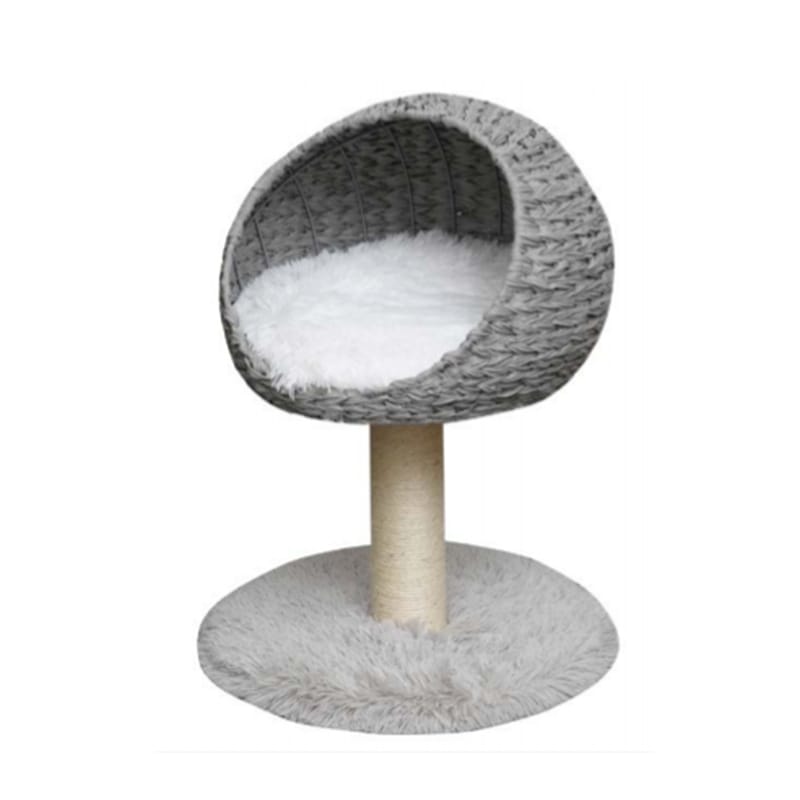
Questions to Ask a Rattan Cat Furniture Supplier
A capable rattan cat furniture sourcing discussion should move beyond catalogue availability. Ask who controls the frame, weaving, finishing, soft goods, assembly, and final inspection. If different workshops supply these stages, clarify how specifications and approved samples are shared.
- What exactly are the visible weave, internal frame, base, coating, adhesive, and textile materials?
- Which dimensions and weave characteristics can be controlled consistently in bulk?
- How are loose ends, sharp points, rocking, surface marks, and colour variation classified?
- Can components such as cushions, sisal posts, covers, or toys be replaced?
- Which documents and tests are available for the specific materials and target market?
- How will changes between the approved sample and production be authorized?
- What packaging tests and final inspection records can be agreed before shipment?
For custom rattan cat furniture, also assess how the supplier handles design development. Our ODM cat furniture development guide explains how to move from a product idea to a controlled production sample.
Move From Product Brief to Controlled Production
The lowest-risk route is a staged process: define the use case, confirm materials, review engineering, approve appearance, test the sample, freeze the specification, and agree inspection and packaging criteria. Each stage should produce a record that can be used by product, purchasing, quality, and logistics teams.
When these controls are in place, rattan cat furniture can become a coherent product family rather than a one-off decorative item. Buyers can extend the same design language across caves, elevated beds, cat trees, and scratching products while keeping construction decisions visible and measurable.
Frequently Asked Questions
Is rattan cat furniture suitable for scratching?
The woven body should not automatically be treated as the intended scratching surface. If scratching is part of the product function, add a purpose-designed, replaceable component such as a sisal-wrapped post or board and define how it connects to the frame.
What is the difference between rattan and wicker?
Rattan refers to a natural plant material, while wicker describes a weaving method. Wicker-style pet furniture may therefore use natural rattan, seagrass, willow, paper rope, or synthetic strands. Buyers should specify the actual material rather than using the terms interchangeably.
What should buyers inspect on a rattan cat furniture sample?
Inspect stability, frame movement, weave tension, gaps, cut ends, reachable hardware, surface finish, cushion construction, odour, dimensions, assembly, carton protection, and consistency with the written material specification.
Can woven cat furniture be customized for private-label collections?
Common customization areas include dimensions, weave pattern, colour direction, frame configuration, cushion fabric, scratching components, labels, packaging, and instruction materials. Every change should be reflected in an approved specification and sample.
How should rattan cat furniture be packed for export?
Protect rims, corners, and woven panels from compression and abrasion; secure loose hardware and cushions; control moisture exposure; and validate the carton for the chosen shipping configuration. Raw-wood pallets or crates may also require destination-specific phytosanitary treatment and marking.
Develop a Woven Cat Furniture Collection With Clear Specifications
If you are planning a private-label or wholesale rattan cat furniture collection, share your target market, product type, dimensions, material direction, expected functions, and packaging needs with our team. We can discuss suitable product structures, sample requirements, and OEM or ODM development steps. Contact Hanyang to start a practical sourcing conversation.