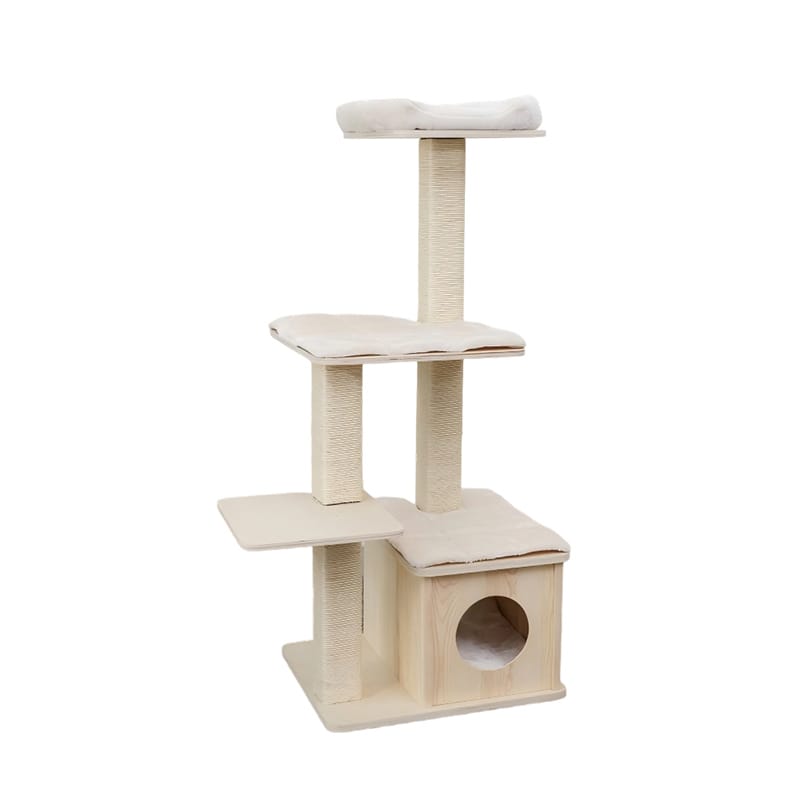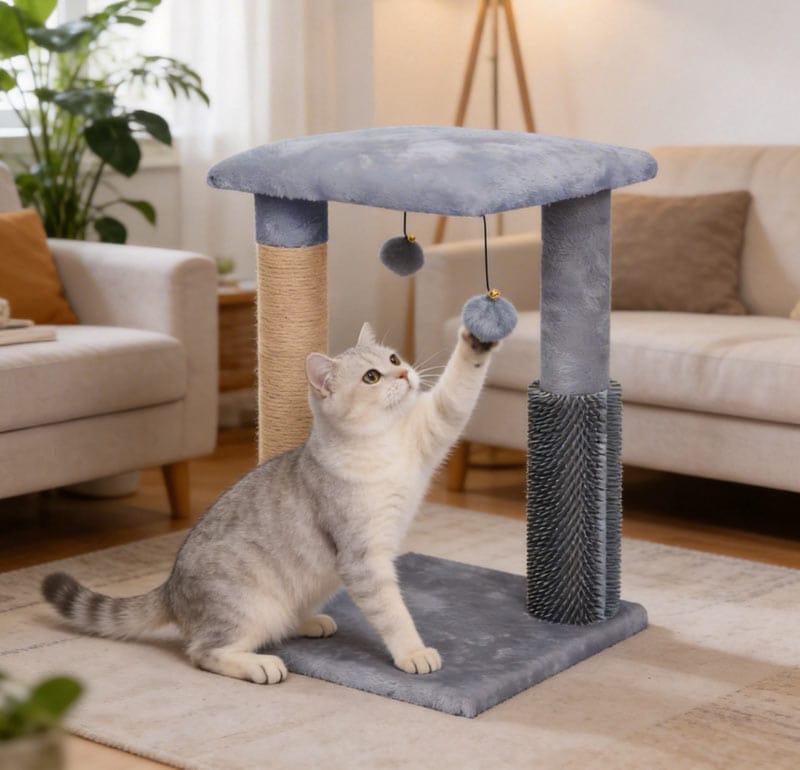
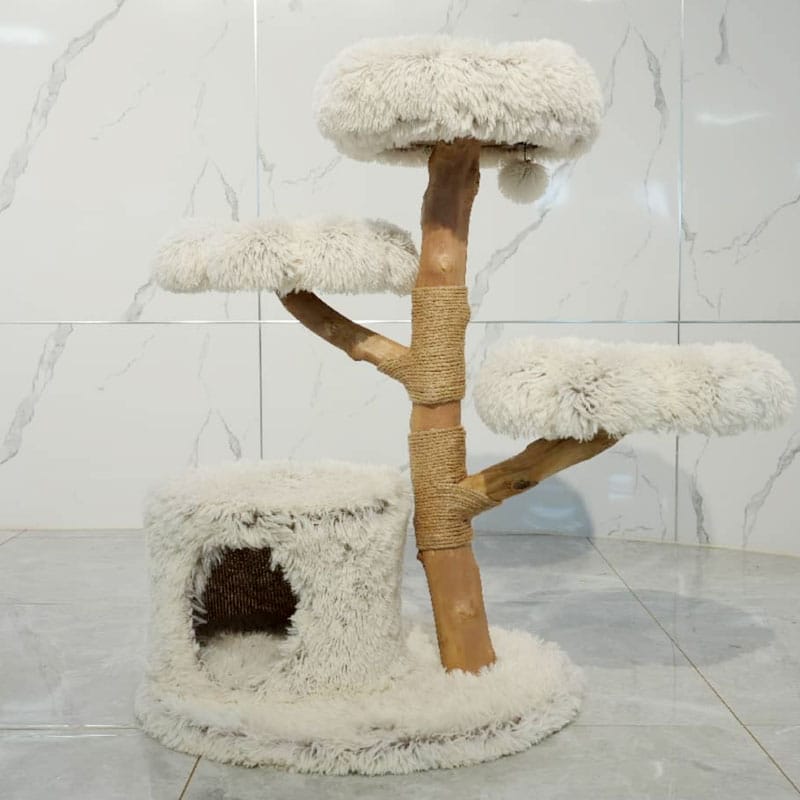
Indoor cats live in a very different environment from outdoor cats. They do not climb trees, explore rooftops, scratch rough bark, or choose high resting spots in the same way they might in a natural outdoor setting. That is why a good quality cat tree is more than a piece of pet furniture. It becomes a climbing structure, scratching area, resting zone, hiding space, and daily activity center inside the home.
For cat owners, choosing the right cat tree can improve a cat’s comfort, activity level, and indoor behavior. For pet stores, wholesalers, distributors, and private-label buyers, understanding what makes a cat tree truly reliable is even more important. A product may look attractive in photos, but long-term customer satisfaction depends on structure, materials, safety, stability, and whether cats actually use it every day.
This guide explains how to choose a good quality cat tree for indoor cats from a practical and manufacturing-focused point of view. Instead of only looking at appearance, we will break down the details that really matter: base design, post thickness, scratching surfaces, platform size, materials, cat behavior, large-cat support, and wholesale purchasing considerations.
Why Indoor Cats Need a Good Quality Cat Tree
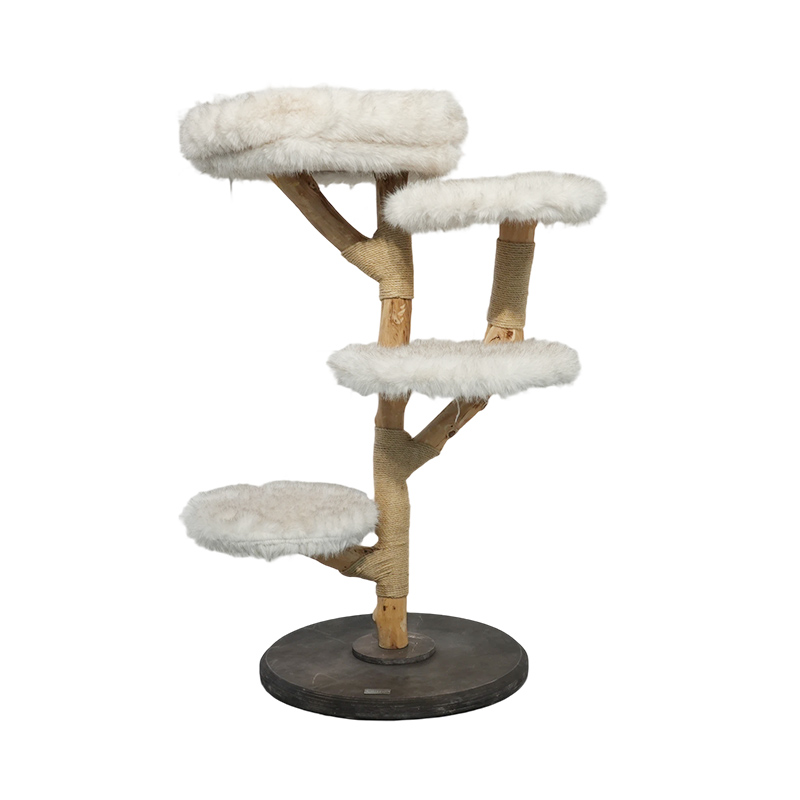
Indoor cats need vertical territory. In a home environment, the floor is shared with people, furniture, other pets, and daily household activity. A cat tree gives cats a raised place where they can observe the room, rest with a sense of security, and move away from disturbances when they need quiet time.
A cat tree for indoor cats also supports natural behaviors. Cats scratch to stretch their muscles, maintain their claws, and mark territory. They climb to explore. They hide when they want privacy. They perch in high places because height gives them confidence and control over their surroundings.
A low-quality cat tree may fail to support these behaviors. If it shakes, tips, has platforms that are too small, or uses weak scratching materials, cats may avoid it completely. In contrast, a high quality cat tree encourages daily use because it feels safe, comfortable, and rewarding.
For indoor cats, the right cat tree can help:
- Provide climbing and jumping opportunities
- Reduce scratching on furniture
- Create a dedicated resting space
- Support exercise in smaller homes
- Give shy cats a secure hiding area
- Help multi-cat households reduce territory conflicts
- Add enrichment without taking up excessive floor space
A good cat tree is not only designed for the owner’s eye. It must be designed around how cats move, scratch, stretch, sleep, and claim space.
What Makes a Cat Tree Good Quality?
A good quality cat tree is not defined by height alone. Many buyers assume that a taller cat tree is automatically better, but height without stability can create safety concerns. Real quality comes from the relationship between structure, materials, comfort, and usability.
A well-made cat tree should have a stable base, thick support posts, strong connectors, durable scratching surfaces, safe platform spacing, and resting areas that match the size of the cat. It should also be easy to assemble and strong enough to handle daily jumping, climbing, scratching, and sleeping.
From a manufacturer’s point of view, quality starts before the product is assembled. It begins with material selection, board thickness, load distribution, post diameter, hardware strength, fabric attachment, and packaging protection. Every part affects the user experience after the cat tree arrives in the customer’s home.
A good quality cat tree should meet these basic standards:
| Quality Area | What Buyers Should Check | Why It Matters |
|---|---|---|
| Base structure | Wide, balanced, and firm | Reduces wobbling and tipping |
| Support posts | Thick and tightly connected | Improves long-term stability |
| Platforms | Large enough for adult cats | Provides comfort and safe movement |
| Scratching surfaces | Durable sisal or textured material | Supports natural scratching behavior |
| Resting zones | Perches, condos, or hammocks | Gives cats multiple comfort options |
| Surface fabric | Soft, secure, and cleanly finished | Improves comfort and appearance |
| Hardware | Strong screws and connectors | Affects safety and assembly quality |
| Packaging | Protective carton and organized parts | Reduces damage during shipping |
A cat tree can look soft and decorative, but if the structure underneath is weak, it will not perform well over time. True quality is felt when the cat jumps onto it, scratches it repeatedly, sleeps on the perch, and continues using it months later.
Start with Stability Before Looking at Design
Stability is one of the most important factors when choosing a good quality cat tree. A cat may jump onto the tree from the floor, leap between platforms, scratch with force, or climb quickly when excited. If the structure shakes too much, the cat may lose trust in it.
A sturdy cat tree usually has a wide base, balanced height, strong vertical posts, and well-supported platforms. For tall cat trees, the base becomes even more important because the higher the structure, the greater the risk of movement if the design is not properly balanced.
Buyers should pay attention to three key details.
Base Width
A wider base improves ground contact and helps the cat tree stay steady during movement. This is especially important for active cats, large cats, and multi-cat homes. A narrow base may save floor space, but it can make the product feel unstable if the upper structure is too tall or heavy.
Post Thickness
Support posts carry the main load of the cat tree. Thick posts usually provide better stability than thin posts, especially when cats climb or scratch aggressively. For a heavy duty cat tree, the post diameter and internal connection quality should be carefully considered.
Platform Support
Platforms should not feel weak, loose, or undersized. A good platform needs enough surface area for a cat to sit, turn around, lie down, and jump safely. If the platform is only attached at one weak point, it may loosen with repeated use.
For buyers comparing different products, the safest approach is to look beyond product photos. Check the base size, post thickness, platform dimensions, and whether the structure is suitable for the cat’s weight and activity level.
Choose the Right Size for the Cat and the Home
Not every home needs the same cat tree. A compact apartment, a large living room, a multi-cat household, and a home with senior cats all require different structures.
A cat tree for indoor cats should match both the cat’s habits and the available space. If the cat is young and energetic, a multi-level design may be more suitable. If the cat is older, lower platforms and easier climbing paths may be safer. If the home has multiple cats, one small perch may not be enough.
For Small Apartments
A compact cat tree or corner cat tree can provide vertical space without occupying too much room. In small apartments, the best design usually uses height efficiently while keeping the base stable. A tall narrow cat tree can work well only when the base and support structure are strong enough.
Useful keyword direction for this topic includes:
- cat tree for small spaces
- compact cat tree for indoor cats
- space saving cat tree
- corner cat tree for apartments
For Large Cats
Large cats need more than a taller cat tree. They need wider platforms, thicker posts, stronger connectors, and a stable base. A perch that works for a kitten may feel too small for a full-grown adult cat.
For large cats, buyers should check:
- Platform width
- Condo entrance size
- Base area
- Post thickness
- Weight distribution
- Overall structure stability
A good quality cat tree for large cats should allow the cat to rest naturally without half of its body hanging off the perch.
For Multi-Cat Homes
A multi-cat household needs multiple resting areas, scratching posts, and escape routes. If only one top perch exists, cats may compete for the highest position. A better design includes several platforms at different heights, one or more condos, and enough scratching surfaces for daily use.
A cat tree for multiple cats should feel like shared territory, not a single-seat product.
Scratching Posts Are Not Optional
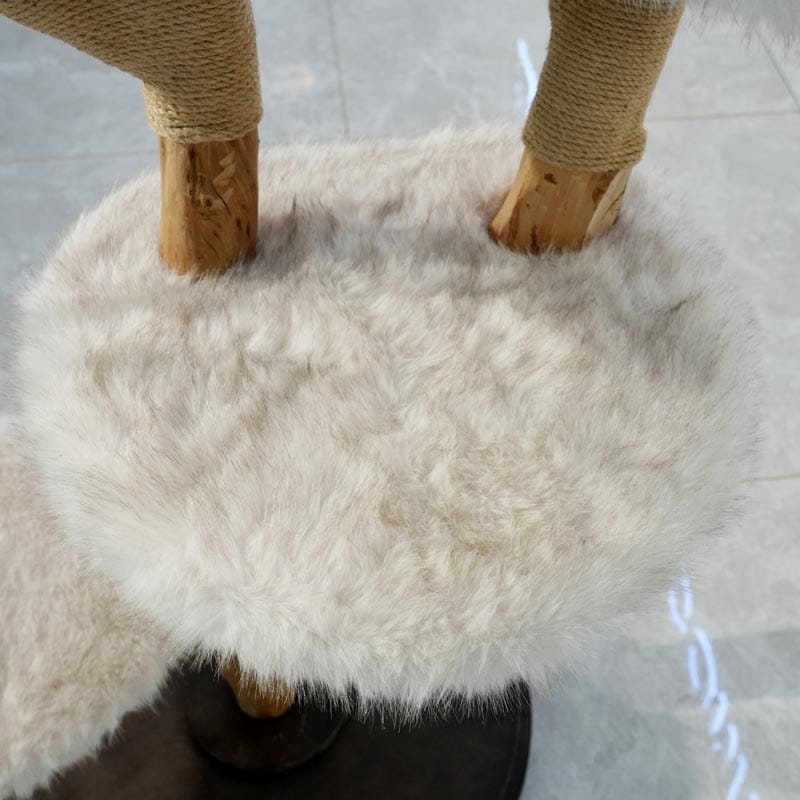
Scratching is not a bad habit. It is a normal cat behavior. Cats scratch to stretch, remove old claw layers, mark territory, and release energy. A cat tree without proper scratching surfaces may fail to solve one of the biggest indoor cat problems: furniture scratching.
A cat tree with scratching posts gives cats a dedicated surface they are allowed to use. However, not all scratching posts perform equally well. A weak, short, or unstable post may not satisfy a cat’s stretching and scratching needs.
Why Sisal Scratching Posts Matter
Sisal is widely used because it offers a rough, satisfying texture that many cats can grip well. A cat tree with sisal scratching posts is often more practical than a decorative tree with limited scratching surfaces.
The best scratching posts are usually:
- Tall enough for full-body stretching
- Firm enough not to wobble
- Wrapped tightly and evenly
- Positioned where cats naturally move
- Available at more than one level
Post Height and Angle
Some cats prefer vertical scratching. Others may enjoy angled or horizontal scratching areas. A well-designed cat tree often combines different surfaces so cats can choose how they want to scratch.
For product manufacturers, scratching post quality is not only about the surface material. It also involves wrapping density, glue quality, post diameter, and how securely the post is fixed to the base or platform.
Materials Decide Durability and User Experience
Material selection has a direct impact on durability, comfort, safety, and perceived product value. A durable cat tree should use materials that can withstand repeated scratching, climbing, and resting.
Common material areas include the frame board, posts, fabric cover, scratching material, connectors, and packaging. Each part plays a different role.
| Component | Better Quality Feature | Buyer Benefit |
|---|---|---|
| Base board | Thick and stable | Helps prevent shaking |
| Support posts | Strong diameter and secure connection | Improves durability |
| Scratching surface | Tight sisal wrapping | Encourages regular scratching |
| Platform board | Firm and properly supported | Safer for jumping and resting |
| Fabric cover | Soft but firmly attached | Improves comfort and appearance |
| Condo structure | Spacious and reinforced | Better for hiding and sleeping |
| Connectors | Strong screws and accurate holes | Easier assembly and safer use |
| Carton packaging | Protective and organized | Reduces delivery damage |
A high quality cat tree should not only feel soft on the surface. It should also be structurally reliable underneath. Buyers often notice quality problems after assembly, so manufacturers should control quality from the inside out.
Platform, Perch, and Condo Design Should Match Real Cat Behavior
Cats do not use a cat tree the way humans look at a product photo. They test whether the perch is stable. They check whether the condo feels safe. They decide whether the top platform gives them a good view. They scratch where the texture feels right.
That is why a multi-level cat tree should be designed around movement flow. Cats should be able to climb naturally from one level to another without awkward jumps or unstable landing points.
Wide Perches Improve Comfort
A top perch is often one of the most used areas of a cat tree. Cats enjoy high resting places because they provide visibility and security. But the perch must be large enough. If it is too small, adult cats may not use it comfortably.
A cat tree with large platform or wide perch is especially useful for adult cats and large breeds.
Condos Provide Privacy
A cat tree with condo gives cats a quiet hiding space. This is useful for shy cats, cats in busy households, or cats that like enclosed resting areas. The entrance should be large enough for easy access, and the interior should not feel cramped.
Multi-Level Layout Encourages Activity
Indoor cats need opportunities to move. A multi-level design gives cats places to jump, climb, turn, scratch, and rest. This can be especially valuable in homes where cats do not have access to outdoor activity.
The best cat tree design is not simply tall. It is usable, balanced, and comfortable from the bottom level to the top perch.
How to Choose a Good Quality Cat Tree for Large Cats
Large cats place more demand on a cat tree. They need more room to sit, stronger support when they jump, and better balance when they scratch. A small or lightweight design may work for kittens but fail to support larger adult cats.
A heavy duty cat tree for large cats should include:
- Wider base
- Thick posts
- Oversized platforms
- Reinforced perches
- Larger condo openings
- Stronger connectors
- Balanced height
- Durable scratching surfaces
The most common mistake is choosing a tall cat tree without checking the actual platform size. A large cat does not only need height. It needs usable space. A wide and stable structure is often more important than extra height.
For wholesalers and retailers, large-cat designs can be a strong product direction because customers who own bigger cats are usually more careful about stability, safety, and durability. They are not only looking for a decorative product. They want a cat tree that solves a real problem.
How to Evaluate Safety Before Buying
Safety should be a central part of any cat tree buying guide. Indoor cats may use the product every day, often when owners are not watching. A safe cat tree should be stable, well-finished, properly assembled, and suitable for the cat’s size.
Buyers should check:
- Whether the base is wide enough
- Whether the cat tree shakes after assembly
- Whether posts are firmly connected
- Whether platforms feel secure
- Whether the fabric is firmly attached
- Whether sharp edges are covered
- Whether small parts are safely fixed
- Whether the product includes clear assembly instructions
A cat tree that feels unstable may scare cats. Once a cat has a bad experience with a shaking structure, it may avoid the product even if the design looks attractive.
For manufacturers, safety is not a single feature. It is the result of correct material selection, accurate drilling, strong hardware, careful edge treatment, and consistent quality inspection.
Common Mistakes Buyers Make When Choosing a Cat Tree
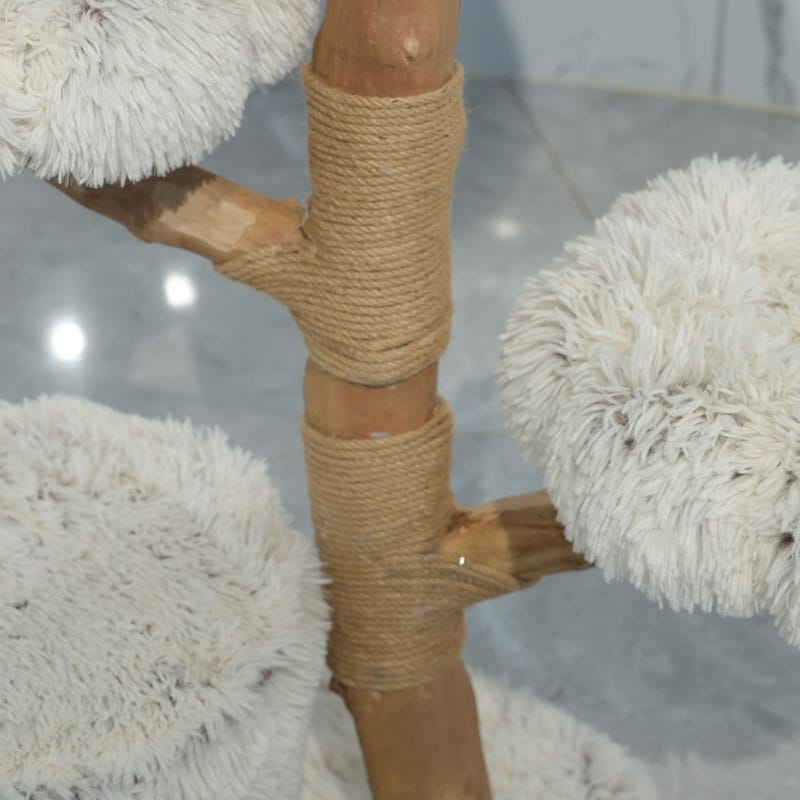
Many buyers focus too much on appearance and not enough on structure. A cat tree can look impressive online but still disappoint users if it is unstable, too small, or difficult to assemble.
Here are common mistakes to avoid.
Choosing Height Over Stability
Tall cat trees are popular, but height must be supported by a strong base and balanced structure. A tall but weak cat tree may shake when cats jump onto the upper levels.
Ignoring the Cat’s Size
A perch that looks large in a product image may not be comfortable for a full-grown cat. Buyers should always check platform dimensions, condo size, and support strength.
Overlooking Scratching Surfaces
If the cat tree has only a small scratching area, cats may continue scratching furniture. Multiple sisal scratching posts improve daily usability.
Buying for Decoration Only
Modern design is valuable, but it should not replace function. A beautiful cat tree that cats do not use has little real value.
Forgetting About Cleaning
Cats shed hair, leave claw marks, and use their resting areas frequently. Surface materials should be practical, not just attractive.
Not Considering Assembly Quality
If holes do not align well or connectors are weak, the cat tree may feel unstable after assembly. Clear instructions and accurate parts are important for customer satisfaction.
What Pet Stores and Wholesale Buyers Should Consider
For pet stores, importers, distributors, and online retailers, choosing a good quality cat tree is not only about one product. It affects customer reviews, repeat purchases, return rates, and brand reputation.
A buyer sourcing cat trees in bulk should evaluate both the product and the manufacturer.
Important B2B factors include:
| Sourcing Factor | Why It Matters |
|---|---|
| Product structure | Affects safety and customer satisfaction |
| Material consistency | Helps maintain stable product quality |
| Custom options | Supports different market needs |
| Packaging design | Reduces shipping damage |
| Assembly accuracy | Improves end-user experience |
| Product range | Helps retailers serve different customers |
| Quality control | Reduces complaints and after-sales issues |
| Private label support | Helps build brand identity |
A reliable cat tree manufacturer should understand not only production, but also how the product performs in real homes. For wholesale buyers, the right supplier should be able to support different sizes, styles, colors, materials, packaging solutions, and market positioning.
If the target customers include families with large cats, multi-cat homes, or small apartments, the manufacturer should be able to recommend suitable structures rather than offering only standard designs.
Manufacturer’s Quality Checklist for a Good Quality Cat Tree
Before placing a wholesale or custom order, buyers can use the following checklist to evaluate whether a cat tree has real market value.
| Checklist Item | Good Quality Standard |
|---|---|
| Base | Wide, firm, and balanced |
| Height | Suitable for the base size |
| Posts | Thick, strong, and securely fixed |
| Scratching areas | Durable sisal or textured surfaces |
| Platforms | Large enough for comfortable resting |
| Perches | Stable and easy to access |
| Condo | Spacious, safe, and well-supported |
| Fabric | Soft, neat, and firmly attached |
| Hardware | Strong and accurate |
| Assembly | Clear instructions and aligned parts |
| Packaging | Protective for long-distance shipping |
| Customization | Available for size, color, material, and branding |
A manufacturer should inspect the product from multiple angles: structure, material, appearance, assembly, safety, and packaging. For B2B buyers, consistent quality is more important than one attractive sample. The goal is to deliver products that remain stable and reliable across repeated orders.
How Custom Cat Tree Manufacturing Adds Market Value
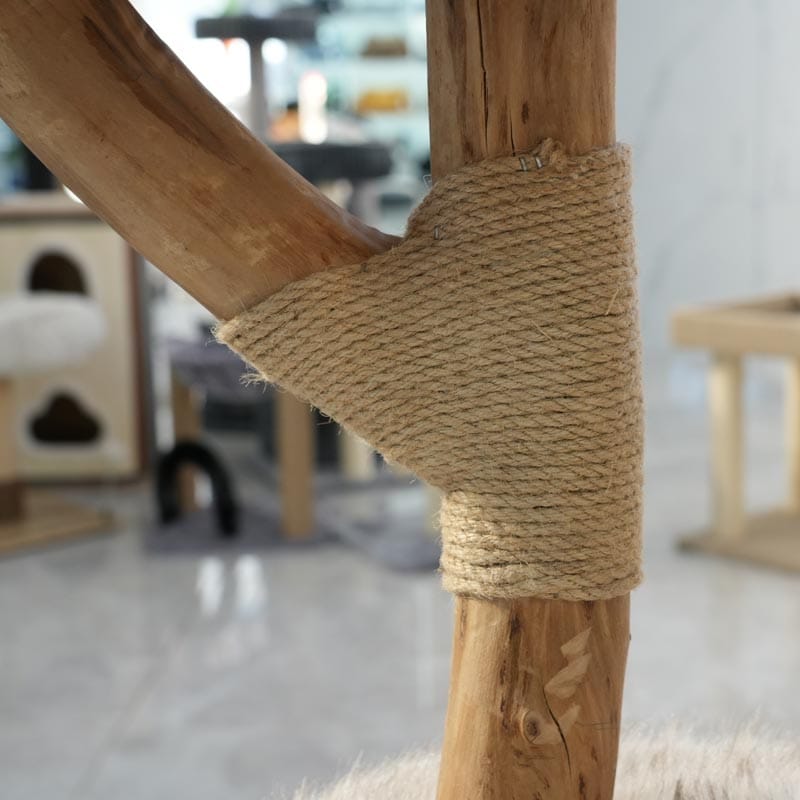
For pet product brands and retailers, standard products may not always meet market needs. Custom manufacturing can help create a more competitive product line.
A custom cat tree manufacturer can support adjustments such as:
- Product height
- Platform size
- Base shape
- Fabric color
- Scratching material
- Condo design
- Packaging layout
- Private label branding
- Product structure
- Market-specific style development
Customization is especially useful when targeting specific customer groups, such as apartment owners, large-cat households, multi-cat homes, or buyers looking for modern indoor pet furniture.
For example, a retailer focused on small-space living may need compact cat trees with vertical layouts. A distributor serving large-cat owners may need reinforced structures with wider perches. A private-label brand may want a consistent color palette, packaging design, and product family.
This is where manufacturer experience becomes important. A good manufacturer does not only produce what is requested. It helps buyers improve the product before mass production.
Conclusion
Choosing a good quality cat tree requires more than comparing styles. A truly useful cat tree should be stable, durable, comfortable, and designed for how cats actually behave indoors. Buyers should look closely at the base, support posts, platform size, scratching surfaces, materials, condo design, safety details, and long-term usability.
For indoor cats, the right cat tree provides vertical space, exercise, scratching opportunities, resting comfort, and a sense of territory. For pet stores, distributors, wholesalers, and private-label brands, the right cat tree can also improve customer satisfaction and strengthen product competitiveness.
As a manufacturer, the focus should always be on structure first, appearance second. A well-designed cat tree should not only look appealing in a product image. It should perform well in real homes, support daily use, and meet the needs of cats, owners, and business buyers.
If you are sourcing wholesale, OEM, or custom cat tree products, choosing a manufacturer with strong structural design, material control, packaging experience, and flexible customization support can help you build a more reliable and market-ready product line.
FAQ
What is a good quality cat tree?
A good quality cat tree is stable, durable, comfortable, and designed around real cat behavior. It should include a strong base, secure posts, useful scratching areas, comfortable platforms, and safe resting spaces.
What type of cat tree is best for indoor cats?
The best cat tree for indoor cats usually includes multiple levels, sisal scratching posts, a stable base, comfortable perches, and at least one resting or hiding area. The right size depends on the cat’s age, size, and activity level.
How do I know if a cat tree is sturdy?
Check the base width, post thickness, platform support, connector quality, and overall balance after assembly. A sturdy cat tree should not shake easily when a cat jumps, climbs, or scratches.
Are sisal scratching posts important?
Yes. Sisal scratching posts help cats stretch, scratch, and mark territory. A cat tree with durable sisal surfaces is more likely to satisfy natural scratching behavior and reduce furniture scratching.
What should wholesale buyers check before ordering cat trees?
Wholesale buyers should check structure, material consistency, packaging strength, assembly accuracy, customization options, and quality control standards. A reliable manufacturer should provide stable product quality across bulk orders.