Table of Contents
Introduction
A cat tree for small spaces has become an important product direction for modern pet furniture buyers. As more cat owners live in apartments, studios, shared homes, and smaller urban spaces, they still want products that support climbing, scratching, resting, and play without taking up too much floor area.
For pet brands, wholesalers, distributors, and private-label buyers, this creates a valuable opportunity. A compact cat tree is not simply a smaller version of a standard cat tree. It must balance vertical function, stable structure, comfortable resting areas, scratching surfaces, easy placement, and modern home style.
A poorly designed small cat tree may save floor space but fail in real use. It may wobble, provide platforms that are too small, or lack enough scratching value. A good cat tree for small spaces should make limited space work harder.
As a professional cat furniture manufacturer, Hanyang supports global pet brands, wholesalers, distributors, and importers with cat trees, cat beds, cat scratchers, and OEM/ODM pet furniture solutions.
Why Small-Space Cat Trees Are in Demand
Small-space living changes how people choose pet furniture. Many customers do not want oversized cat trees that dominate the room. They want products that fit beside a sofa, near a window, in a bedroom corner, or beside a work desk.
However, cats still need environmental enrichment. Indoor cats benefit from climbing opportunities, scratching outlets, hiding areas, and comfortable resting spaces. International Cat Care recommends creating cat-friendly homes with suitable scratching areas, resting places, and vertical opportunities.
This means a compact cat tree should not remove important functions. Instead, it should combine several functions into a smaller footprint.
A cat tree for small spaces is especially suitable for:
| Market Scenario | Product Need |
|---|---|
| Apartment living | Compact footprint and vertical use |
| Studio homes | Multi-function design in one product |
| First-time cat owners | Easy assembly and simple placement |
| Online retail | Clear product photos and practical features |
| Private-label brands | Custom colors, materials, and packaging |
| Urban pet stores | Space-saving display and practical selling points |
For B2B buyers, this category can support both entry-level and premium product lines, depending on material, structure, and design style.
Compact Does Not Mean Weak
One of the biggest mistakes in compact cat tree design is making the product small at the expense of stability. A cat tree for small spaces must still handle jumping, climbing, scratching, and repeated daily movement.
Because compact products often have smaller bases, structural balance becomes even more important. The base should be wide enough for the product height. The main post should connect firmly to the base. Platforms should not extend too far from the center of gravity.
A stable compact cat tree usually includes:
| Design Point | Why It Matters |
| Wider or reinforced base | Helps reduce wobbling |
| Balanced platform placement | Prevents the structure from leaning |
| Strong post connection | Supports scratching and climbing |
| Practical height | Uses vertical space without becoming unstable |
| Secure hardware | Improves long-term assembly strength |
| Anti-slip bottom design | Helps the product stay in place |
For buyers reviewing samples, stability should be tested after full assembly. Push the product gently from different directions, check whether the post loosens, and confirm whether the platform feels secure.
A compact cat tree that feels stable will build customer trust. A compact cat tree that shakes may quickly receive poor feedback.
How to Use Vertical Space Efficiently
The main advantage of a cat tree for small spaces is vertical design. Instead of using a large floor area, the product should create a useful climbing path upward.
A good vertical layout gives cats several activity zones:
A lower entry point.
A scratching zone.
A middle resting platform.
A top perch or observation area.
Optional hiding or enclosed space.
This design allows cats to climb, scratch, rest, and observe without needing a large footprint.
VCA Hospitals explains that cat trees can provide climbing, hiding, and playing opportunities for indoor cats, and that they are often best placed in areas where the family spends time. Indoor cat enrichment is closely connected to how well the product fits real home life.
For OEM development, buyers should think about how the cat enters and moves through the product. If the first platform is too high, smaller or older cats may avoid it. If the top perch is too small, cats may not use it for resting. If the scratching post is hidden behind the structure, it may not become part of daily behavior.
Best Product Structures for Small Spaces
There are several practical structures for compact cat tree development. The right choice depends on target customers and sales channels.
| Structure Type | Best For | Key Selling Point |
| Single-post cat tree with bed | Small apartments and first-time cat owners | Simple, compact, easy to place |
| Double-layer cat tree | Cats that need rest and scratch functions | More value within limited space |
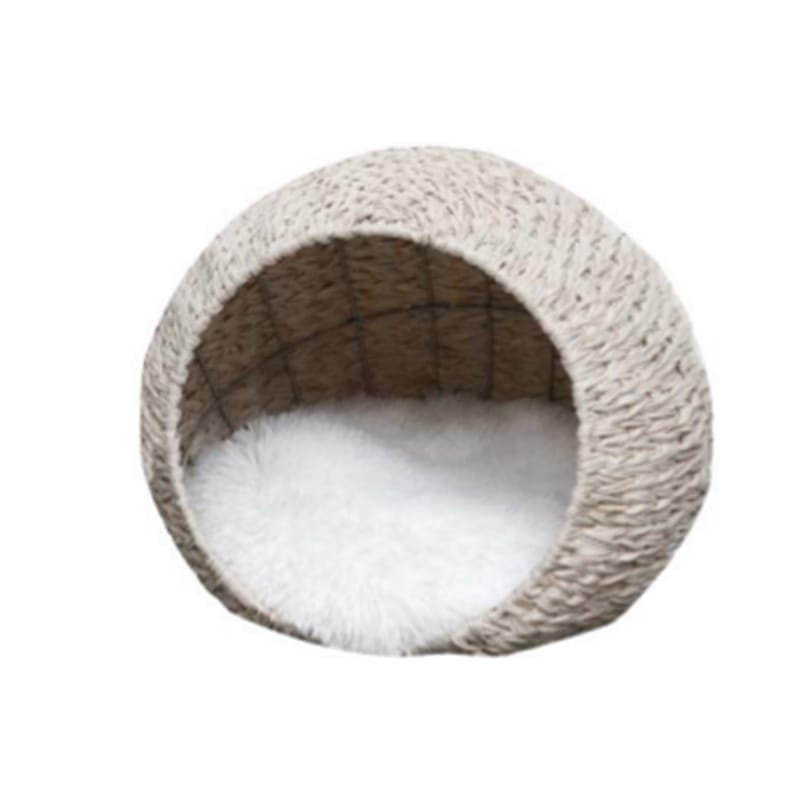
| Compact cat tree with cave | Cats that like privacy | Resting and hiding in one design |
| Small cat tree with inclined scratcher | Active cats and playful kittens | Scratching and climbing combination |
| Narrow vertical cat tree | Urban homes with limited floor area | More height, less footprint |
| Modern compact wooden cat tree | Design-focused customers | Furniture-style appearance |
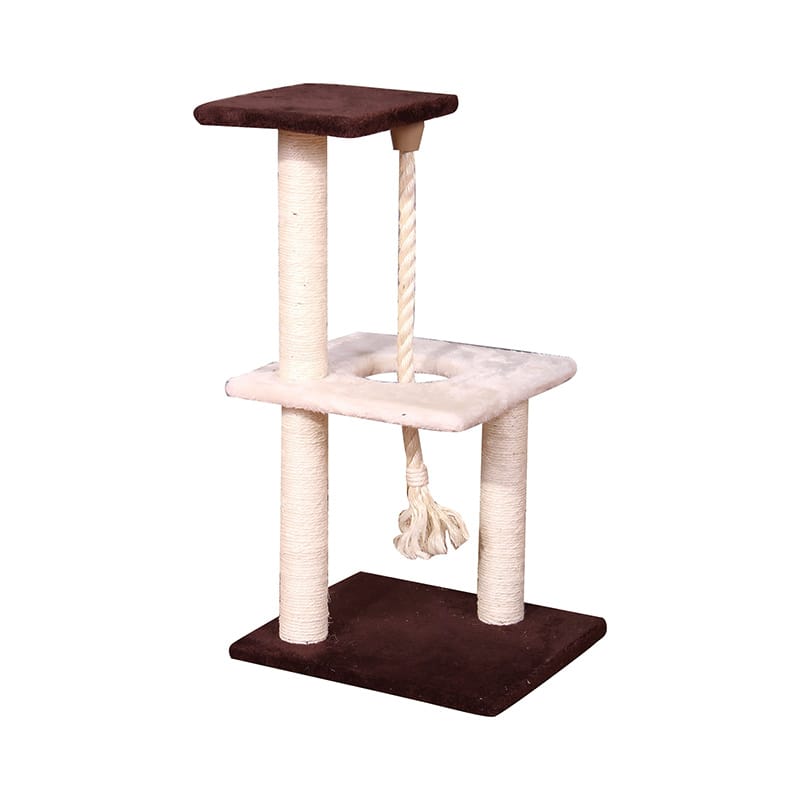
Hanyang’s simple single post cat tree with bed is an example of a compact vertical design with a sisal post, plush bed, and small footprint for apartment-style use.
For buyers developing a small-space product line, it is better to create several compact designs instead of relying on one model. This allows different customers to choose based on cat size, room layout, and preferred function.
Scratching Function Must Not Be Removed
A cat tree for small spaces should still include a real scratching area. Scratching is a normal cat behavior, not a decorative feature. Cats scratch to stretch, maintain claws, and mark their environment.
AAHA recommends stable scratching posts and different scratching options as part of indoor enrichment. For compact cat trees, this means scratching surfaces should be visible, stable, and easy for cats to access.
Common scratching options include:
Sisal-wrapped vertical posts.
Inclined sisal boards.
Jute or natural-fiber surfaces.
Replaceable scratching panels.
Sisal-covered side panels.
The scratching area should be long enough for a comfortable stretch. If the post is too short, cats may not use it fully. If the surface is unstable, cats may avoid it.
For B2B buyers, sisal quality should be checked carefully. The rope should be wrapped tightly, the ends should be secure, and the post should not loosen after repeated movement.
Platform and Bed Design for Compact Cat Trees
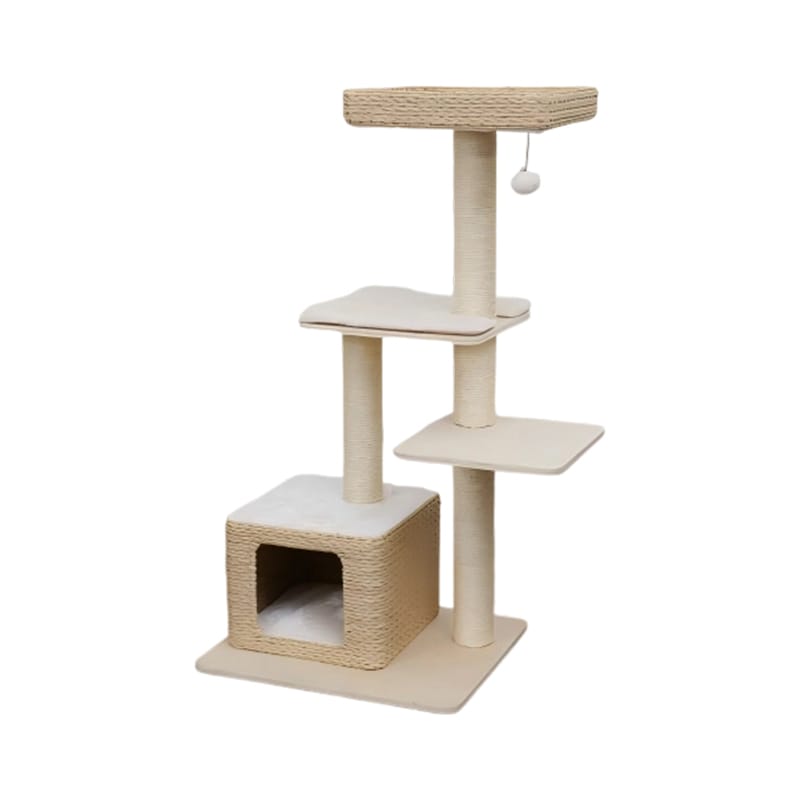
Small-space cat trees often fail because their platforms are too small to be useful. A platform should not only look good in photos. It should allow the cat to sit, turn, and rest comfortably.
For compact designs, every platform must have a clear purpose. A lower platform may help cats climb. A top perch may provide observation. A side bed may support resting. A cave may provide privacy.
A good compact platform design should consider:
Usable surface area.
Edge height and comfort.
Softness of plush or cushion.
Movement path between levels.
Whether the platform blocks scratching access.
Whether the bed is removable or easy to clean.
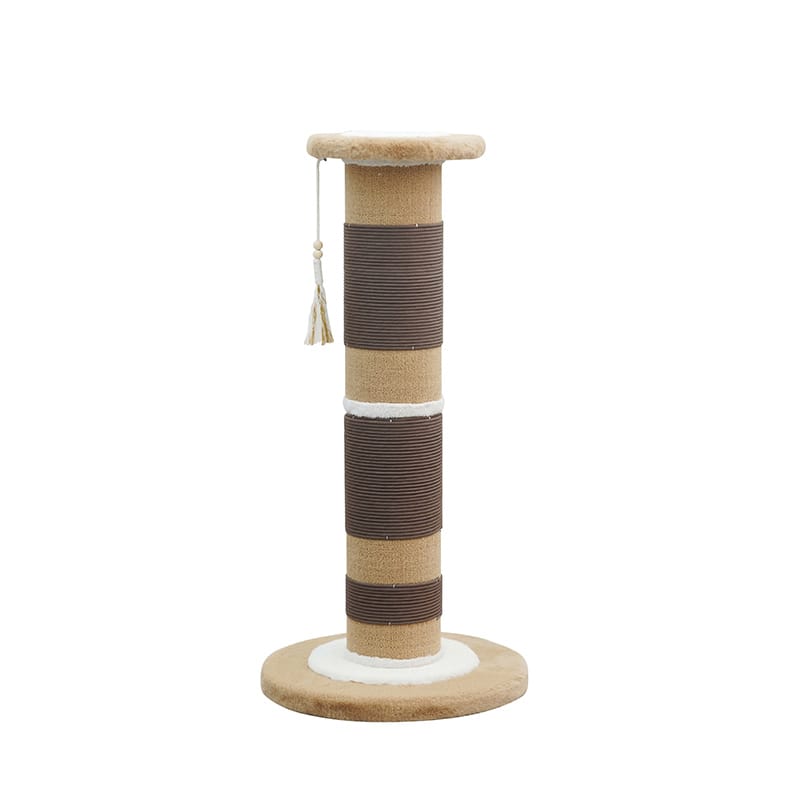
Hanyang’s multifunctional small cat tree combines compact structure with a sisal post, grooming brush, plush perch, and play features, making it suitable for buyers looking for multi-functional apartment cat furniture.
Modern Home Style Matters More in Small Rooms
In a small room, pet furniture is highly visible. A large or messy-looking product can make the space feel crowded. This is why modern design matters in the small cat tree category.
Customers often prefer neutral colors, soft textures, rounded shapes, wood accents, and clean silhouettes. A compact cat tree should look like part of the home, not a temporary object placed in the corner.
For private-label buyers, this creates room for product differentiation. You can develop different design directions, such as:
Minimalist apartment style.
Natural wood style.
Soft plush comfort style.
Neutral modern style.
Compact playful style.
Premium furniture-style cat tree.
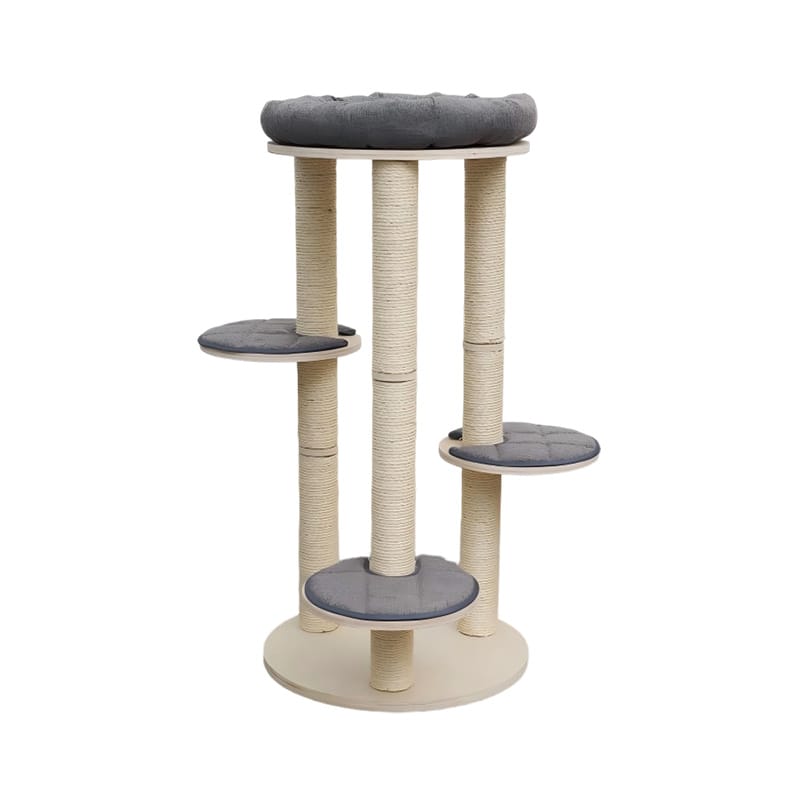
Hanyang’s modern 4 tier cat tree shows how a light wood frame, plush platforms, mixed-texture posts, and a compact vertical layout can support modern home décor needs.
OEM Customization Ideas for Small-Space Cat Trees
A cat tree for small spaces is highly suitable for OEM and private-label customization. Buyers can adjust the product based on target market, room size, customer preferences, and brand positioning.
Useful OEM customization options include:
| Custom Area | Possible Options |
| Height | Low, medium, or vertical apartment-friendly structure |
| Base size | Compact square base, corner base, reinforced base |
| Material | MDF, plywood, solid wood parts, sisal, plush, jute |
| Color | Beige, gray, white, wood tone, seasonal colors |
| Function | Bed, cave, toy, grooming brush, scratching board |
| Surface | Plush, removable cushion, woven texture, sisal mat |
| Packaging | Private-label carton, manual, barcode, product series design |
| Branding | Logo tag, custom name, catalog support |
The key is to avoid customization that only changes appearance. True OEM value comes from structure, usability, and market fit.
For example, a brand targeting apartment customers may need a compact base, neutral color, vertical design, and simple assembly. A brand targeting multi-cat homes may need stronger posts, multiple perches, and extra scratching areas. A brand targeting modern décor customers may need wood elements, smoother finishes, and cleaner lines.
Packaging and Assembly Are Critical for Online Sales
Compact cat trees are often sold online because they are easier to ship than large furniture-style models. This makes packaging and assembly especially important.
A good product should be easy for customers to assemble without confusion. Hardware should be organized. Instructions should be clear. Parts should be labeled when necessary. Wood panels, plush cushions, and posts should be protected from scratches and compression.
Important packaging checks include:
Carton strength for export shipping.
Separate packing for hardware.
Protection for corners and panels.
Clear assembly manual.
Stable internal packing layout.
Reduced movement inside the carton.
For online sellers, poor assembly experience can cause negative reviews even when the product itself is well designed. A compact cat tree should feel simple, organized, and reliable from the moment the customer opens the box.
How Buyers Should Evaluate a Sample
Before bulk production, buyers should inspect the sample from both the cat’s perspective and the customer’s perspective.
A practical sample review should include:
| Test Area | What to Check |
| Stability | Does the tree wobble when pushed gently? |
| Base | Is it wide and strong enough for the height? |
| Platform size | Can a cat sit and turn comfortably? |
| Scratching surface | Is the sisal tight and accessible? |
| Assembly | Are holes aligned and hardware complete? |
| Fabric quality | Is the plush secure and comfortable? |
| Edges | Are panels smooth and safe to touch? |
| Packaging | Are parts protected during shipping? |
Buyers should also check whether the product still feels stable after assembly and movement. If a sample becomes loose quickly, the design or hardware may need improvement before mass production.
Product Page Content That Helps Small Cat Trees Convert
A cat tree for small spaces needs product copy that explains both space-saving value and cat-friendly function.
Instead of writing only “compact and durable,” a stronger product page should explain:
Where the product can be placed.
What functions it combines.
How the base supports stability.
What scratching material is used.
Whether it includes a bed, cave, or perch.
How it fits apartment living.
What customization options are available for B2B buyers.
A better product description could be:
“Designed for apartment living and compact homes, this cat tree for small spaces combines a stable base, sisal scratching post, soft resting perch, and vertical activity design to give indoor cats a practical place to climb, scratch, and relax without occupying too much floor space.”
This kind of copy connects user needs, product benefits, and SEO keywords naturally.
Building a Small-Space Cat Tree Product Line
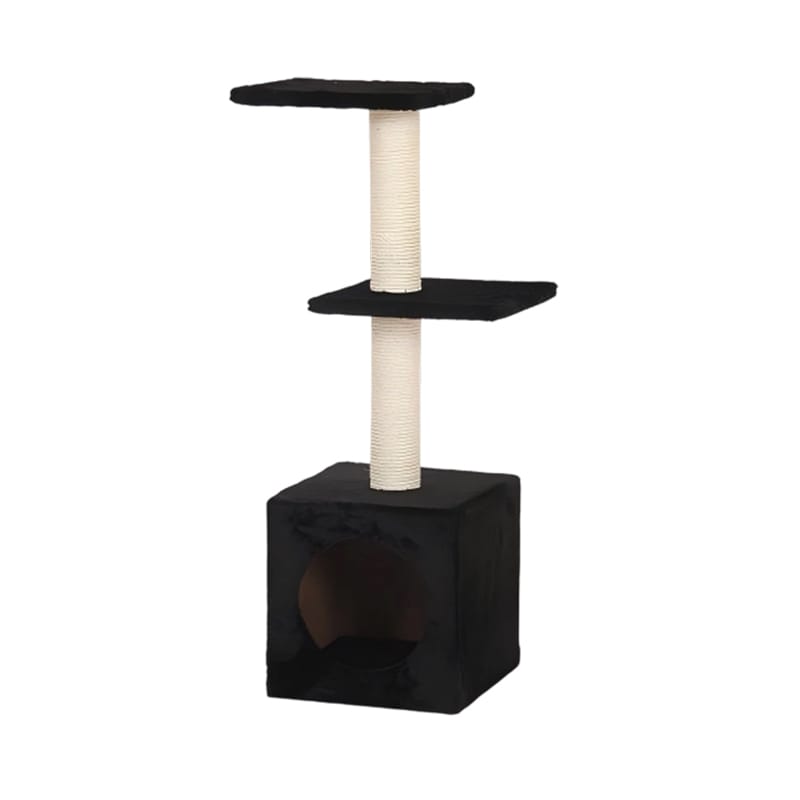
A single compact cat tree can sell well, but a complete product line gives brands more flexibility. Buyers can build a small-space series for different customer types.
| Product Line Type | Target Customer |
| Basic compact cat tree | First-time cat owners |
| Cat tree with bed | Cats that like elevated resting |
| Cat tree with cave | Cats that prefer hiding and privacy |
| Compact scratching cat tree | Homes needing furniture protection |
| Modern wooden compact cat tree | Design-conscious customers |
| Multi-function apartment cat tree | Customers wanting more value in one product |
This approach allows a brand to cover different price levels, home styles, and cat behavior needs without moving away from the compact furniture category.
Buyers can explore more products in Hanyang’s cat furniture collection or request a custom solution through the Contact Us page.
Conclusion
A cat tree for small spaces is not just a smaller cat tree. It is a product that must use limited room intelligently while still supporting climbing, scratching, resting, and indoor enrichment.
For pet brands, wholesalers, distributors, and private-label buyers, this category offers strong market potential because it solves a real customer problem: many people want cat furniture that works in apartments and compact homes without sacrificing function.
The best small-space cat tree combines stable structure, vertical design, useful scratching surfaces, comfortable platforms, modern appearance, easy assembly, and reliable packaging. When these details are handled well, the product becomes easier to sell and more valuable for long-term product line development.
Hanyang supports OEM and ODM cat tree development for global pet furniture buyers, including compact designs, custom materials, private-label packaging, and export-ready production support.
FAQ
What is a cat tree for small spaces?
A cat tree for small spaces is a compact cat furniture product designed for apartments, studios, bedrooms, and smaller homes. It usually combines climbing, scratching, resting, and play functions within a smaller footprint.
Is a small cat tree suitable for indoor cats?
Yes. A small cat tree can be suitable for indoor cats if it includes stable structure, usable platforms, scratching surfaces, and a comfortable resting area. The key is smart vertical design rather than size alone.
What should buyers check before ordering compact cat trees?
Buyers should check base stability, post strength, platform size, sisal quality, fabric finishing, assembly process, packaging protection, and whether the design fits the target market.
Can small cat trees be customized for private-label brands?
Yes. Small cat trees can be customized in size, color, material, structure, scratching surface, cushion style, packaging, and branding for OEM and private-label programs.
Why work with Hanyang for compact cat tree manufacturing?
Hanyang provides cat furniture manufacturing support for global buyers, including product development, OEM/ODM customization, material selection, packaging support, and stable production for bulk orders.