A sisal cat scratching post may look like a simple pet accessory, but its real performance depends on a combination of material quality, structural stability, usable scratching height, surface tension, and manufacturing consistency.
For cat owners, the main concern is whether the product will attract the cat and protect household furniture. For retailers, importers, and private-label brands, the questions are more complex. Will the scratching surface remain tight after repeated use? Does the base stay stable when a cat stretches against the post? Can worn components be replaced? Will the product arrive without loose rope, exposed fasteners, or damaged corners?
These details determine whether a product receives positive feedback or becomes a source of returns and complaints.
This guide explains how a sisal cat scratching post should be designed, manufactured, inspected, and customized for different markets. It also shows how buyers can distinguish a decorative post from a genuinely durable cat scratching product.
Key Takeaways
- Cats scratch as part of normal stretching, claw maintenance, and territorial behavior.
- Sisal provides a coarse, resistant surface that supports repeated claw engagement.
- Post height and stability usually matter more than decorative accessories.
- Sisal rope and sisal fabric create different scratching experiences and wear patterns.
- A weak base or loose connection can make an otherwise attractive product unsuccessful.
- Replaceable posts and scratching surfaces can extend the usable life of a product.
- Retail buyers should evaluate materials, fasteners, wrapping tension, packaging, and assembly together.
- OEM development should begin with the target cat size, retail channel, and expected product position.
Table of Contents
Why Cats Need a Dedicated Scratching Surface
Scratching is not simply an unwanted habit. It is a normal behavior that serves several physical and behavioral purposes.
Cats may scratch to:
- stretch their back, shoulder, and leg muscles;
- remove worn outer claw layers;
- leave visible and scent-based territorial marks;
- release energy after sleeping or playing;
- interact with an important area of their environment.
Veterinary guidance from the Cornell Feline Health Center explains that scratching is normal feline behavior and recommends redirecting it toward suitable surfaces rather than trying to eliminate it.
The animal behavior guidance on destructive scratching also recommends offering different scratching materials and orientations because individual cats may prefer vertical, horizontal, or angled surfaces.
This has an important implication for product development: a sisal cat scratching post must do more than look attractive. It has to provide enough resistance, space, and stability for a cat to complete the behavior comfortably.
What Is Sisal and Why Is It Used for Cat Scratching Posts?
Sisal is a natural leaf fiber obtained from the Agave sisalana plant. The material is widely used to produce rope, twine, mats, and other products that require a firm fibrous structure. More information about the plant and its traditional uses is available in this overview of sisal fiber.
The value of sisal in cat furniture comes from its texture.
When a cat pulls its claws across a sisal surface, the fibers create resistance without feeling completely rigid. This resistance allows the claws to engage with the material, which is one reason sisal is commonly used on vertical posts and climbing furniture.
A Coarse and Distinctive Texture
Sisal feels noticeably different from upholstery and household carpet. That distinction can help create a clearer separation between an approved scratching surface and ordinary home furnishings.
Resistance to Repeated Scratching
A properly produced sisal cat scratching post can tolerate repeated claw contact better than many soft decorative fabrics. Actual durability, however, still depends on fiber quality, rope thickness, wrapping tension, adhesive use, and the construction beneath the sisal.
Compatibility with Multiple Product Forms
Sisal can be used on:
- standalone scratching posts;
- multi-post scratching towers;
- cat trees with beds or platforms;
- inclined scratching boards;
- wall-mounted scratching panels;
- replaceable scratching columns;
- integrated cat furniture systems.
This versatility allows manufacturers to develop an entire product family around the same basic material.
Sisal Rope vs Sisal Fabric vs Other Scratching Materials
Not every surface marketed as a scratching material performs in the same way. Buyers should evaluate both the material itself and the way it is attached to the product.
| Material | Surface Character | Durability Potential | Maintenance | Best Application |
|---|---|---|---|---|
| Sisal rope | Deep, segmented texture | High when tightly wrapped | Sections may be rewrapped or replaced | Vertical posts and cat trees |
| Sisal fabric | Flatter and more uniform | High with strong backing | Panels may be replaced | Scratching boards and modern posts |
| Jute | Softer natural texture | Moderate | Worn areas may need replacement | Decorative posts and mixed-material designs |
| Corrugated cardboard | Lightweight and shreddable | Lower under heavy use | Insert is usually replaced | Horizontal and angled scratchers |
| Carpet | Soft looped or cut surface | Varies by construction | Difficult to repair neatly | Platforms and selected post designs |
| Natural wood | Firm and irregular | Depends on wood species | May be sanded or replaced | Rustic or nature-inspired furniture |
Sisal Rope
Sisal rope creates visible horizontal ridges around the post. Many cats can hook their claws between these rope lines, producing a strong tactile response.
For manufacturers, the most important variables are:
- rope diameter;
- consistency of the fiber;
- wrapping tension;
- number of turns;
- start and end fixation;
- adhesive distribution;
- gaps between adjacent rope lines.
Loose wrapping can cause the rope to rotate, sag, or slide down the column. Once a gap forms, wear often accelerates around the exposed area.
Sisal Fabric
Sisal fabric produces a more continuous surface. It can support cleaner, more minimalist product designs because there are no visible rope coils.
Fabric-covered panels can also be easier to replace when designed as separate components. However, the fabric needs a strong backing and secure edge treatment. Weakly attached edges may curl or peel after repeated claw pulling.
Jute
Jute offers a natural appearance and can complement sisal in decorative products. It is generally softer, so it may not provide the same long-term resistance in the most heavily scratched zones.
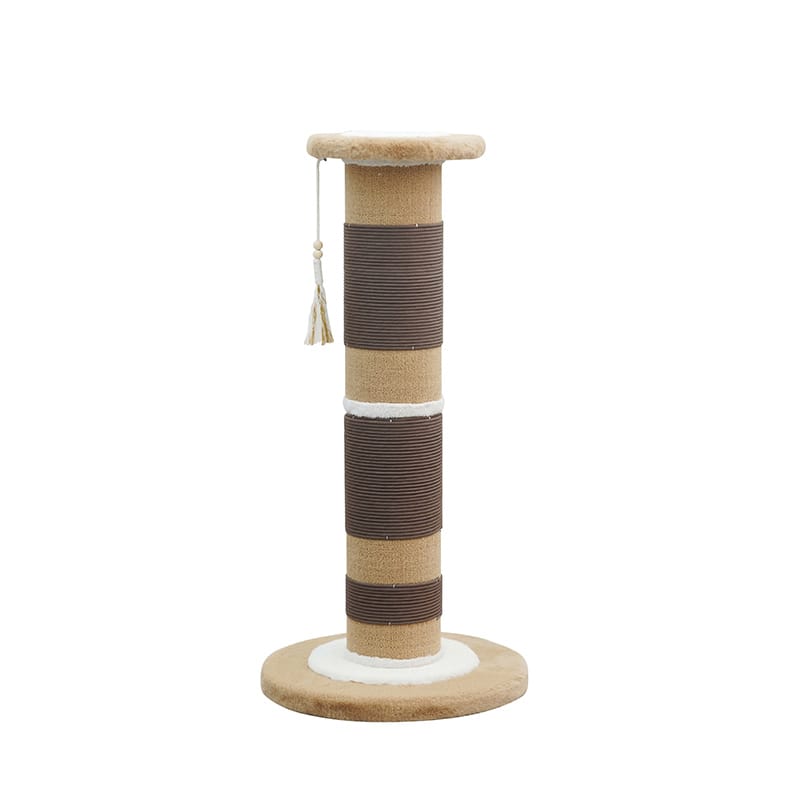
A mixed-material product can use sisal on the primary vertical surface and jute on secondary columns or decorative panels. The three-tier sisal and jute scratching post demonstrates how both materials can be integrated into one structure.
Cardboard and Carpet
Cardboard is useful for horizontal scratchers and replaceable inserts, while carpet can add softness to beds and platforms. Neither material must be treated as a direct substitute for sisal in every design.
The best material depends on the intended orientation, product lifespan, cat size, cleaning expectations, and retail positioning.
How Tall Should a Sisal Cat Scratching Post Be?
There is no single height that works for every cat. A practical design should allow the target cat to extend its body without immediately reaching the top of the scratching area.
The scratching post construction recommendations published by a humane society suggest that a post should be tall enough for a cat to stretch fully and should have a sufficiently stable base to prevent tipping.
Compact Posts
Compact models are useful for:
- kittens;
- smaller cats;
- apartment households;
- bedside or sofa-side placement;
- secondary scratching stations;
- products that combine a post with a bed or toy.
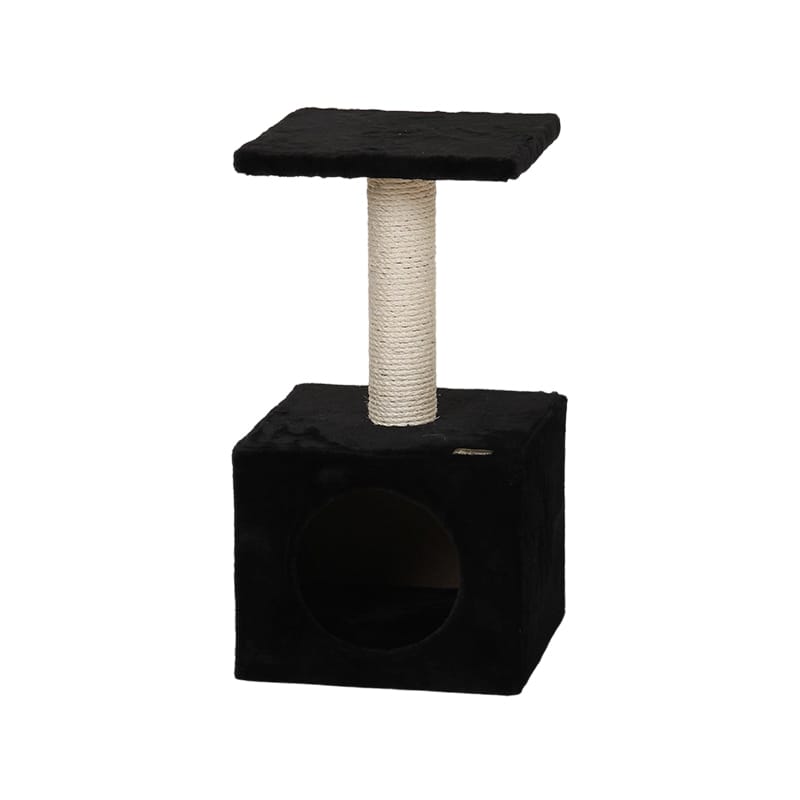
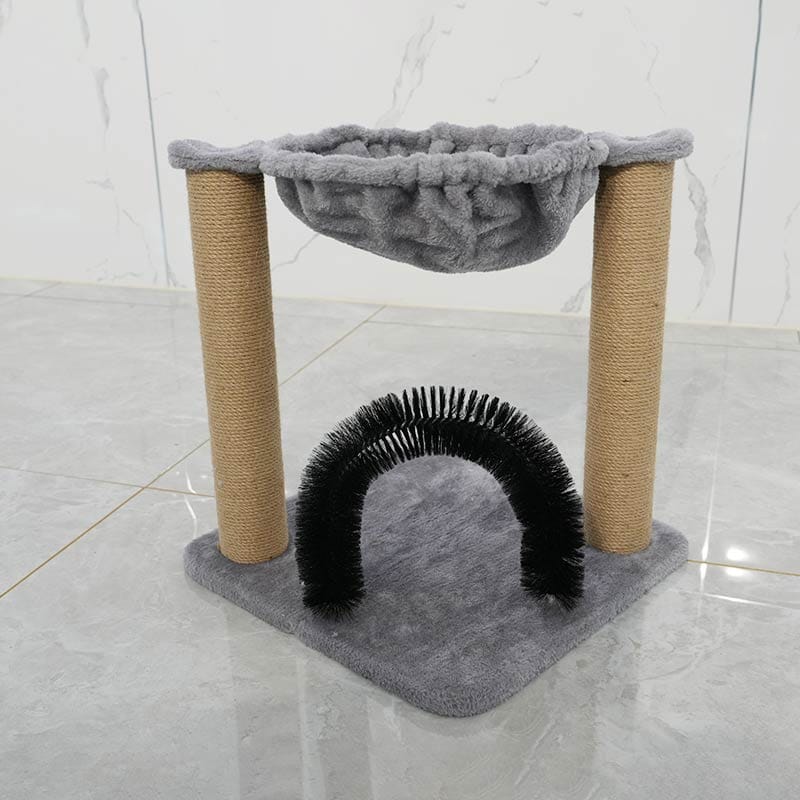
For example, a compact sisal cat scratching post with a resting surface can combine scratching, resting, and play functions without occupying the floor area of a full cat tree.
A compact product should not be described as a full-stretch post for every adult cat. Its strongest selling points are usually accessibility, multifunctionality, and space efficiency.
Standard Vertical Posts
A medium or tall vertical post is intended to support a more complete stretch. The post should offer enough uninterrupted sisal area without a platform, toy, connector, or decorative element blocking the main scratching zone.
Retail buyers should measure the usable scratching height rather than looking only at total product height.
A product may be 80 centimeters tall, but if the lower section is covered by a bed and the upper section contains a perch connector, the actual scratching surface can be much shorter.
Extra-Tall Posts
Tall products are suitable for:
- large adult cats;
- active indoor cats;
- customers seeking full-body stretching;
- multi-cat households;
- cat trees that combine scratching and climbing.
As height increases, the post diameter, base dimensions, connection system, and overall weight distribution must also be reviewed. Simply making a narrow post taller can increase wobble and tipping risk.
Why Stability Determines Whether Cats Use the Post
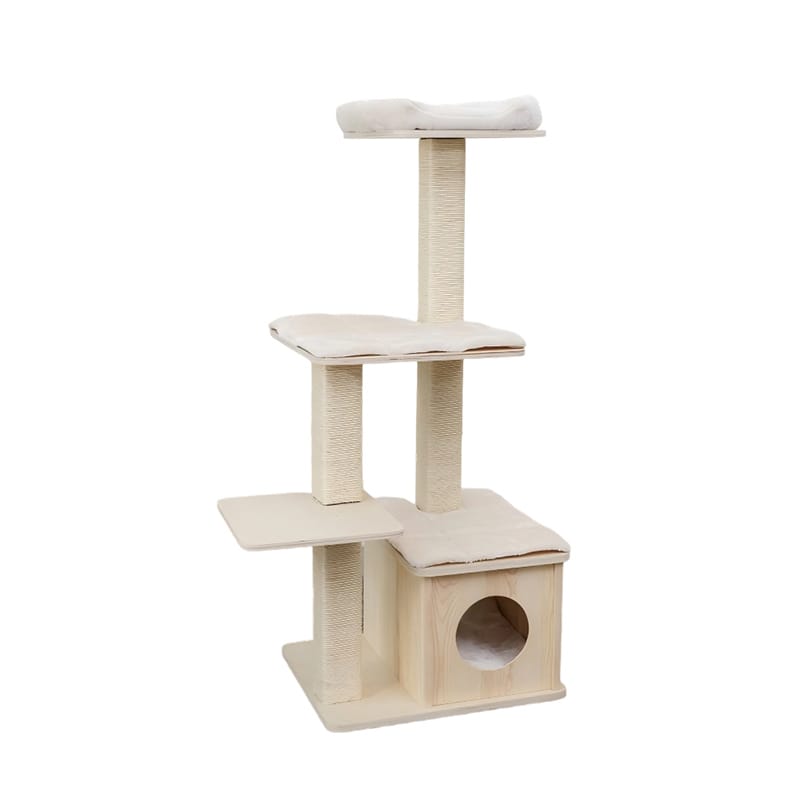
A visually attractive sisal cat scratching post can still fail if it moves when a cat applies force.
Cats frequently pull downward and backward while scratching. This creates leverage against the post and transfers force into the base and connection points. If the structure rocks, twists, or slides, the cat may avoid it and return to a more stable surface such as a sofa arm.
Base Width
The base should be proportionate to the post height and expected user weight. A taller post generally requires a wider, heavier, or better-balanced base.
A large base alone does not guarantee stability. Its thickness, material density, anti-slip treatment, and connection to the post also matter.
Base Shape
Common base shapes include:
- square bases;
- rectangular bases;
- circular bases;
- corner-fitting bases;
- weighted platform bases;
- furniture-integrated bases.
Square and rectangular bases are straightforward to manufacture and package. Corner bases can save visible floor space, while integrated products can use beds or platforms to distribute the structure’s weight.
Post Diameter
A narrow column may flex under aggressive scratching. Increasing the diameter can improve rigidity and provide a larger scratching surface, although it also affects material use and carton dimensions.
The correct diameter should be determined by:
- product height;
- post core material;
- target cat size;
- base construction;
- number of supporting posts;
- intended load on attached platforms.
Fasteners and Connection Points
A post may be attached with threaded rods, screws, inserts, brackets, or a combination of hardware. Buyers should check whether the connection can remain tight after repeated movement and assembly.
A well-designed connection should:
- align correctly during assembly;
- avoid exposed sharp hardware;
- resist rotation;
- remain accessible for maintenance;
- avoid damaging the post core when tightened.
How Sisal Rope Wrapping Affects Durability
The exterior material receives the most attention, but the wrapping process often determines how long a sisal cat scratching post remains usable.
Controlled Tension
Each rope line should be wound tightly against the previous line. Uneven tension creates soft sections that move when a cat scratches.
Consistent Coverage
Visible gaps expose the post core and create concentrated wear points. The rope should cover the intended area continuously unless uncovered sections are part of the design.
Secure Starting and Finishing Points
The rope ends should be fixed where cats cannot easily pull them loose. Staples, nails, adhesive, recessed channels, or mechanical retainers may be used depending on the product design.
Any metal fastener must be positioned so that it does not become exposed during normal scratching.
Adhesive Application
Adhesive can help prevent rotation and slippage, but more adhesive is not automatically better. Excess application may harden the surface, create visible residue, or produce inconsistent texture.
Manufacturers should control:
- adhesive type;
- application amount;
- drying time;
- bonding coverage;
- odor after curing;
- compatibility with the rope and post core.
Rope Density and Fiber Consistency
The rope should have consistent thickness throughout the batch. Significant variation can create an uneven finished surface and make production specifications difficult to repeat.
For wholesale buyers, a pre-production sample should use the same rope specification planned for mass production.
Matching Scratching Post Designs to Different Customer Needs
A strong product line should not consist of the same post in several colors. Different customer groups require different structures.
For Apartment Owners
Space-conscious buyers often prefer a compact sisal cat scratching post that combines two or more functions.
Useful features include:
- an integrated top bed;
- a small perch;
- a hanging toy;
- a grooming brush;
- an angled scratching board;
- a corner-fitting base.
For Large Cats
Large cats need more usable height, wider surfaces, stronger post cores, and greater base stability.
The design should avoid small top perches that do not support the cat’s body comfortably. If a resting platform is included, its dimensions and supported load should be specified separately from the post itself.
For Multi-Cat Households
A single narrow scratching area may create competition. Multi-cat products can include:
- two or more scratching posts;
- scratching surfaces at different heights;
- several resting positions;
- separate access routes;
- a combination of vertical and angled surfaces.
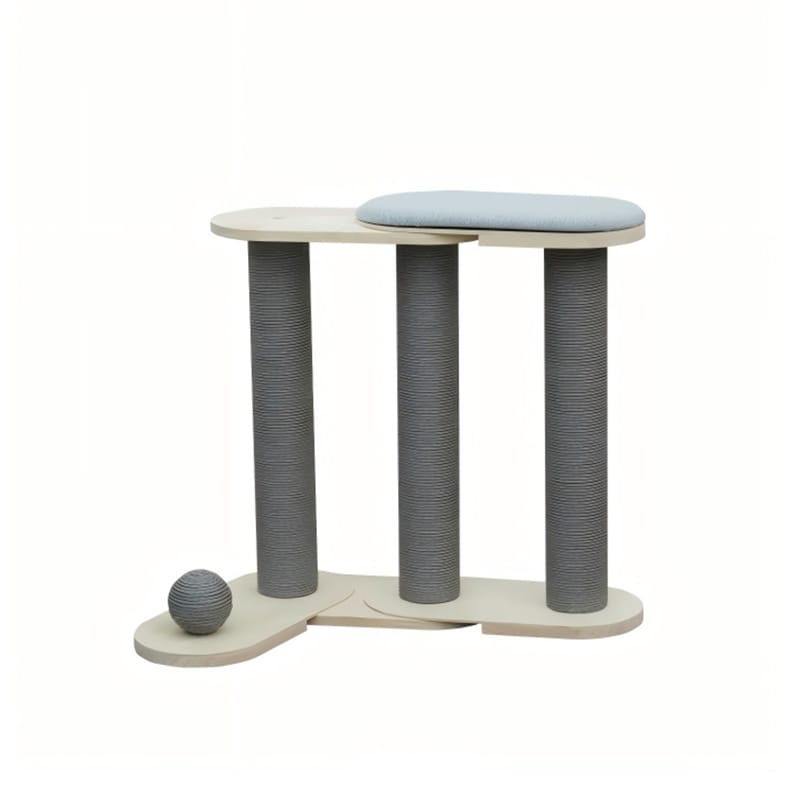
A fully sisal-wrapped compact cat tree provides multiple scratching zones instead of limiting the product to one narrow column.
For Design-Conscious Homes
Modern buyers often want pet furniture that feels connected to the rest of the room.
Relevant design choices include:
- natural wood finishes;
- warm neutral fabrics;
- concealed hardware;
- removable cushions;
- rounded platforms;
- balanced material combinations;
- visually lighter structural forms.
Aesthetic improvement should not reduce the usable scratching area or compromise stability.
Replaceable Components and Product Lifespan
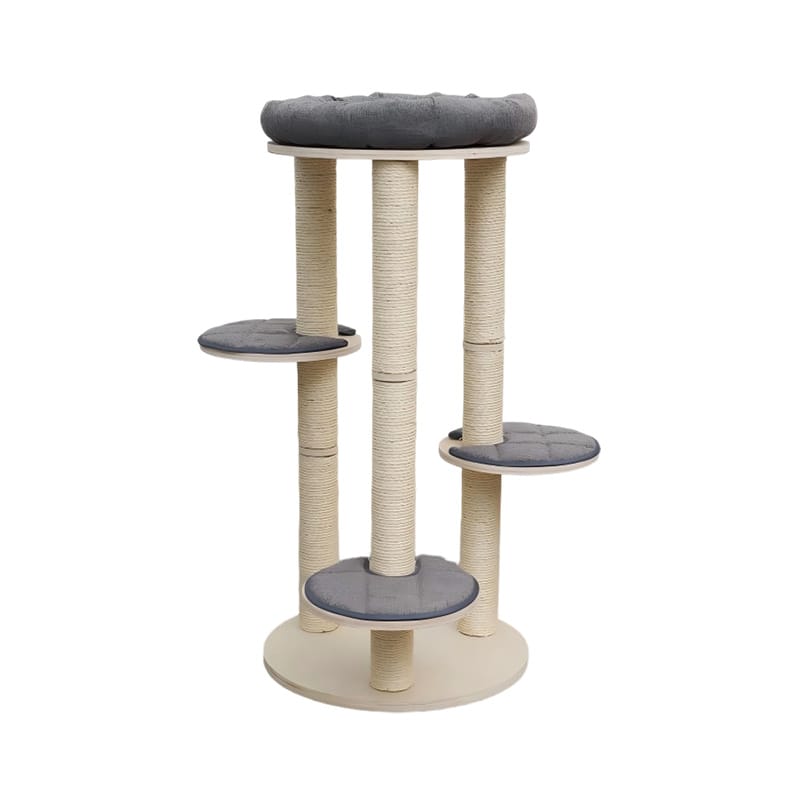
Sisal is durable, but no scratching material is permanent. Repeated use will eventually create frayed or worn sections.
A product that allows the most heavily used component to be replaced can provide better long-term value and reduce the need to discard the complete structure.
Replaceable Scratching Columns
A replaceable post can be connected to the base and upper platform with threaded hardware. Customers can remove the worn column and install a replacement without rebuilding the entire product.
For this system to work, the manufacturer must maintain:
- consistent post dimensions;
- standardized thread sizes;
- accurate connector placement;
- availability of compatible spare parts;
- clear replacement instructions.
Replaceable Sisal Panels
Flat or curved sisal fabric panels can be attached with screws, slots, hook-and-loop systems, or concealed retainers. This approach is useful for modern cat furniture where replacing an entire structural column would be unnecessary.
Rewrappable Rope Surfaces
Some customers may repair a worn sisal cat scratching post by removing old rope and applying new material. A structure designed for rewrapping should not contain unnecessary protrusions or permanently enclosed attachment points.
Retail brands can reduce customer frustration by making the repair path clear before purchase.
Safety and Quality Checks for Sisal Scratching Posts
Quality inspection should evaluate the complete product rather than checking only its appearance.
Structural Checks
Inspectors should confirm that:
- the post is vertical and correctly aligned;
- the base sits flat;
- joints do not rotate under reasonable force;
- the structure does not tip during intended use;
- platforms remain level;
- fasteners can be tightened without damaging the board.
Surface Checks
The sisal surface should be checked for:
- loose rope lines;
- exposed rope ends;
- uncovered gaps;
- sharp fibers;
- excessive adhesive;
- uneven color;
- oil or chemical odor;
- exposed staples or nails.
Edge and Hardware Checks
Board edges should be smooth and properly finished. Screws, connectors, washers, and threaded components should not be accessible to the cat during normal use.
Fabric and Cushion Checks
When the sisal cat scratching post includes plush surfaces or a bed, inspect:
- seam strength;
- cushion attachment;
- removable cover fit;
- loose threads;
- fabric shedding;
- color consistency;
- zipper placement.
Assembly Testing
A production sample should be assembled using the same instructions and hardware supplied to customers.
The test should identify:
- confusing steps;
- missing labels;
- similar-looking fasteners;
- poor hole alignment;
- tools not included or specified;
- components that require excessive force;
- parts that can be installed backward.
OEM Customization for Retail and Private-Label Buyers
OEM customization should be based on a clearly defined market need. Changing only the fabric color rarely creates meaningful product differentiation.
Structural Customization
Buyers may request changes to:
- total height;
- base dimensions;
- post diameter;
- number of posts;
- perch size;
- bed position;
- scratching orientation;
- replacement system;
- toy placement.
Structural changes should be reviewed as a complete system. Increasing platform size, for example, changes weight distribution and may require a wider base or stronger support.
Material Customization
Available directions may include:
- sisal rope thickness;
- sisal color;
- mixed sisal and jute surfaces;
- solid wood or engineered board;
- short plush or woven fabric;
- removable cushion materials;
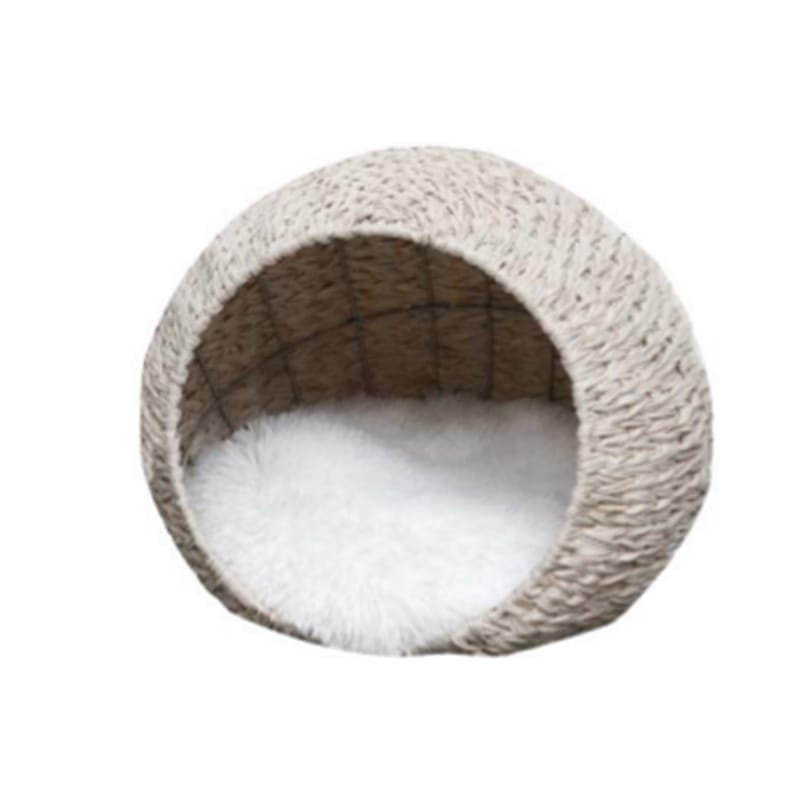
- natural woven baskets;
- anti-slip base treatments.
Visual Customization
A private-label sisal cat scratching post can be developed around:
- brand-specific colors;
- wood-tone finishes;
- embroidered or printed labels;
- branded instruction sheets;
- custom cartons;
- product photography requirements;
- retail-ready inserts.
Product Family Development
A practical collection might include:
- a compact entry-level post;
- a standard full-stretch post;
- a post with an integrated bed;
- a multi-post tower;
- a fully sisal-covered cat tree.
Using shared materials and hardware across the collection can simplify purchasing, production, and spare-part management.
Buyers can review the existing cat furniture collection and pet supplies range to compare different structural directions.
Packaging and Assembly Considerations
Packaging is part of product engineering, especially for e-commerce and international shipping.
Flat-Pack Design
A flat-pack sisal cat scratching post can reduce carton volume, but the product must remain simple to assemble.
Excessive disassembly can create:
- more hardware;
- more assembly mistakes;
- weaker joints;
- longer setup time;
- higher risk of missing components.
Protection of Sisal Surfaces
Sisal can become compressed, stained, or frayed if it rubs against hardware or board edges during transport.
Protective packaging should prevent:
- rope abrasion;
- moisture exposure;
- pressure marks on plush surfaces;
- movement of heavy components;
- contact between metal fittings and finished surfaces.
Hardware Organization
Fasteners should be separated, counted, and clearly identified. Numbered bags and matching instruction labels can make assembly easier.
Instruction Design
Instructions should rely on clear diagrams, part codes, and assembly order. They should also explain when connections must be tightened again after the full structure has been aligned.
How to Evaluate a Sisal Cat Scratching Post Manufacturer
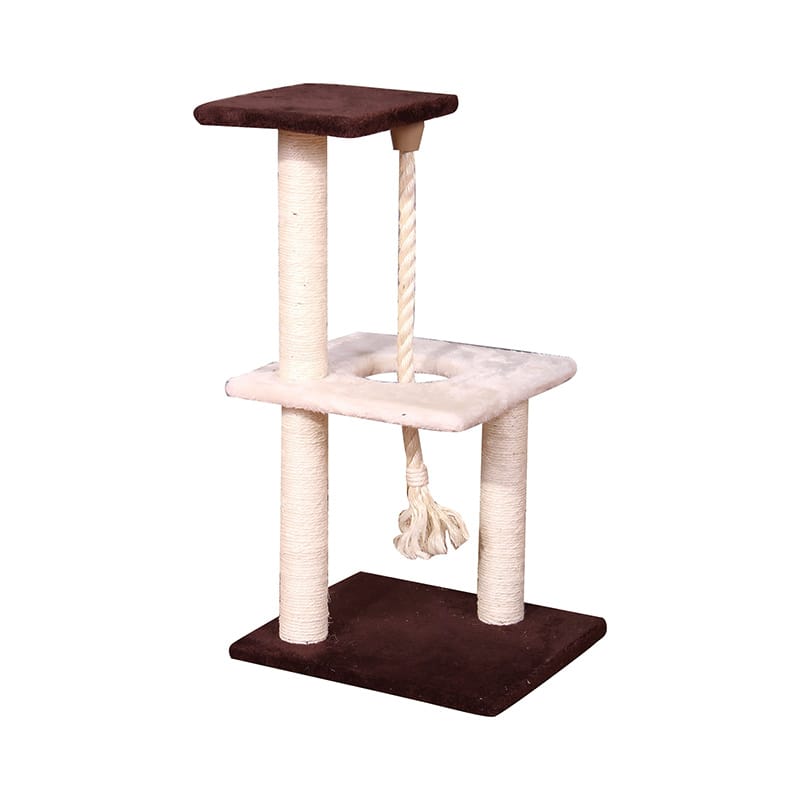
A reliable supplier should be able to explain how the product is made, not just send catalog photos.
Request a Complete Specification
The specification should include:
- total product dimensions;
- usable scratching height;
- base size and thickness;
- post diameter;
- sisal type and rope specification;
- core material;
- net and gross weight;
- carton dimensions;
- included hardware;
- assembly requirements;
- supported customization.
Review a Physical Sample
The sample should be evaluated for:
- stability;
- rope tension;
- edge finishing;
- odor;
- hardware quality;
- fabric quality;
- assembly accuracy;
- package protection.
Do not evaluate the sample only when it is new. Repeatedly scratch, rotate, move, and load the product to identify weak connections.
Confirm Mass-Production Consistency
A strong sample does not guarantee that every production unit will match it.
Discuss how the manufacturer controls:
- material suppliers;
- sisal rope batches;
- board thickness;
- drilling positions;
- adhesive application;
- assembly hardware;
- packaging quantities;
- final inspection.
Ask About Replacement Parts
Replacement columns, toys, cushions, and hardware can improve after-sales support. Buyers should confirm whether spare parts can be ordered separately and whether future production will remain compatible.
Evaluate Development Support
For a custom project, the manufacturer should be able to review drawings, identify structural risks, recommend materials, develop samples, and adjust the design before bulk production.
The existing cat scratching post OEM design guide provides additional information about product development for brands, retailers, and wholesale buyers.
FAQ
Is sisal safe for a cat scratching post?
Natural sisal is widely used for cat scratching products because it provides a coarse surface suitable for claw engagement. Product safety also depends on how the sisal is processed, attached, and finished. Buyers should check for chemical odor, loose rope, sharp fasteners, and exposed adhesive.
Is sisal rope or sisal fabric better?
Neither option is universally better. Sisal rope provides pronounced ridges and works well on vertical posts. Sisal fabric creates a flatter, cleaner surface and can be useful for replaceable panels or minimalist designs. The correct choice depends on the product structure and target market.
How tall should a sisal cat scratching post be?
The scratching surface should allow the target cat to stretch comfortably. Compact posts may suit kittens, small cats, or secondary scratching areas, while larger adult cats usually require a taller uninterrupted surface. Buyers should evaluate usable scratching height rather than total product height.
Why does a cat ignore a new scratching post?
Common reasons include insufficient height, instability, an unsuitable surface, poor placement, or competition from a more attractive scratching location. Placing the post near an existing scratching area can help redirect the behavior.
Does a heavier base always make a post more stable?
Additional weight can help, but stability also depends on base width, post position, material rigidity, anti-slip treatment, and connection strength. A heavy but narrow base may still tip under side force.
Can the sisal be replaced after it wears out?
Yes, if the product is designed with a replaceable column, removable panel, or rewrappable post. Replacement planning should be considered during product development rather than added after production.
Is a compact sisal cat scratching post suitable for large cats?
A compact model may work as a secondary scratching or resting product, but it may not allow a large cat to stretch fully. Large-cat products should prioritize usable height, base stability, post rigidity, and adequate resting dimensions.
What information should an importer request before placing an order?
Important information includes material specifications, dimensions, sample terms, customization options, assembly instructions, packaging data, quality inspection procedures, production lead time, and spare-part availability.
Can a sisal scratching post include a bed or perch?
Yes. Integrated beds and perches can increase functionality, especially in smaller homes. The added components must not reduce the primary scratching area or make the structure unstable.
How can private-label buyers customize a scratching post?
Customization can include structure, dimensions, sisal specifications, fabric colors, wood finishes, toy designs, labels, instruction manuals, packaging, and replacement components.
Conclusion
A successful sisal cat scratching post is not defined by sisal alone. The material must be combined with suitable height, a stable base, a rigid post core, secure rope wrapping, safe hardware, and a design that reflects how cats actually scratch.
For retail and private-label buyers, the most important purchasing decisions happen before production begins. Defining the target cat size, household environment, expected lifespan, retail channel, packaging method, and replacement strategy creates a clearer product specification and reduces avoidable quality problems.
A compact post with a bed, a tall full-stretch model, and a multi-surface cat tree serve different customers. Treating them as separate product types makes it easier to develop a balanced collection rather than relying on one generic design.
Businesses developing a custom sisal cat scratching post can contact the manufacturing team to discuss structure, materials, branding, packaging, samples, and wholesale production requirements.