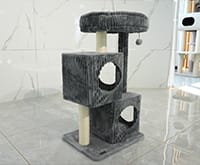
Most cat trees look similar at first glance. But once they are used for a few weeks, the differences become obvious—some stay solid and functional, while others start to wobble, shed, or simply get ignored by cats.
From a manufacturing perspective, the real gap is not design style. It is how the structure behaves under real, repeated use: jumping, scratching, climbing, and weight shifting. That is where a high quality cat tree separates itself from everything else.
Instead of treating it as simple pet furniture, it helps to look at it as a small indoor activity structure built around feline behavior and mechanical stability.
Table of Contents
What “High Quality” Actually Means in Cat Tree Design
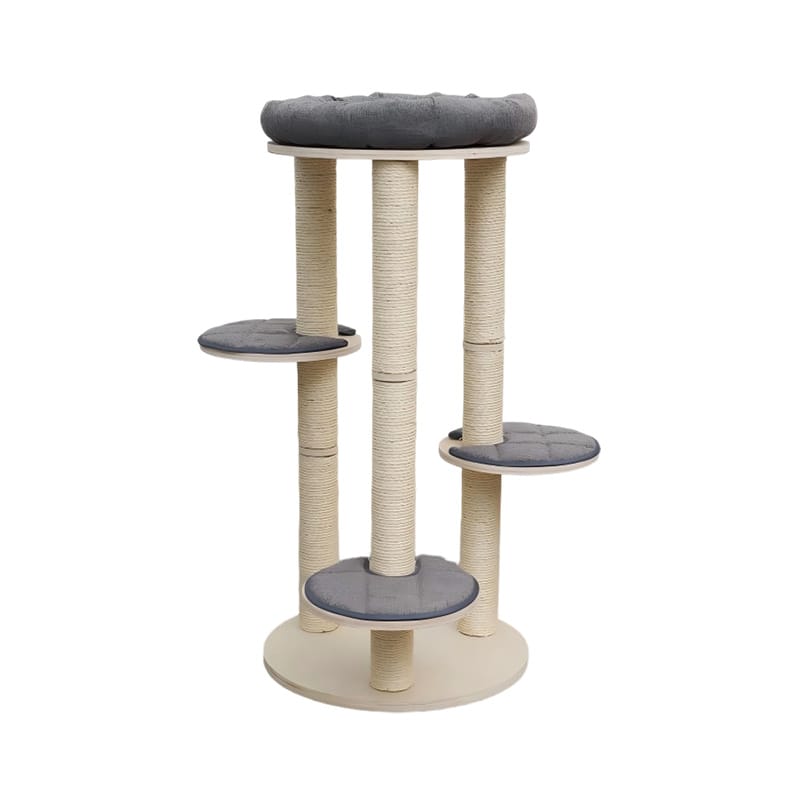
In most product listings, “high quality” is used loosely. In real production terms, it comes down to three measurable outcomes:
- The structure does not loosen over time
- Cats continue to use it after repeated interaction
- The base and posts remain stable under uneven force
Cats rarely interact with furniture in a controlled way. They jump from angles, push off sideways, and land with uneven force. A stable structure must absorb that behavior without shifting.
There is also a behavioral side to quality. If a cat does not feel secure at the top platform, the entire structure loses purpose—no matter how visually appealing it is.
Materials Decide More Than Appearance
Material selection is usually where quality differences start.
In production, a typical high quality cat tree relies on a combination of:
- Dense wood-based panels for load-bearing parts
- Reinforced posts for vertical support
- Natural sisal for scratching surfaces
- Soft, replaceable fabric for resting zones
The important part is not just what materials are used, but how they work together. A strong post with a weak base still fails. A soft platform without internal support collapses under repeated pressure.
Over time, cats also respond to material feel. Slippery surfaces or overly soft platforms often reduce usage frequency, even if the product looks comfortable.
How a Proper Cat Tree Is Built in Manufacturing
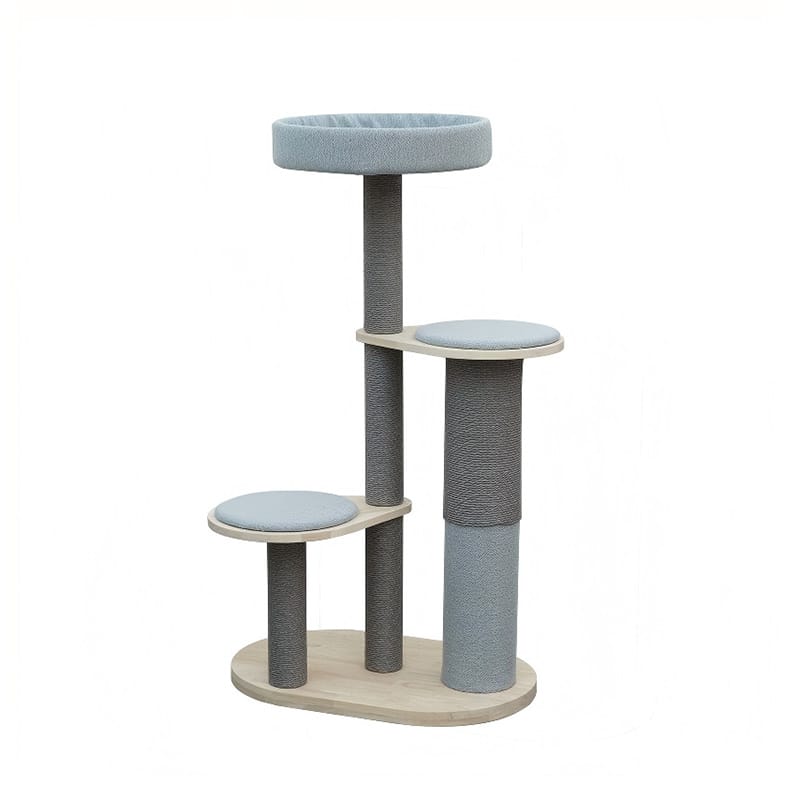
Factory production is often misunderstood as simple assembly. In reality, the process determines long-term stability.
A more accurate breakdown looks like this:
Material screening before production
Panels and posts are checked for density and moisture consistency. Small variations here can later affect structural balance.
Structural layout planning
The position of each platform is designed based on load distribution, not just visual symmetry. This is where many low-quality designs fail.
Reinforcement during assembly
Connection points are strengthened to handle lateral force, not only vertical weight.
Stability testing under movement simulation
Instead of static weight only, real testing includes repeated climbing and jumping pressure patterns.
This is one of the biggest differences between basic production and engineered pet furniture manufacturing.
Why Cats Ignore Some Cat Trees Completely
One of the most common complaints from pet owners is simple: the cat doesn’t use it.
This is usually not a “preference issue.” It is a structure issue.
There are a few consistent reasons:
- The base moves slightly during jumps
- Platforms are too narrow or too far apart
- Scratching posts feel unstable under force
- The layout does not match climbing instincts
Cats rely heavily on balance and predictability. If the structure reacts unpredictably, they quickly stop interacting with it.
A well-designed high quality cat tree feels “fixed in space,” even when actively used.
Large Cats Change Everything in Design Logic
Designing for heavier or larger breeds is not just scaling dimensions upward.
It requires rethinking load behavior:
- Wider base footprint to reduce tipping risk
- Reinforced vertical columns to handle repeated impact
- Shorter jump distances between platforms
- More rigid core structure to prevent flexing
Without these adjustments, even visually strong products can fail under real daily use.
Smaller cats, on the other hand, rely more on accessibility and comfort. The structure needs to be easier to climb without losing stability.
Stability Issues Usually Start Small
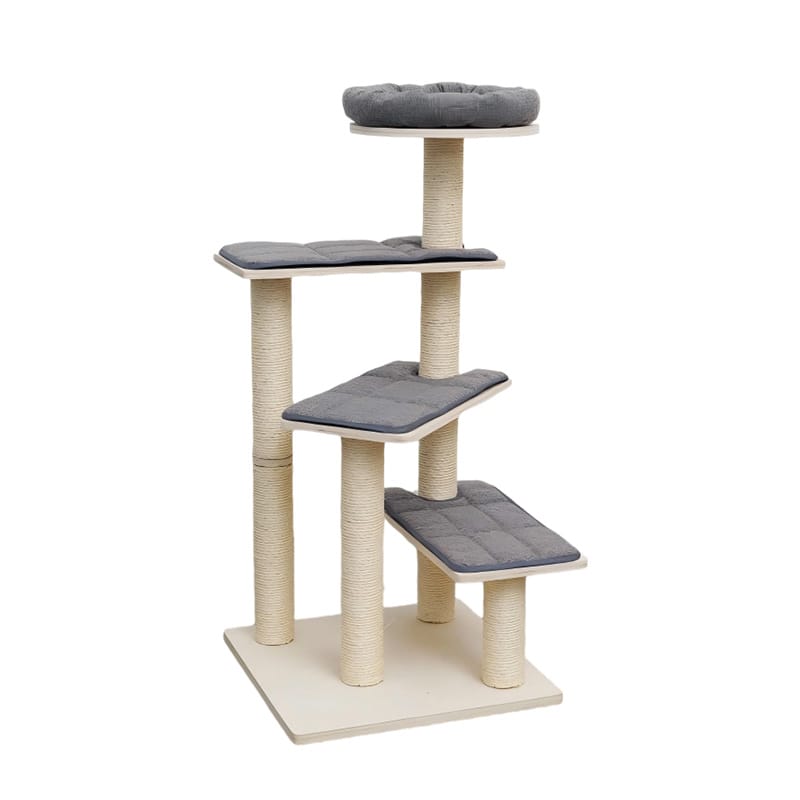
Most structural problems do not appear immediately. They develop gradually.
It often starts with:
- Slight loosening at joints
- Minor shifting of the base
- Small fabric tears around high-contact points
Over time, these issues compound. Once movement becomes noticeable, cats tend to avoid the structure entirely.
That is why stability is not just a safety feature—it directly affects product usability.
High Quality vs Standard Cat Trees (What Actually Changes)
Instead of comparing marketing terms, the difference is easier to understand through behavior and structure:
- High quality structures remain firm after repeated use cycles
- Lower-grade versions often develop movement at connection points
- Better designs distribute weight instead of concentrating it
- Poor designs rely heavily on surface appearance rather than internal support
The key distinction is not how the product looks when new, but how it behaves after real use.
Manufacturing Perspective: Why OEM Buyers Focus on Structure First
From a production standpoint, OEM buyers usually care less about visual styling and more about consistency.
What matters most:
- Repeatable structural performance across batches
- Material traceability and stability
- Flexibility in platform configuration
- Predictable assembly behavior during mass production
Customization is important, but it only works when the structural base is already reliable.
Market Direction: What Is Changing in Cat Tree Design
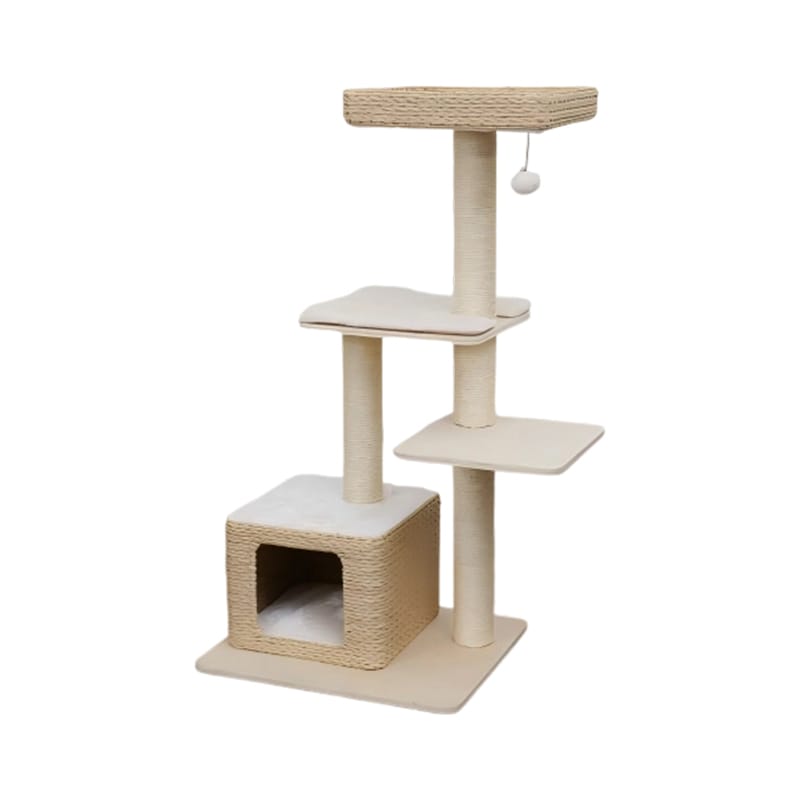
The direction of the category is slowly shifting.
Instead of purely decorative pet furniture, buyers are moving toward:
- Space-efficient vertical structures
- Designs that blend with interior environments
- Materials that are easier to maintain
- Multi-functional activity zones in one structure
There is also a growing focus on long-term usability rather than short-term appearance impact.
Conclusion
A high quality cat tree is not defined by size, decoration, or complexity. It is defined by how consistently it performs under real feline behavior over time.
Once the structure is stable, materials are properly selected, and the design matches natural movement patterns, the product stops being just furniture and becomes part of the cat’s daily environment.
For manufacturers, the real challenge is not building something that looks complete on day one—it is ensuring that it remains functional after months of unpredictable use. That is where engineering, material control, and structural design matter most.
FAQ
What makes a cat tree truly high quality?
A high quality cat tree is defined by structural stability, durable materials, and a design that supports natural cat behaviors like climbing, scratching, and resting without wobbling or weakening over time.
What materials are best for a high quality cat tree?
Solid wood or reinforced wood panels, natural sisal rope for scratching posts, and stable fabric or plush coverings are commonly used to ensure durability and safety.
How long can a high quality cat tree last?
Its lifespan depends on usage and construction quality, but a well-made structure with reinforced joints and stable materials can maintain performance for years under normal indoor use.
Why do some cats avoid using cat trees?
Cats often avoid unstable or poorly designed structures. If a cat tree wobbles, has poor platform spacing, or uncomfortable materials, cats may stop using it.
Is OEM or factory-direct cat tree production better for quality control?
Factory-direct or OEM production usually offers better control over materials, structure design, and consistency, which helps ensure stable quality across batches.