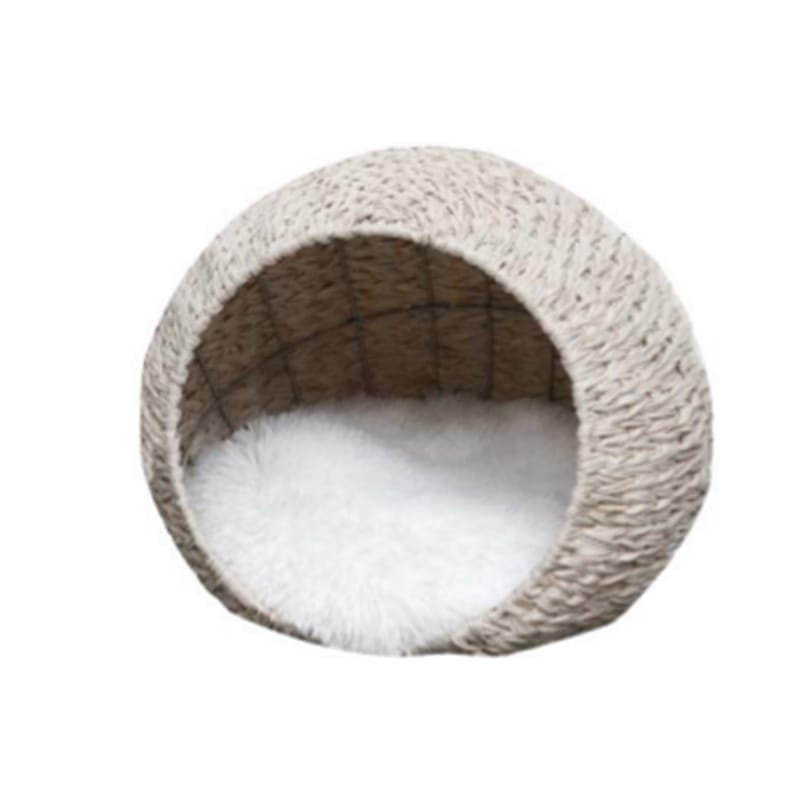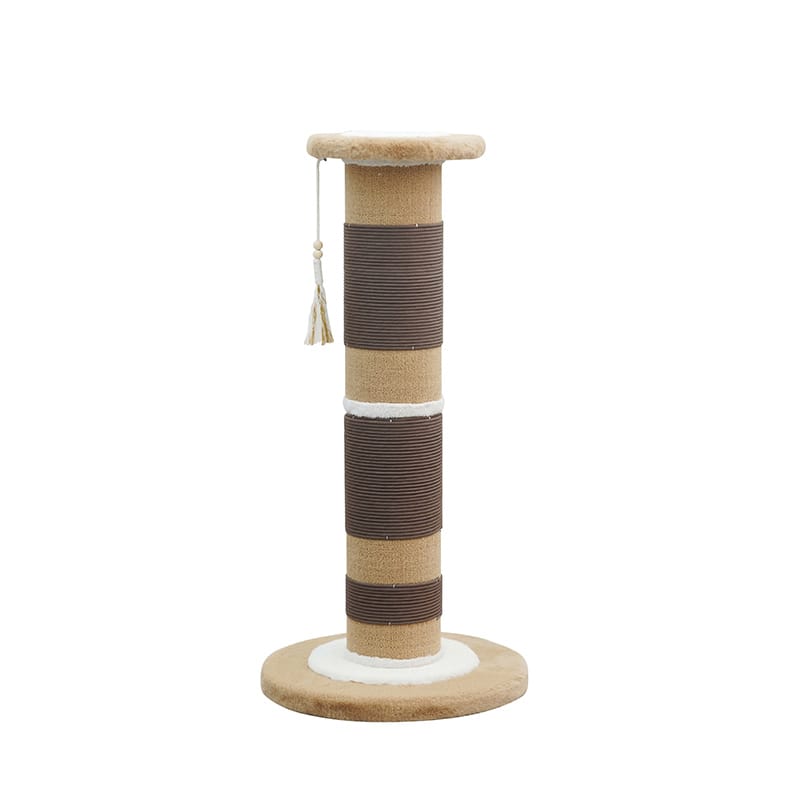
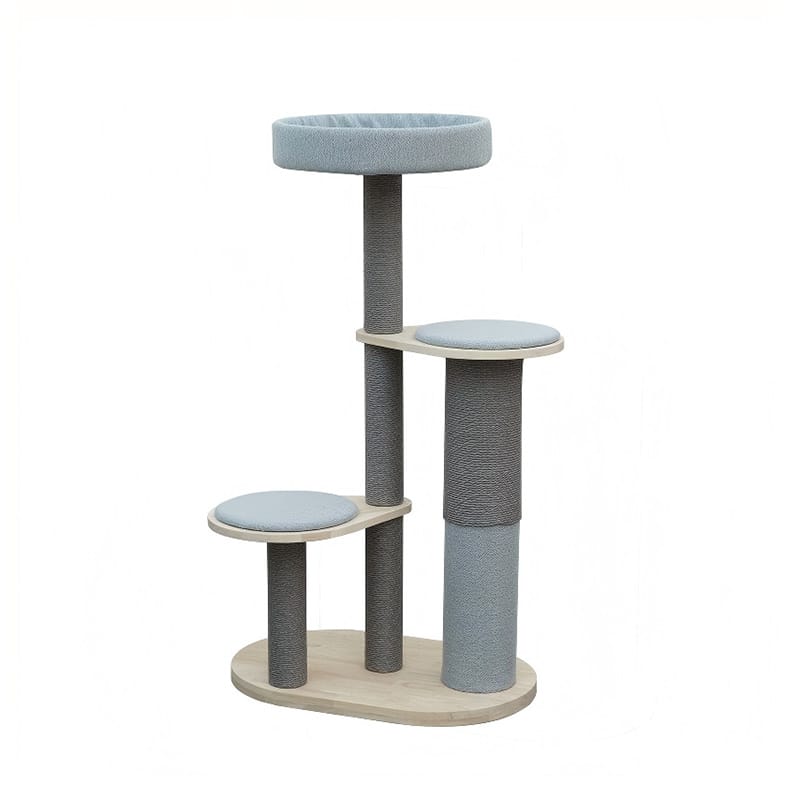
The demand for functional indoor cat furniture has shifted far beyond simple scratching posts. In many markets, the sisal cat tree has become a standard household item for cat owners who want something that supports both feline behavior and home design expectations.
From a manufacturing perspective, this product category sits at the intersection of material engineering, structural safety, and pet behavior design. What used to be a basic pet accessory has evolved into a structured product system with clear requirements on durability, stability, and usability.
This article breaks down how sisal cat trees are designed, what makes them effective, and why sourcing directly from a manufacturer matters for long-term product consistency and brand development.
Table of Contents
Understanding the Role of a Sisal Cat Tree in Indoor Living Spaces
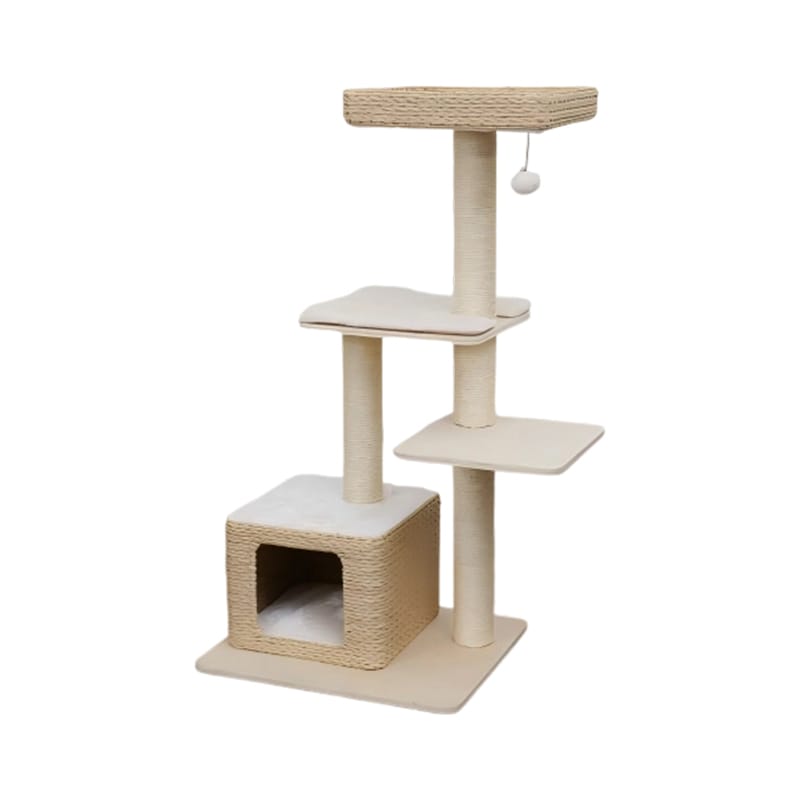
A sisal cat tree is not just a climbing structure. In practical use, it functions as a behavioral outlet for indoor cats that have limited environmental stimulation.
Most cats living indoors share similar behavioral needs:
- Climbing to elevated areas for observation
- Scratching to maintain claw condition
- Marking territory through repetitive surface contact
- Resting in semi-enclosed, elevated spaces
A properly designed cat tree brings these behaviors into one controlled structure, reducing unwanted scratching on furniture and improving overall pet well-being.
What separates sisal-based structures from other materials is the surface response. The fiber texture provides consistent resistance, which encourages repeated use without rapid degradation.
Why Sisal Fiber Continues to Dominate Scratching Surface Design
Material choice is one of the most overlooked aspects of cat furniture design. Sisal remains widely used because it performs reliably under repetitive mechanical stress.
Unlike softer textile surfaces, sisal maintains its structure even after prolonged scratching. This matters in real-world use because cats do not interact with surfaces gently or predictably.
Key functional characteristics include:
- Natural fiber structure with strong tensile resistance
- Stable friction level suitable for claw engagement
- Reduced shedding compared to many synthetic alternatives
- Compatibility with rope-wrapped vertical structures
In manufacturing terms, sisal is also relatively stable during processing, which allows consistent production across different product models.
How Manufacturing Decisions Influence Product Stability and Safety
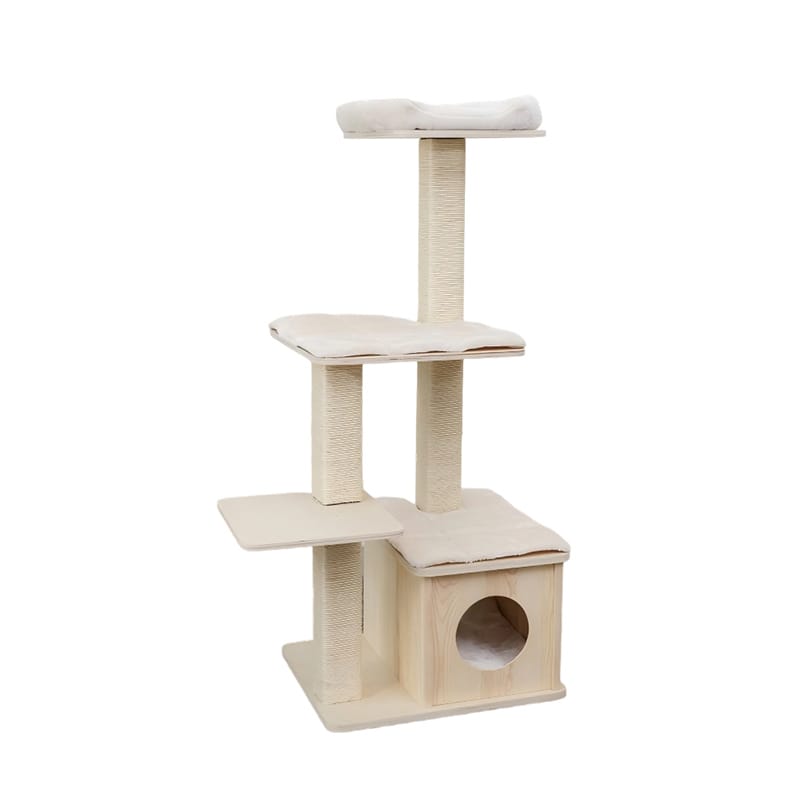
A sisal cat tree may look simple from the outside, but structurally it involves multiple load-bearing and stress distribution points.
A typical production process includes:
Frame Construction
The internal frame is usually built from engineered wood or reinforced board materials. The goal is not just rigidity, but balanced weight distribution across multiple levels.
Structural Assembly
Vertical posts and platforms are assembled in a way that prevents wobbling under movement. This is especially important for taller designs or multi-cat households.
Surface Wrapping
Sisal rope is tightly wound around support columns under controlled tension. Inconsistent wrapping can lead to slippage or uneven wear over time.
Stability Testing
Before packaging, assembled units are typically tested for tipping resistance and joint stability under repeated movement conditions.
The end result is not just a pet accessory, but a structured furniture system designed for repeated daily interaction.
Why OEM and ODM Production Matters in This Category
In global pet product sourcing, customization has become a standard expectation rather than an added feature.
OEM and ODM production allows buyers to define how a sisal cat tree fits into their own product strategy. This includes structural design, visual identity, and functional variation.
Common customization directions include:
- Multi-level layouts tailored to different cat activity levels
- Compact designs for urban living environments
- Reinforced structures for larger or more active cats
- Integrated resting zones and enclosed spaces
- Brand-specific visual styling for retail consistency
This flexibility is particularly important for distributors and private label brands that need differentiated product lines without rebuilding production systems from scratch.
Design Differences Based on Real Cat Behavior Patterns
One of the more practical aspects of cat tree design is how differently cats use the same structure.
High-energy cats tend to prefer vertical movement. They will repeatedly jump between platforms and use elevated perches as observation points.
More cautious or younger cats often stay closer to lower levels and enclosed spaces where movement feels more controlled.
Multi-cat environments introduce another layer of complexity. Competition for space means:
- Multiple scratching surfaces are necessary
- Resting zones must be distributed
- Structural balance becomes more important than height alone
Good design does not assume behavior. It accommodates variation.
Comparing Sisal with Other Common Scratching Materials
Not all scratching surfaces behave the same under real use conditions.
Carpet-based surfaces tend to flatten over time, reducing tactile feedback for cats. Cardboard systems are often used for short-term engagement but lack structural longevity when used heavily.
Sisal maintains a more consistent texture profile over time. This is one of the reasons it continues to be used in long-term installations and multi-level furniture systems.
From a product lifecycle perspective, material stability directly affects customer satisfaction and replacement frequency, which is why manufacturers continue to refine wrapping techniques and fiber selection.
Market Direction: How Cat Furniture Is Evolving Globally
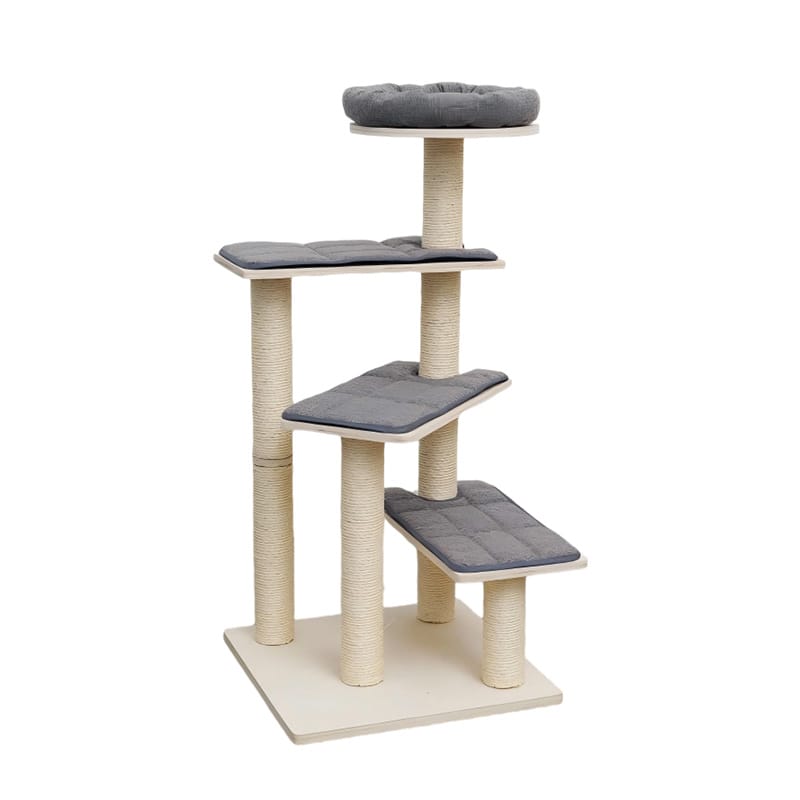
The cat furniture category is gradually moving away from purely functional design toward integrated home furniture concepts.
Several patterns are shaping product development:
Indoor Pet Lifestyle Expansion
More pets are living fully indoors, increasing demand for structured activity environments.
Home Interior Integration
Cat furniture is expected to blend into living spaces rather than stand out visually.
Material Awareness
There is growing attention toward natural fiber materials and reduced synthetic dependency.
E-Commerce Driven Design
Products are increasingly designed to perform well in online visual environments, not just physical stores.
These shifts influence both design direction and manufacturing requirements.
What to Look for in a Manufacturing Partner
For wholesale buyers and brand owners, selecting a production partner is less about catalog variety and more about consistency.
Key indicators of manufacturing reliability include:
Production Stability
The ability to maintain consistent output across different product lines.
Material Control
Reliable sourcing and processing of sisal fiber and structural components.
Quality Assurance Process
Multi-step inspection covering stability, surface finish, and structural alignment.
Customization Capability
Support for structural modifications and private label requirements.
Export Experience
Familiarity with packaging standards and international shipping coordination.
These factors directly affect product performance in downstream retail environments.
Where Sisal Cat Trees Are Commonly Used in Commercial Channels
This product category appears across multiple distribution channels:
Pet retail environments often use cat trees as core display products due to consistent consumer demand.
Online retail platforms rely heavily on visually structured designs that communicate function quickly.
Brand-level distribution focuses on building product ecosystems rather than standalone items.
Across all channels, adaptability is a key advantage. A single structural design can often be modified into multiple variations depending on target market requirements.
Product Longevity and Practical Maintenance Considerations
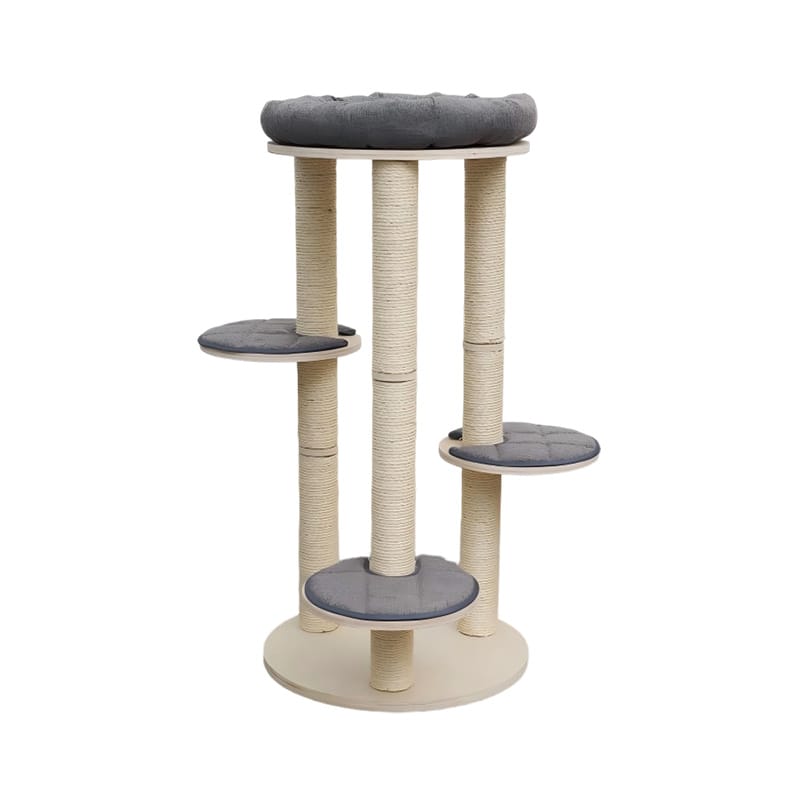
Although sisal cat trees are designed for durability, their long-term performance still depends on basic maintenance practices.
In real usage environments, the most common maintenance actions include:
- Removing accumulated fur and surface debris
- Checking joint stability over time
- Rotating usage areas in multi-cat households
- Cleaning fabric and platform surfaces periodically
Well-designed structures maintain usability for extended periods when basic care is applied consistently.
Conclusion
The sisal cat tree category has developed into a mature segment within the pet furniture industry, driven by changes in indoor pet lifestyles, material expectations, and global retail behavior.
From a manufacturing perspective, success in this space depends on more than production capacity. It requires an understanding of animal behavior, structural engineering, and market-driven design adaptation.
As demand continues to grow across both retail and wholesale channels, products that balance durability, functional design, and material consistency will remain central to the category’s development.
FAQ
What is a sisal cat tree used for?
A sisal cat tree is designed to support scratching, climbing, and resting behaviors in indoor cats, helping protect household furniture from damage.
Why is sisal material commonly used in cat trees?
Sisal fiber provides strong durability and a textured surface that allows cats to scratch naturally without wearing out quickly.
Are sisal cat trees suitable for large cats?
Yes. With reinforced frames and stable base structures, sisal cat trees can support larger and more active cat breeds when properly designed.
How do you maintain a sisal cat tree?
Regular cleaning, removing loose fibers, and checking structural joints can help extend its lifespan and maintain stability.
What should be considered when choosing a sisal cat tree manufacturer?
Key factors include material quality control, structural stability testing, customization capability, and consistent production standards.