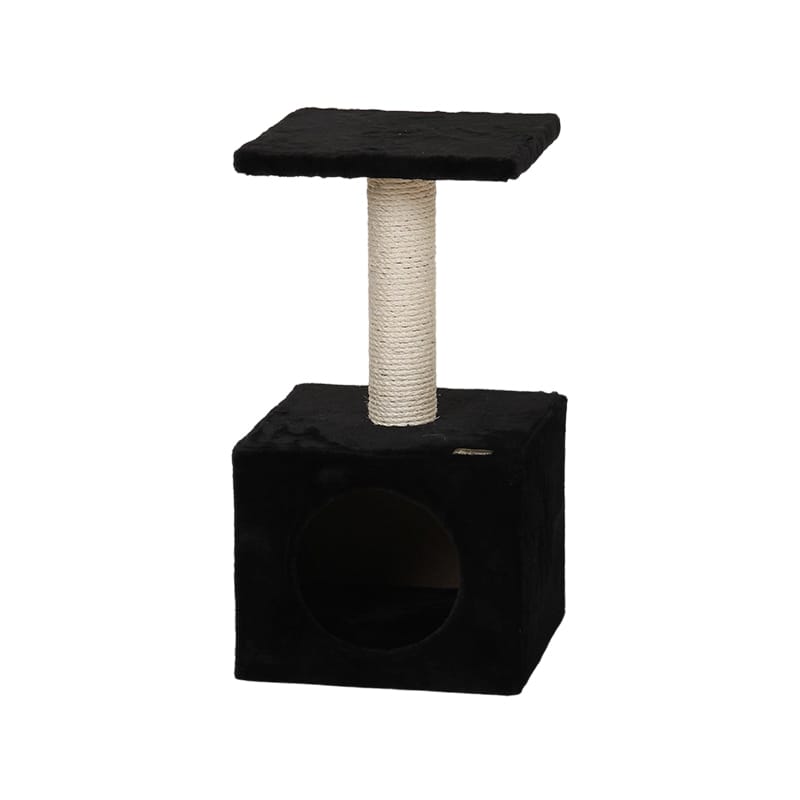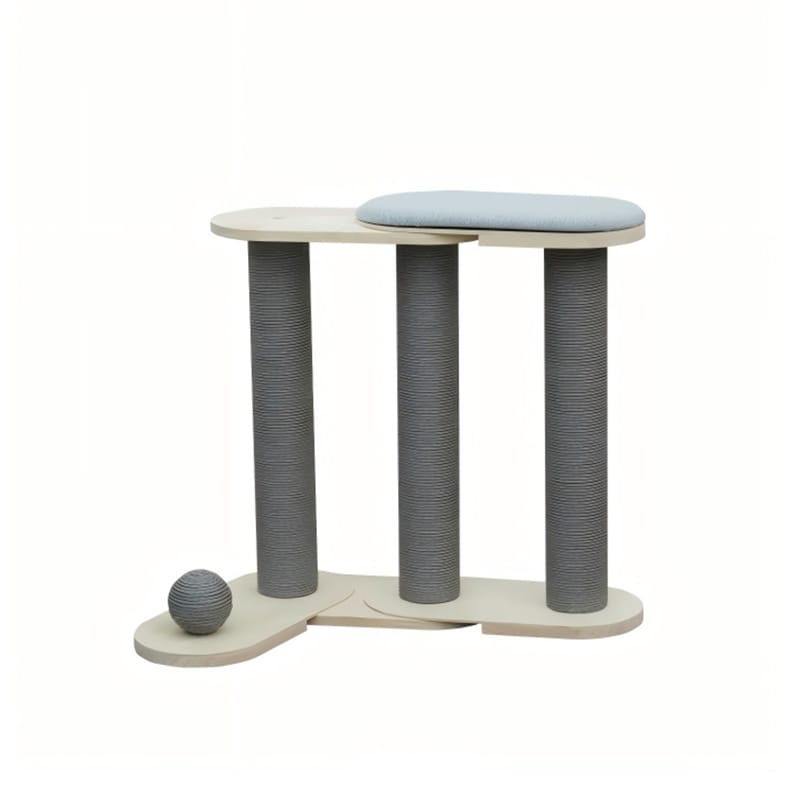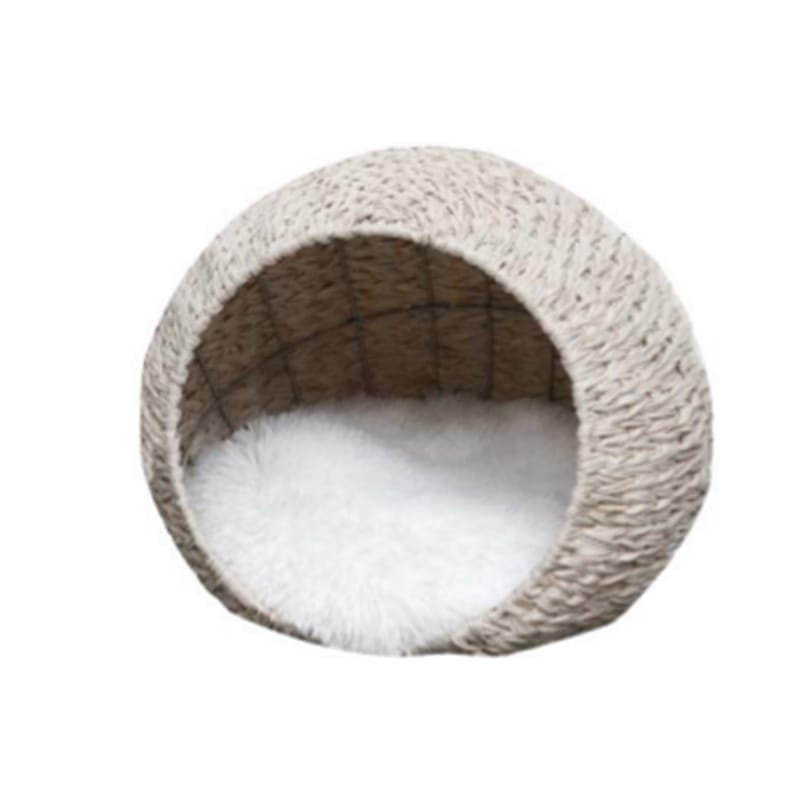
For many pet furniture buyers, the next opportunity is not simply making a taller tower or adding another platform. The more practical question is how to make a product easier to maintain after months of scratching, climbing, resting, and cleaning. That is why replaceable cat tree parts are becoming an important design topic for private-label buyers, distributors, and brands that want longer product life without making the whole structure complicated.
A cat tree is used every day. Posts wear down, cushions collect fur, hanging toys get pulled, and soft covers may need washing or replacement. When replaceable cat tree parts are planned during OEM development, buyers can create cat furniture that feels more thoughtful, more serviceable, and easier to position as a long-term indoor product. This guide explains how to design replaceable cat tree parts in a way that supports real cat behavior, practical production, and clear buyer expectations.
Why Replaceability Matters in Cat Furniture Design
Cat furniture sits at the intersection of home furniture and pet activity equipment. It must look acceptable in a living space, but it also has to tolerate clawing, jumping, rubbing, shedding, and repeated cleaning. A product may look strong in product photos, but buyers usually care about what happens after daily use. Replaceable cat tree parts help answer that concern because the most-used areas can be renewed without replacing the entire item.
For OEM buyers, replaceable cat tree parts can support several goals. It can reduce the feeling that a product is disposable, give private-label brands more after-sales flexibility, and make product pages more useful by explaining how the structure is maintained. It also helps manufacturers think more carefully about how posts, cushions, toys, mats, and covers connect to the main frame.
The key is to treat replaceable cat tree parts as part of product engineering, not as an afterthought. If replaceable cat tree parts are added without clear connection points, accurate sizing, and easy assembly logic, the idea can create more problems than benefits. A good design should be simple enough for ordinary customers to understand and stable enough for cats to trust.
Which Parts Are Most Suitable for Replacement?
When planning replaceable cat tree parts, not every component needs to be removable. The best approach is to identify the parts that experience the most wear or need the most cleaning. In most cat trees and scratchers, replaceable cat tree parts usually include sisal posts, scratching mats, plush cushions, fabric covers, hanging toys, grooming brushes, and sometimes removable cat cave pads.
| Part | Why It May Need Replacement | OEM Design Consideration |
|---|---|---|
| Sisal post | Repeated clawing can wear the rope surface | Use stable screw connections and consistent post diameter |
| Cushion or pad | Fur, odor, and daily resting require cleaning | Use removable covers or secure hook-and-loop fixing |
| Hanging toy | Active cats may pull or chew the toy | Use a clear attachment point that is easy to change |
| Scratching board | Angled boards receive concentrated claw pressure | Make the board replaceable without weakening the frame |
| Fabric mat | Soft surfaces may flatten or collect dirt | Keep the shape simple and washable when possible |
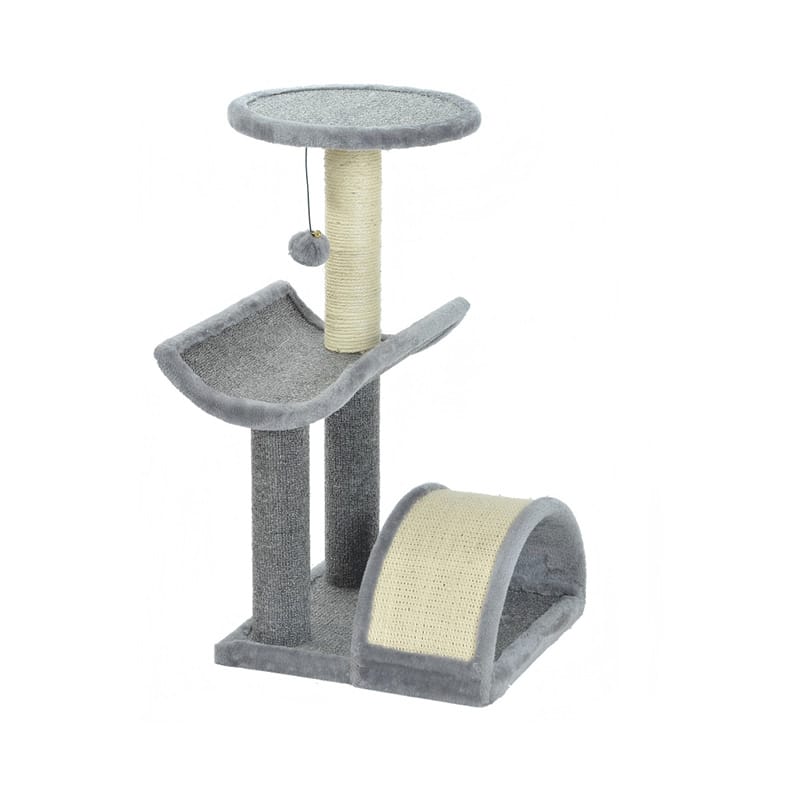
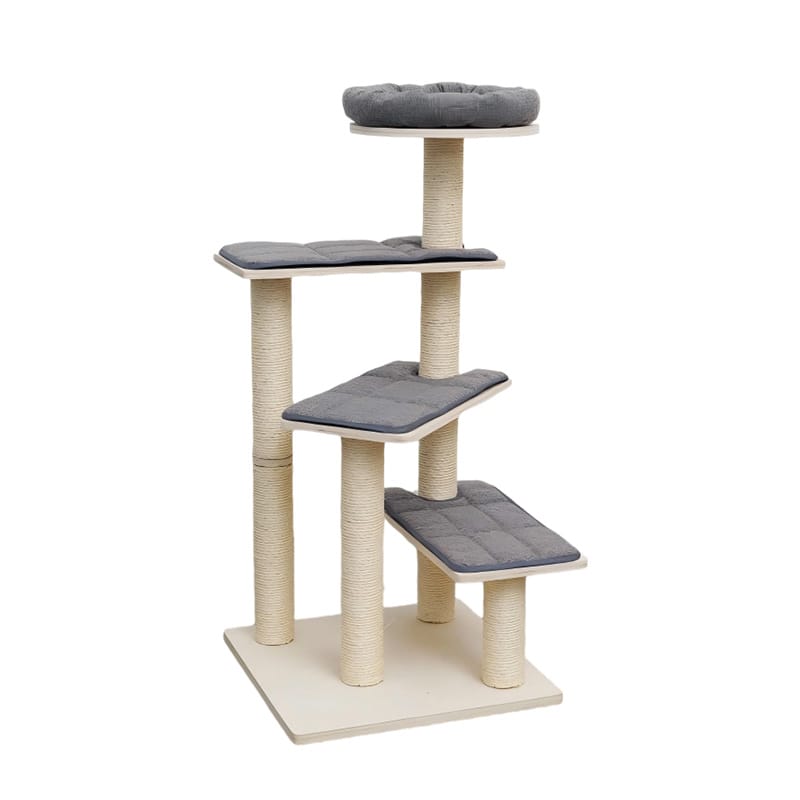
For a compact product, one or two replaceable areas may be enough. For a larger structure, buyers may want a clearer system. For example, a multi-functional cat tree can combine replaceable scratching posts, a curved scratching board, and removable resting surfaces. This makes the product more practical without changing its core layout.
Start With Cat Behavior, Not Spare Parts
The purpose of replaceable cat tree parts is not only to make a product easier to repair. The product must still serve natural cat behavior. Cats scratch to stretch, maintain claws, and communicate through scent and visual marks. Resources from International Cat Care explain why scratching is normal behavior and why cats need suitable places to do it indoors.
This means the most important scratching area should not be hidden, undersized, or unstable. If the main scratching post is replaceable but too short for stretching, the design still fails. If a removable board moves during use, cats may avoid it. Replaceable cat tree parts should make the product more useful, not simply more modular.
For buyers developing a product line, it helps to define the behavior each part supports. A tall post supports stretching. A platform cushion supports resting. A cave pad supports hiding. A hanging toy supports play. Once the purpose is clear, it becomes easier to decide which parts should be fixed and which parts should be serviceable.
Connection Design: The Detail Buyers Should Inspect
The biggest challenge with replaceable cat tree parts is connection quality. A part must be easy to remove, but it cannot feel loose during use. For replaceable cat tree parts, this balance depends on screw placement, insert quality, board thickness, post alignment, and the way soft parts are fixed to the surface.
For sisal posts, buyers should ask whether the post can be replaced without damaging the upper platform or base. For cushions, they should check whether the fixing method keeps the cushion from sliding when a cat jumps onto it. For toys, they should confirm that the attachment does not leave sharp edges or weak knots. Replaceable cat tree parts should feel intentional and secure, not improvised.
Stability is still the first requirement. Guidance from AAHA discusses the importance of indoor enrichment, including stable scratching and climbing areas. A serviceable design should never reduce the confidence cats feel when they climb or scratch. For larger structures, buyers can also review Hanyang’s guide on cat tree design for large cats because base balance and platform size become even more important when parts are removable.
Material Choices for Replaceable Areas
Material selection affects how often replaceable cat tree parts may need replacement and how easy they are for customers to maintain. Sisal rope is widely used for scratching because it provides a firm texture that claws can grip. Jute, seagrass, and other natural textures can create different appearances, especially for furniture-style products. Plush fabric and removable cushions improve comfort, but they should be designed with cleaning in mind.
Wood-based frames can work well with replaceable cat tree parts because the main structure can remain stable while soft or worn surfaces are updated. For example, a multi layer solid wood cat tree can use a durable frame, sisal posts, and removable cushions to balance appearance with daily function. Buyers who focus on wood sourcing may also want to understand general responsible forestry concepts from the Forest Stewardship Council, especially when discussing documentation requirements with suppliers.
The main point is compatibility. A replacement cushion should match the platform size. A replacement post should match the original height, diameter, and thread direction. A scratching mat should fit the board without leaving loose corners. Replaceable cat tree parts only work well when the factory controls dimensions consistently across production batches.
How Replaceable Parts Support OEM and Private-Label Programs
For private-label buyers, replaceable cat tree parts can become part of the product story. Instead of describing a cat tree only by height, color, and number of platforms, a product page can explain how high-use areas are designed for maintenance. This is especially useful for brands that want to position cat furniture as a considered home product rather than a short-term accessory.
OEM customization may include matching replacement cushions to seasonal color directions, using brand tags on removable pads, offering different sisal textures, or designing a spare toy attachment that fits several models in the same line. Hanyang’s cat climbing frame collection shows how different structures can support climbing, scratching, resting, and play. With careful planning, one product series can share certain replaceable cat tree parts while still offering different sizes and styles.
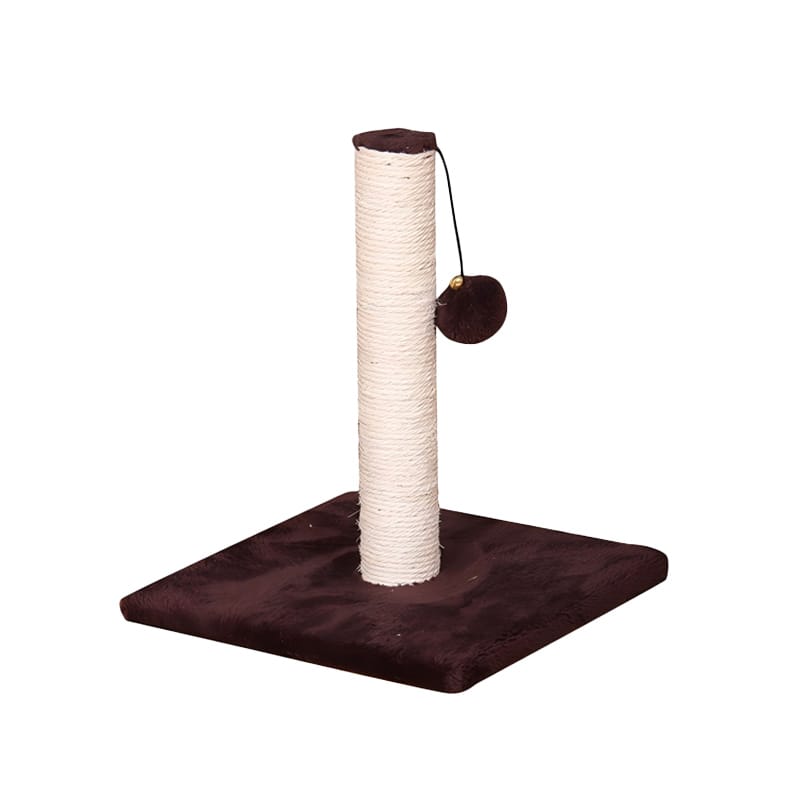
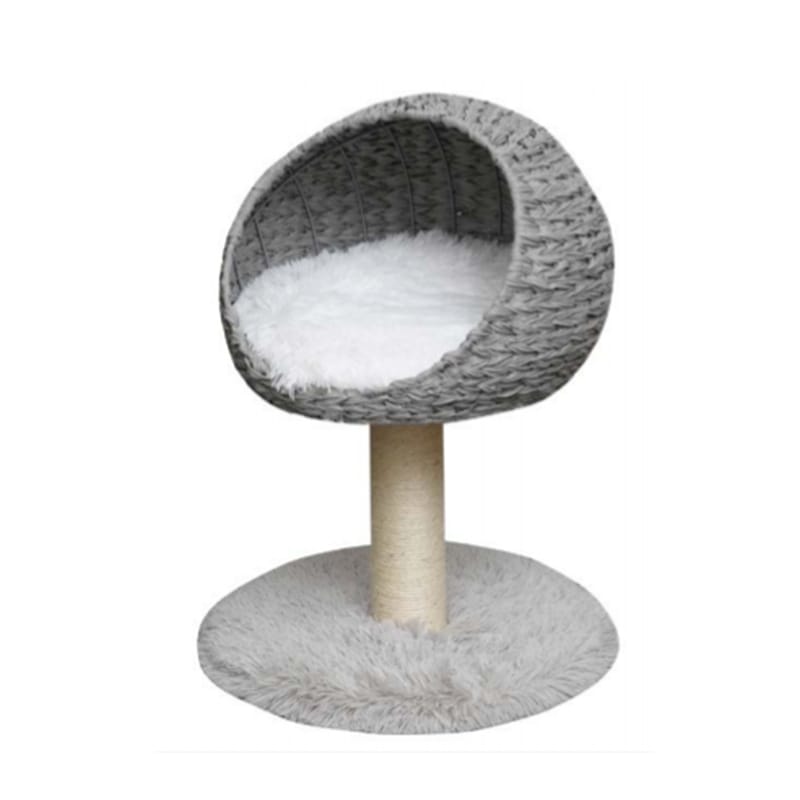
This does not mean every buyer needs a complex spare-part program. In many cases, it is enough to design the most important wear areas clearly. A compact scratcher may only need a replaceable toy and durable sisal post. A larger wooden tree may benefit from removable cushions and standardized posts. A woven model may focus on removable fabric pads and secure scratching zones.
Sample Review Checklist for Buyers
Before confirming bulk production, buyers should test replaceable cat tree parts on an actual sample. A drawing or photo cannot show whether the connection feels secure, whether a cushion slides, or whether a post can be removed without damaging nearby panels. Sample review for replaceable cat tree parts should be practical and hands-on.
- Assemble the full product and check whether all removable parts fit cleanly.
- Push the structure from different directions to confirm that replaceability has not weakened stability.
- Remove and reinstall the serviceable parts several times to check thread alignment and fixing strength.
- Inspect edges, screws, hooks, and toy attachments for safety and finish quality.
- Check whether soft parts can be cleaned or replaced without special tools.
- Confirm that replacement dimensions are documented for future production consistency.
Buyers should also evaluate packaging. If a product includes removable pads, posts, or toys, the carton should keep each part protected and organized. Clear instructions matter because customers may misunderstand the product if parts are not labeled. For more general supplier evaluation, Hanyang’s cat tree furniture manufacturer guide covers how buyers can assess factory reliability before placing larger orders.
Packaging and Instruction Considerations
Replaceable cat tree parts should be reflected in the packaging and manual. If a product contains removable cushions, the manual should show where they attach. If a toy can be replaced, the attachment point should be visible. If the sisal post is serviceable, the assembly diagram should make the screw direction clear.
Good instructions for replaceable cat tree parts reduce confusion and help buyers communicate product value. The cat tree category includes many structures, from simple posts to complex towers, so clear assembly logic is important. Buyers should avoid designs where maintenance requires too many hidden steps. A product with replaceable cat tree parts should still feel simple when opened, assembled, and cleaned.
Common Mistakes to Avoid
The first mistake with replaceable cat tree parts is making too many components removable. A cat tree is not a puzzle; it must feel solid. If every surface can be detached, the product may become harder to assemble and less stable. The second mistake is ignoring dimensional control. Replacement parts depend on consistent production, so small variations in post diameter, hole position, or cushion shape can create customer complaints.
The third mistake is using weak fixing methods for high-pressure areas. A removable toy and a removable scratching board do not face the same force. The fourth mistake is treating replaceable cat tree parts as a marketing phrase without real usability. If customers cannot understand how to remove, clean, or replace a part, the benefit is not clear.
Finally, buyers should avoid copying one replacement idea across every model. A compact scratcher, a wooden tower, and a woven cat bed need different serviceable details. A sisal cat scratcher may focus on post durability and toy attachment, while a woven elevated cat bed may focus more on removable resting surfaces.
Conclusion
Replaceable cat tree parts can make cat furniture more practical, but only when they are planned with structure, behavior, materials, and production consistency in mind. For OEM buyers, the opportunity is to design products that stay useful after daily scratching, resting, and cleaning, while still remaining stable and easy to assemble.
The best approach is selective. Choose the parts that genuinely face wear, make the connection secure, document dimensions carefully, and explain the maintenance benefit clearly. Hanyang supports global buyers with cat trees, scratchers, cat beds, and OEM/ODM pet furniture development. To discuss a product line with replaceable cat tree parts, buyers can explore the cat furniture collection or send project requirements through the Contact Us page.
FAQ
What are replaceable cat tree parts?
Replaceable cat tree parts are serviceable components such as sisal posts, cushions, mats, toys, covers, or pads that can be removed, cleaned, or changed without replacing the whole cat tree.
Are replaceable parts useful for OEM cat furniture?
Yes. Replaceable cat tree parts can help OEM buyers create products that are easier to maintain, easier to explain on product pages, and better suited for private-label product lines.
Which cat tree parts should usually be replaceable?
The most common options are sisal scratching posts, removable cushions, fabric pads, hanging toys, scratching boards, and cat cave mats. The best choice for replaceable cat tree parts depends on product size and structure.