Table of Contents
Choosing a tall cat tree starts with the detail that changes its everyday use. The highest shelf is not the only decision. Trace the downward route with equal care, including the turn from the top bed and any blind step hidden by a cushion. Compare a stairlike offset arrangement with vertically stacked shelves.
This tall cat tree guide focuses on check the descent before adding height. It connects an illustrative design comparison with observable construction details and a Hanyang catalog reference, helping pet retailers and brands define the next product decision.
A practical tall cat tree comparison
For the tall cat tree comparison, work through the following example before choosing between visual alternatives.
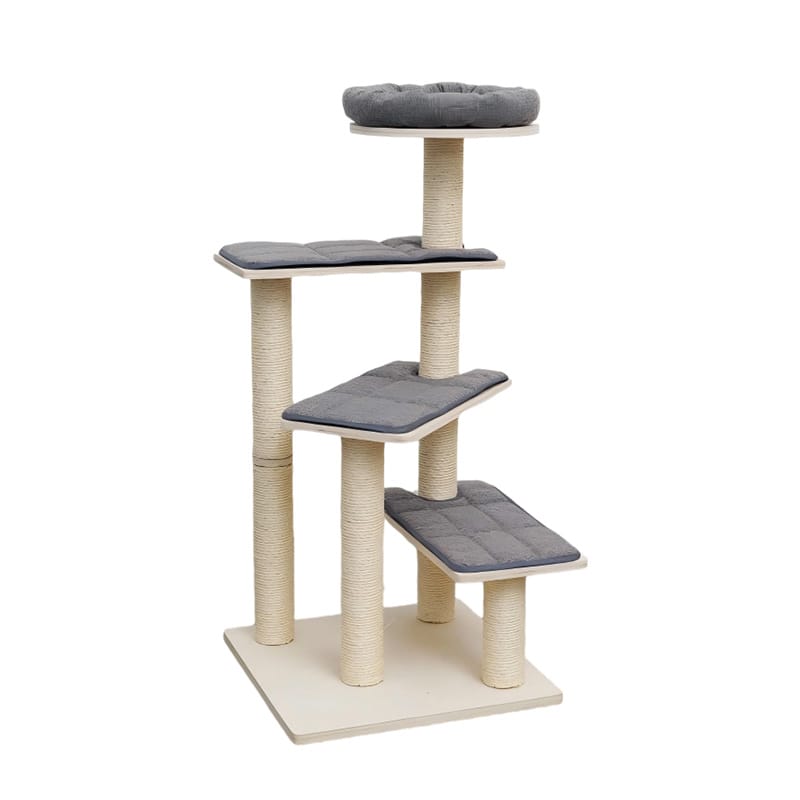
Consider a tall tower whose upper bed is reached by three offset shelves. The upward route looks clear, but the bed rim hides the first downward landing. Ask for a view from the upper platform and compare a revised shelf offset without increasing overall height. The change may require a wider room envelope and different support checks. Keep those consequences visible in the tall cat tree comparison rather than treating height as the only premium feature. A useful tall design is one with a documented route, measurable landings and a complete support arrangement, not simply the longest post option in a product family.
Tall cat tree: trace a continuous route from the floor
In tall cat tree comparisons, start with a side elevation and mark every surface that can actually support a landing. Connect those surfaces in the order a cat would use them, including the return to the floor. A shelf hidden behind a large bed may count in a marketing illustration while contributing little to the route. Ask for a second view whenever two platforms overlap in the first photograph. The purpose of the drawing is to reveal turns, changes of direction and obscured approaches before the tall cat tree sample is ordered. Keep the route legible after cushions, rims and toys are installed.
Identify the load path through the assembly
For tall cat tree selection, follow the connection from the resting surface through its supporting posts or brackets to the base. Note offset platforms and side baskets because their projection changes how forces reach the support. An external photograph often conceals the connection beneath a cushion or inside a cave. Request the relevant underside view or drawing. Keep each configuration identifiable. A claim about one top bed cannot automatically be transferred to a wider replacement bed, a longer post or an accessory attached at a different point on the same product family.
Review the descent as a separate decision
A layout that looks straightforward on the way up can create an awkward downward turn. Check whether the next landing is visible from the upper platform, whether a post occupies the turning area, and whether a lower shelf provides a useful intermediate position. Do not infer accessibility from total height or a photograph of a young active cat. For a range aimed at cats with particular mobility needs, obtain appropriate specialist input and model-specific evidence. A clear drawing and a realistic sample are more useful than a universal promise about which cats can use the tree.
Separate floor contact from joint movement
First inspect whether the base contacts the intended level floor as designed. Then assess the assembled joints according to the manufacturer’s procedure. A rocking base and a loose connection are different problems and should not be addressed with the same improvised fix. Record the surface used during assessment and any required anchoring arrangement. Follow the specified assembly and tightening instructions. Adding unapproved shims, changing fasteners or overtightening a connection can conceal the original issue and make later comparisons between samples unreliable.
Measure the usable landing instead of the outline
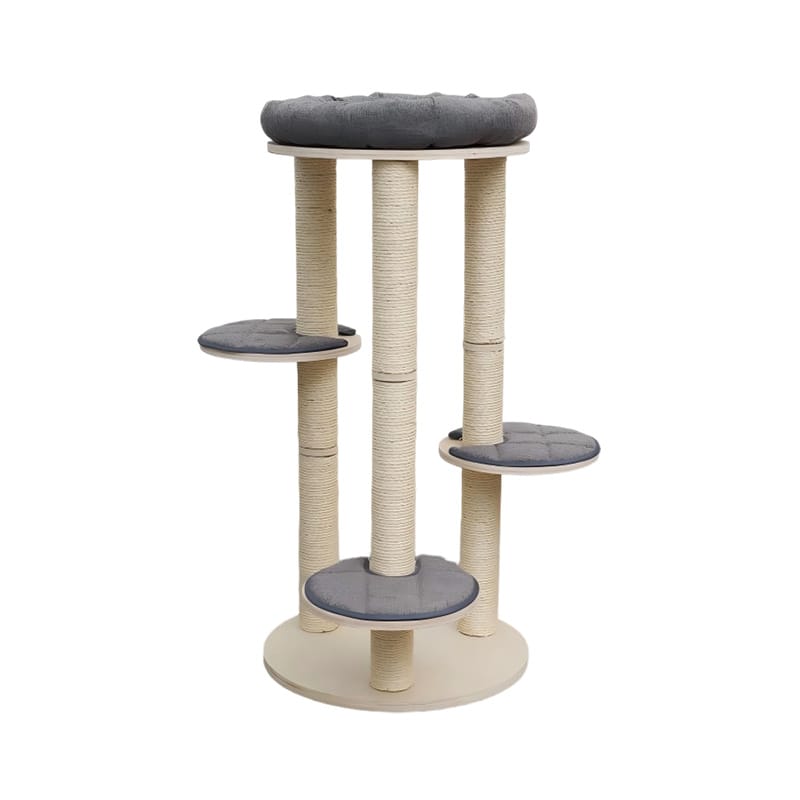
Record the area left after posts, raised edges, cushion bulges and decorative pieces are taken into account. A large nominal platform can provide a much smaller landing sector beside the approach. Mark the direction of arrival on the drawing, then review the space available for turning. Compare alternative shelf offsets at the same overall height so the effect of the tall cat tree layout remains visible. If moving a platform changes the overhang or support arrangement, treat it as a structural change requiring another review, even when the visual difference seems small.
Ask what evidence supports a capacity statement
A useful capacity statement identifies the tall cat tree model, the component concerned and the conditions under which it was assessed. Ask whether it applies to an individual platform or to the whole assembly, and whether the quoted result assumes a particular fixing method. A static load demonstration alone should not be described as proof of every dynamic use condition. Avoid supplying a number simply because similar products advertise one. Where evidence is incomplete, keep the tall cat tree specification pending and describe the dimensions and construction that are actually documented.
Show the complete route in the product listing
Use a full side view with enough contrast to separate the shelves and columns. Keep at least one photograph free from props that obscure the lower approach. The listing should identify assembled dimensions, platform dimensions and any required fixing arrangement without presenting a staged room scene as performance evidence. When several variants share a name, label the pictured configuration precisely. Customers should be able to recognize the actual product and understand how its parts connect without guessing whether a shelf or accessory shown in another image is included.
Treat layout changes as changes to the complete product
Moving a top bed, extending a post or widening a side basket can alter the tall cat tree assembly even if the parts use the same materials. Compare revised drawings and samples as complete configurations. Keep the original and revised dimensions together so a cosmetic request does not obscure a support change. The supplier should identify which checks need repeating. For a tall cat tree retailer, this also means keeping listing images, included components and instructions aligned with the version being sold. A familiar product name is not sufficient revision control.
Compare the design approaches
| Design approach | What to compare | Evidence to request |
|---|---|---|
| Stacked landings | Visible turning area | Side view of the complete route |
| Offset landings | Compare the same factor on this alternative | Keep dimensions and assessment conditions consistent |
| Centered support | Load path and projection | Configuration-specific support information |
| Offset resting component | Compare the same factor on this alternative | Keep dimensions and assessment conditions consistent |
A relevant Hanyang catalog reference
Hanyang lists Multi Layer Solid Wood Cat Tree (With Sisal Scratching Posts + Grey Plush Cushion) as a relevant construction reference. Its published parameter table states Overall height: 102.5cm; base size: 48cm*48cm; material: Solid wood boards, sisal rope, short plush fabric. Confirm the current drawing and quoted configuration before using those catalog figures in an order specification. The page provides a starting point for discussion; it is not independent evidence of a capacity or an unlisted material property.
For the tall cat tree brief, compare the reference with the wider Cat Climbing Frame range. Hanyang describes product development and OEM/ODM support on its company page. Ask which proposed changes are available for the selected model and which require a separate drawing or sample. Keep requested options distinct from confirmed specifications.
Prepare the next product decision
The next tall cat tree decision should follow the specific comparison above. Compare a stairlike offset arrangement with vertically stacked shelves. A useful tall design is one with a documented route, measurable landings and a complete support arrangement, not simply the longest post option in a product family.
For background beyond the tall cat tree product comparison, see Cats Protection’s scratching guidance. For the next supplier conversation, bring the annotated views and the specific unresolved measurements from this guide. Keep behavioral background, product specifications and supplier commitments as distinct sources of information.
Discuss your tall cat tree project with Hanyang, focusing on check the descent before adding height. Include the intended room position, usable dimensions and changes to the referenced model. Use the form below to request clarification or a quotation for the tall cat tree configuration you want to explore.
Frequently asked questions
What should I measure when comparing tall cat tree options?
Consider a tall tower whose upper bed is reached by three offset shelves. The upward route looks clear, but the bed rim hides the first downward landing. Keep the tall cat tree comparison tied to the finished dimensions of the proposed version.
What is the main layout question for a tall cat tree?
The highest shelf is not the only decision. Trace the downward route with equal care, including the turn from the top bed and any blind step hidden by a cushion. Compare a stairlike offset arrangement with vertically stacked shelves.
Can a tall cat tree be customized?
Discuss check the descent before adding height with Hanyang using the referenced model and a marked-up drawing. Compare a stairlike offset arrangement with vertically stacked shelves. Availability of the requested change must be confirmed for that configuration.
What evidence should support a tall cat tree claim?
Use the Multi Layer Solid Wood Cat Tree (With Sisal Scratching Posts + Grey Plush Cushion) as the catalog reference for the discussion. Keep those consequences visible in the tall cat tree comparison rather than treating height as the only premium feature. Confirm the final configuration and any claimed performance separately.
What should I include in a tall cat tree inquiry?
Frame the inquiry around check the descent before adding height. A useful tall design is one with a documented route, measurable landings and a complete support arrangement, not simply the longest post option in a product family. Include the annotated reference and identify the measurements or material details still awaiting confirmation.