Table of Contents
Introduction
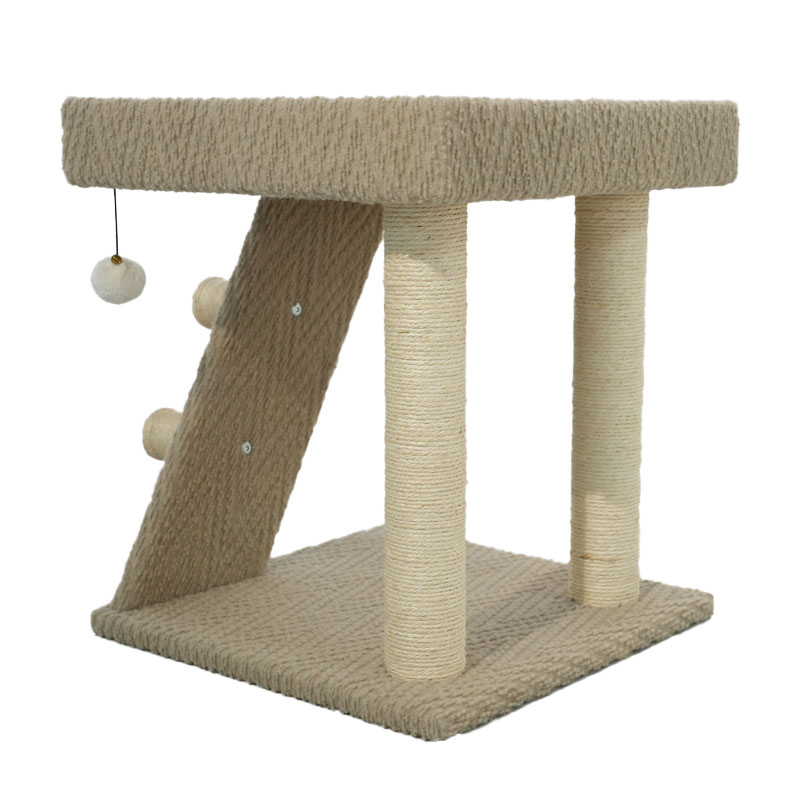
A wooden cat tree is becoming one of the most attractive product directions in the pet furniture market. Traditional plush cat trees still have demand, but many modern pet owners now want cat furniture that looks cleaner, lasts longer, and fits naturally into the home. For pet brands, distributors, and wholesale buyers, this creates a strong opportunity to develop a product line that combines feline behavior needs with furniture-style design.
Unlike a basic cat tree, a wooden cat tree is not only judged by height, number of platforms, or soft fabric. Buyers also need to evaluate structure, wood material, surface finishing, stability, packaging, assembly, and customization potential. A product that looks stylish in photos must also remain practical for cats and reliable for long-term daily use.
As a professional cat furniture manufacturer, Hanyang supports global pet brands, retailers, distributors, and importers with cat trees, cat beds, scratching products, and OEM/ODM pet furniture solutions. This guide explains how to source and develop a wooden cat tree that is stable, attractive, and suitable for private-label product lines.
Why Wooden Cat Trees Are Becoming More Popular
The rise of the wooden cat tree is closely related to changes in indoor living. Many cat owners treat pet products as part of the home environment, not as temporary accessories. They want cat furniture that can stay in the living room, bedroom, apartment corner, or cat café without looking messy.
Wooden cat trees answer this demand in several ways. They can look more like real furniture, offer a stronger structure, and support minimalist or natural home décor styles. Wood textures, neutral fabrics, sisal scratching posts, and rounded platforms can create a warmer and more premium appearance.
For B2B buyers, this trend is important because it allows a cat tree to move beyond basic utility. A wooden cat tree can be positioned as indoor cat furniture, modern pet furniture, natural-style home décor, or a private-label premium product series.
A well-developed wooden cat tree is especially suitable for:
| Buyer Type | Why Wooden Cat Trees Fit |
|---|---|
| Pet product distributors | Easy to add as a higher-value product line |
| E-commerce brands | Strong visual appeal for product pages and lifestyle photos |
| Retail chains | Suitable for modern home and pet furniture sections |
| Private-label brands | Custom colors, structures, packaging, and series development |
| Cat cafés and pet spaces | More durable and furniture-like for visible indoor spaces |
| Importers and wholesalers | Clear differentiation from basic plush cat trees |
A Wooden Cat Tree Must Still Start With Cat Behavior
A wooden cat tree should not be designed only for humans. Cats must still find it useful, safe, and comfortable. The best design begins with natural feline behavior: climbing, scratching, resting, hiding, stretching, and observing.
Indoor cats benefit from vertical space and enrichment because these features help them express normal behavior inside the home. Guidance from AAHA discusses the importance of indoor enrichment, including climbing, scratching, play, and resting areas. For a wooden cat tree, this means the structure should provide more than decoration.
A good wooden cat tree should give cats:
A stable path to climb upward.
A comfortable place to rest.
A scratching surface that supports full-body stretching.
A hiding or semi-private area when possible.
A high viewing point for observation.
Enough platform space for turning and lying down.
The most successful OEM designs combine cat behavior logic with human home décor needs. If the product looks beautiful but cats do not use it, it will not perform well in the market.
Key Structural Features Buyers Should Check
When sourcing a wooden cat tree, structure is more important than decoration. Buyers should inspect whether the product can handle repeated climbing, jumping, scratching, and leaning.
A strong wooden cat tree should have a balanced base, reliable post connections, usable platforms, and a logical climbing route. The structure should not wobble easily when pushed from different directions.
| Structural Area | What to Check | Why It Matters |
| Base | Width, thickness, and balance | Prevents tipping and improves confidence |
| Main frame | Wood strength and connection quality | Supports long-term daily use |
| Platforms | Usable size and rounded edges | Improves comfort and safety |
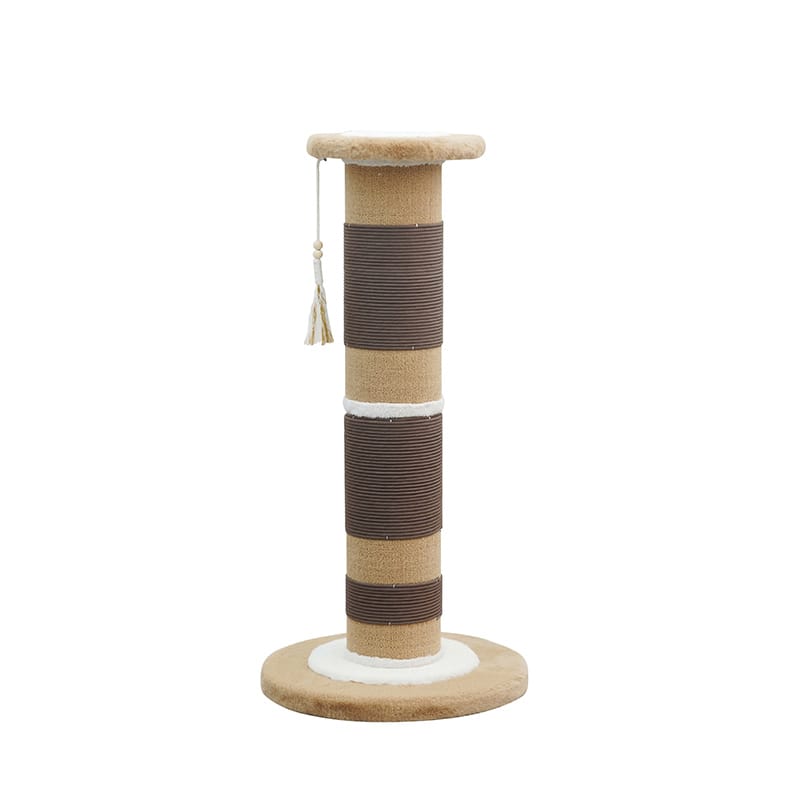
| Scratching posts | Sisal wrapping and post firmness | Encourages scratching and stretching |
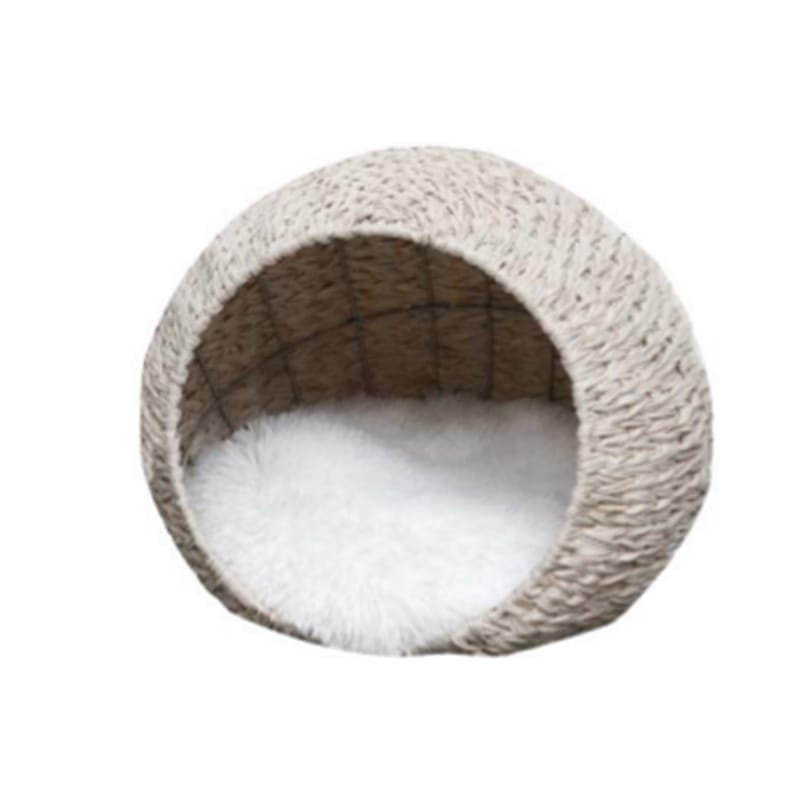
| Cat cave or condo | Opening size and interior space | Makes hiding areas practical, not decorative |
| Assembly joints | Screws, inserts, and alignment | Reduces wobbling and customer complaints |
| Surface finishing | Smooth edges and clean coating | Improves appearance and user experience |
| Packaging | Reinforced protection for wood parts | Reduces damage during shipping |
A wooden cat tree can appear stronger than a plush model, but this is only true when the design and production details are controlled properly. Thin panels, weak connections, or poor hardware can still create stability problems.
Solid Wood, Plywood, and Engineered Wood: How to Choose
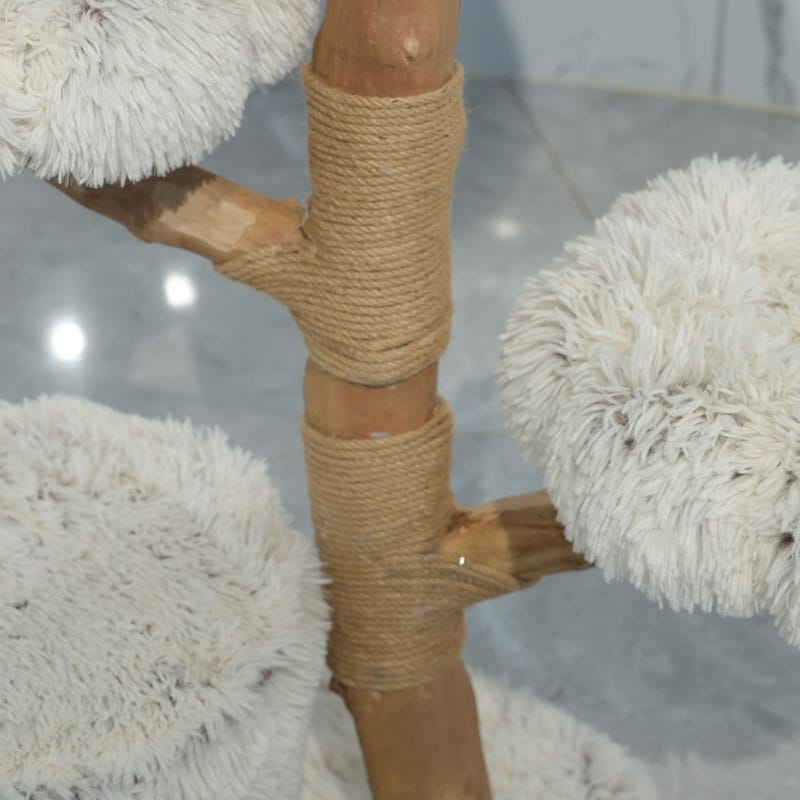
Material selection is one of the biggest decisions in wooden cat tree development. Different wood materials affect strength, weight, appearance, production efficiency, and product positioning.
Solid wood can offer a natural texture and strong visual appeal. It is often suitable for products that need a premium or nature-inspired look. However, solid wood must be processed carefully to avoid rough edges, inconsistent moisture behavior, or unnecessary structural complexity.
Plywood is commonly used in furniture-style pet products because it can provide stable panel strength and consistent production performance. It can also be shaped into curved platforms, layered structures, or clean modern silhouettes.
Engineered wood panels may be used in some designs when buyers need stable shapes and controlled surface finishing. The key is to ensure the material matches the intended product positioning and durability expectations.
For brands that care about responsible sourcing, wood-related documentation may also be part of the product development discussion. Organizations such as the Forest Stewardship Council provide widely recognized information about responsible forest management and wood sourcing standards.
Design Styles That Work Well for Wooden Cat Trees
A wooden cat tree can be developed in several design directions. The right style depends on the target market and sales channel.
Natural solid wood style
This style uses visible wood texture, soft platforms, sisal scratching posts, and organic shapes. It is suitable for buyers targeting natural home décor, premium pet furniture, and modern indoor spaces.
Hanyang’s natural solid wood cloud cat tree is a useful example of how wood branches, cloud-shaped platforms, sisal posts, plush surfaces, and a cat cave can be combined into a visually warm and functional design.
Minimalist apartment style
This style focuses on clean lines, compact structure, neutral colors, and easy placement. It is suitable for urban apartment customers who want cat furniture that does not take over the room.
Multi-functional wooden cat tree
This design combines climbing, scratching, resting, hiding, and play elements in one structure. It is useful for brands that want to communicate more value on product pages.
Luxury home furniture style
This style uses refined shapes, premium-looking fabric, smooth wood finishes, and carefully selected colors. It works well for private-label brands targeting design-conscious pet owners.
Stability Is the Core of a Sellable Wooden Cat Tree
A wooden cat tree often looks more stable than a soft plush model, but buyers should not assume stability without testing. A cat may jump onto the top platform from a sofa, climb from the side, or scratch with its full body weight against a post. The structure must handle these movements.
Stability depends on the relationship between base size, height, weight distribution, and platform placement. If the upper structure extends too far from the center, the product may wobble. If the base is too light or narrow, the product may feel unsafe.
Buyers should test a sample by assembling it fully, checking whether all screw holes align, gently pushing it from multiple angles, and observing whether the top section moves. If the product is intended for larger cats or multi-cat homes, stability testing becomes even more important.
For related sourcing considerations, buyers can also review Hanyang’s guide on choosing a cat tree for large cats to understand how platform size, base design, and structural balance affect real user experience.
Scratching Surfaces Should Be Built Into the Design
A wooden cat tree should not forget scratching behavior. Cats scratch to stretch, maintain claws, and mark their environment. International Cat Care explains that scratching is a normal cat behavior, which is why providing suitable scratching surfaces is important in the home.
For a wooden cat tree, scratching areas can be integrated in several ways:
Sisal-wrapped posts.
Sisal mats attached to wooden panels.
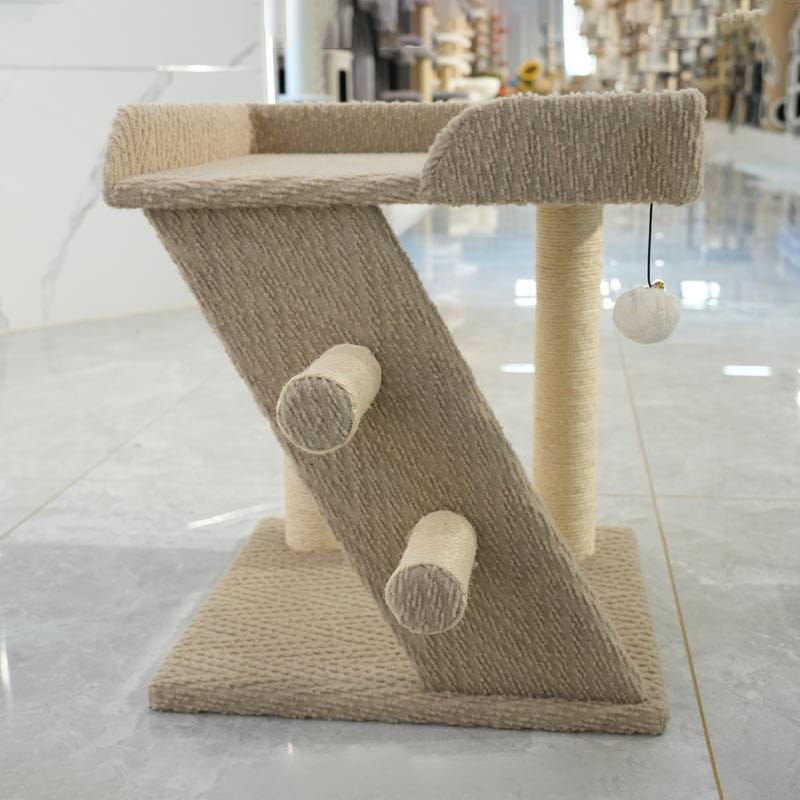
Inclined scratching boards.
Jute or natural-fiber textured areas.
Replaceable scratching components.
The scratching surface should be placed where cats naturally pass through or stretch. A hidden scratching surface may not be used often. A vertical sisal post near the climbing route usually gives cats a clear reason to interact with the product every day.
For product development, buyers should check whether the sisal is tightly wrapped, whether the ends are secure, and whether the post remains firm after repeated movement. A beautiful wooden cat tree with weak scratching areas will not satisfy active indoor cats.
Comfort Details That Improve Customer Reviews
Wood alone is not enough. A wooden cat tree should also feel comfortable. Cats need soft resting surfaces, secure platforms, and areas where they can relax without slipping.
Comfort details may include removable cushions, plush platform covers, rounded platform edges, soft cat beds, or semi-enclosed hiding spaces. These features help the product feel more complete.
For buyers, removable or replaceable fabric parts can also become a selling point. They make the product easier to clean and maintain, especially for homes with multiple cats.
A strong comfort-focused design should consider:
Whether the platform is wide enough for resting.
Whether the cushion stays in place.
Whether the cat cave has enough entry space.
Whether the top perch feels secure.
Whether cats can move between levels naturally.
A wooden cat tree should look like furniture, but it should also feel like a trusted resting place for cats.
OEM Customization Options for Private-Label Buyers
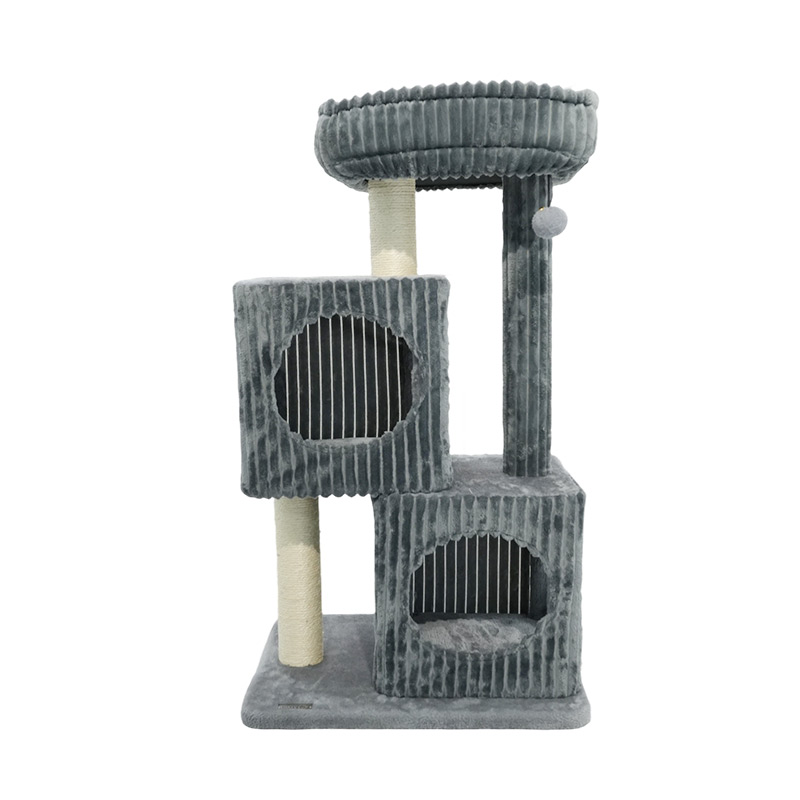
Wooden cat trees are highly suitable for OEM and private-label development because many design details can be customized. Buyers can create a product series that matches their brand identity and target market.
Common customization options include:
| Custom Area | Available Direction |
| Wood material | Solid wood, plywood, engineered wood options |
| Structure | Compact, multi-level, large-cat, apartment-friendly |
| Color | Natural wood tone, neutral fabric, seasonal color direction |
| Scratching surface | Sisal rope, sisal mat, jute, mixed texture |
| Soft parts | Plush cushions, removable pads, fabric covers |
| Function | Cave, perch, toy, ladder, scratching board, hammock |
| Packaging | Private label carton, manual, barcode, product series packaging |
| Branding | Logo tag, customized product name, catalog support |
Hanyang supports OEM and ODM development for cat furniture buyers, including product structure planning, material selection, custom colors, and private-label packaging. Buyers can explore more options through the cat furniture product category or contact the team for project-specific requirements.
How to Evaluate a Wooden Cat Tree Sample
Before bulk production, buyers should review samples carefully. A wooden cat tree includes more visible structural parts than a fully plush-covered model, so finishing quality is easy for customers to notice.
A sample review should include:
| Inspection Point | What Buyers Should Confirm |
| Wood finish | Smooth surface, clean edges, no rough corners |
| Stability | No obvious wobbling after assembly |
| Hardware | Screws and connectors fit properly |
| Platform usability | Cats have enough space to stand, turn, and rest |
| Cushion quality | Fabric is attached or fixed securely |
| Sisal quality | Wrapping is tight and evenly finished |
| Assembly | Instructions are clear and parts are organized |
| Packaging | Wood pieces are protected from scratches and impact |
Buyers should also check whether the sample can be assembled by an ordinary customer without professional tools. Difficult assembly can create negative reviews even when the product itself is well designed.
Packaging and Shipping Considerations for Wooden Cat Trees
Packaging is especially important for wooden cat trees because visible panels, edges, and corners can be damaged during international shipping. A scratched wood surface is more noticeable than a small mark on plush fabric.
Good packaging should protect the main wood panels, posts, hardware, cushions, and decorative parts separately. The carton should support export shipping and reduce movement inside the box.
For B2B buyers, packaging also affects brand image. A private-label wooden cat tree should arrive with organized components, clear instructions, and professional presentation. This helps improve customer satisfaction and reduces after-sales communication.
Important packaging details include protective wrapping for wood panels, separated hardware bags, clear part labels, reinforced carton design, and assembly instructions with diagrams.
How to Position a Wooden Cat Tree on Product Pages
A wooden cat tree needs a stronger product story than a basic cat tree. Instead of only listing size and material, the product page should explain why the design matters.
A good product page should communicate:
The home décor style.
The type of cat owner it serves.
The stability features.
The scratching function.
The comfort details.
The wood material direction.
The assembly and maintenance advantages.
The OEM customization options for B2B customers.
A stronger product description might say:
“Designed with a furniture-style wooden frame, stable multi-level structure, sisal scratching posts, and soft resting platforms, this wooden cat tree gives indoor cats a dedicated space to climb, scratch, hide, and relax while fitting naturally into modern homes.”
This type of copy connects product features with user benefits and search intent. It is more effective than vague claims such as “high quality” or “durable.”
Common Mistakes Buyers Should Avoid
When sourcing a wooden cat tree, buyers should avoid several common mistakes.
The first mistake is choosing appearance over structure. A product may look beautiful in photos but wobble after assembly.
The second mistake is using platforms that are too small. If cats cannot turn or rest comfortably, the product becomes less useful.
The third mistake is treating scratching surfaces as decoration. Sisal areas must be placed where cats can actually stretch and scratch.
The fourth mistake is ignoring packaging. Wood surfaces need better protection than many plush components.
The fifth mistake is developing only one model. A wooden cat tree category performs better when buyers create a product line for different home sizes, cat sizes, and design preferences.
Building a Wooden Cat Tree Product Line
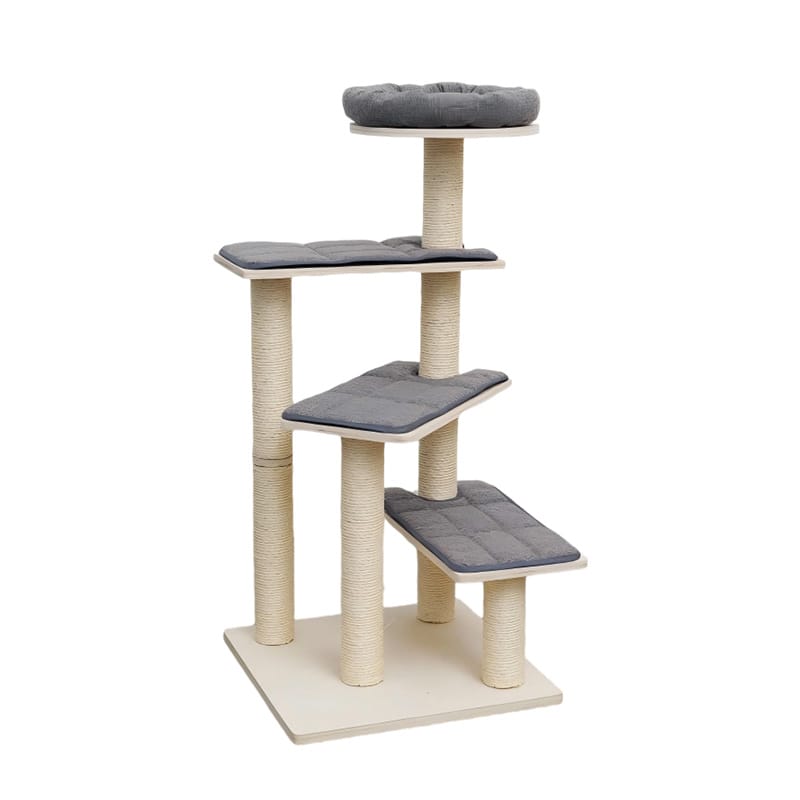
A single wooden cat tree can perform well, but a product series gives buyers stronger market coverage. A complete wooden cat tree line can include compact, mid-size, multi-level, large-cat, and premium furniture-style models.
| Product Line Direction | Target Customer |
| Compact wooden cat tree | Apartment owners and small homes |
| Mid-size wooden cat tree | General indoor cat households |
| Large wooden cat tree | Bigger cats and multi-cat families |
| Natural solid wood cat tree | Premium and nature-inspired home markets |
| Wooden cat tree with cave | Cats that like privacy and resting spaces |
| Wooden cat tree with multiple scratchers | Active cats and multi-cat households |
This structure helps brands build a stronger category instead of relying on one product. It also gives distributors and retailers more options for different customer groups.
Conclusion
A wooden cat tree is one of the most promising directions in modern cat furniture because it combines function, stability, and home décor value. For pet brands, retailers, distributors, and private-label buyers, it offers a clear way to stand out from basic plush cat trees.
The best wooden cat tree is not simply made of wood. It must be designed around real cat behavior, stable structure, comfortable resting areas, strong scratching surfaces, smooth finishing, and reliable packaging. When these details work together, the product becomes easier to sell, easier to position, and more valuable for long-term category development.
Hanyang can support wooden cat tree OEM and ODM projects with structure design, material selection, custom colors, private-label packaging, and export-ready production. To discuss your next wooden cat tree product line, visit the cat furniture collection or send your requirements through the Contact Us page.
FAQ
What is a wooden cat tree?
A wooden cat tree is a cat furniture product built with wood or wood-based structural parts. It usually includes platforms, scratching posts, resting areas, and sometimes caves or cushions for indoor cats.
Is a wooden cat tree better than a plush cat tree?
It depends on the target customer. A wooden cat tree often has a cleaner furniture-style appearance and can offer strong structure, while plush cat trees may feel softer. Many modern designs combine wood frames with soft cushions and sisal scratchers.
What materials are commonly used for wooden cat trees?
Common materials include solid wood, plywood, engineered wood panels, sisal rope, plush fabric, cushions, and metal hardware. The right choice depends on design style, target market, and OEM requirements.
Can wooden cat trees be customized for private label brands?
Yes. Wooden cat trees can be customized in structure, material, color, size, scratching surface, cushion style, packaging, and branding. This makes them suitable for OEM and private-label pet furniture programs.
What should buyers check before ordering wooden cat trees in bulk?
Buyers should check structure stability, wood finishing, platform size, sisal quality, hardware strength, assembly process, packaging protection, and batch consistency before confirming bulk production.